Prime Minister of Armenia visits the National Library. A tour of the Palace of the Commonwealth
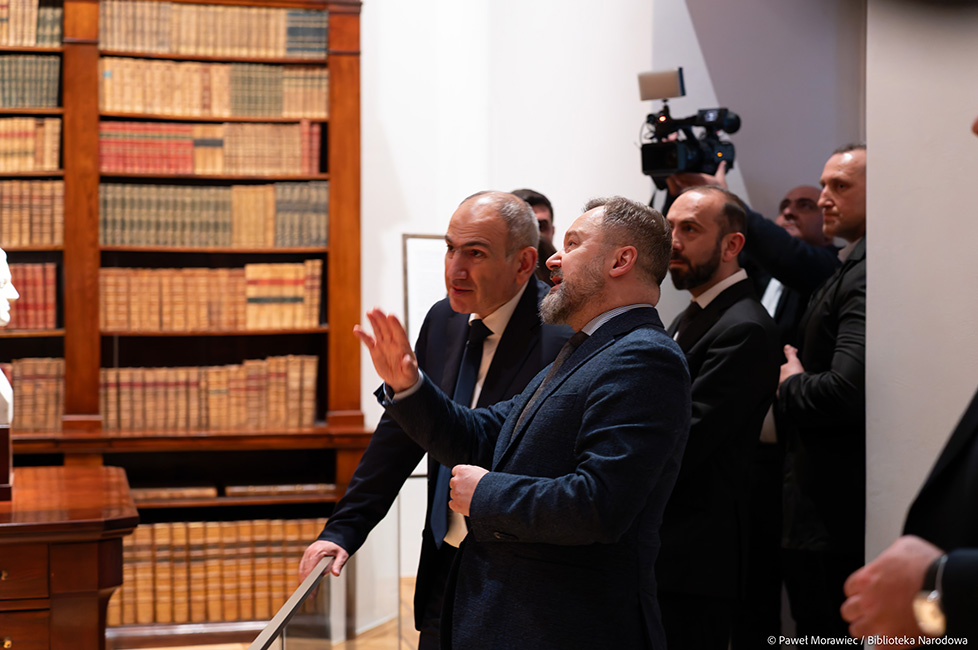
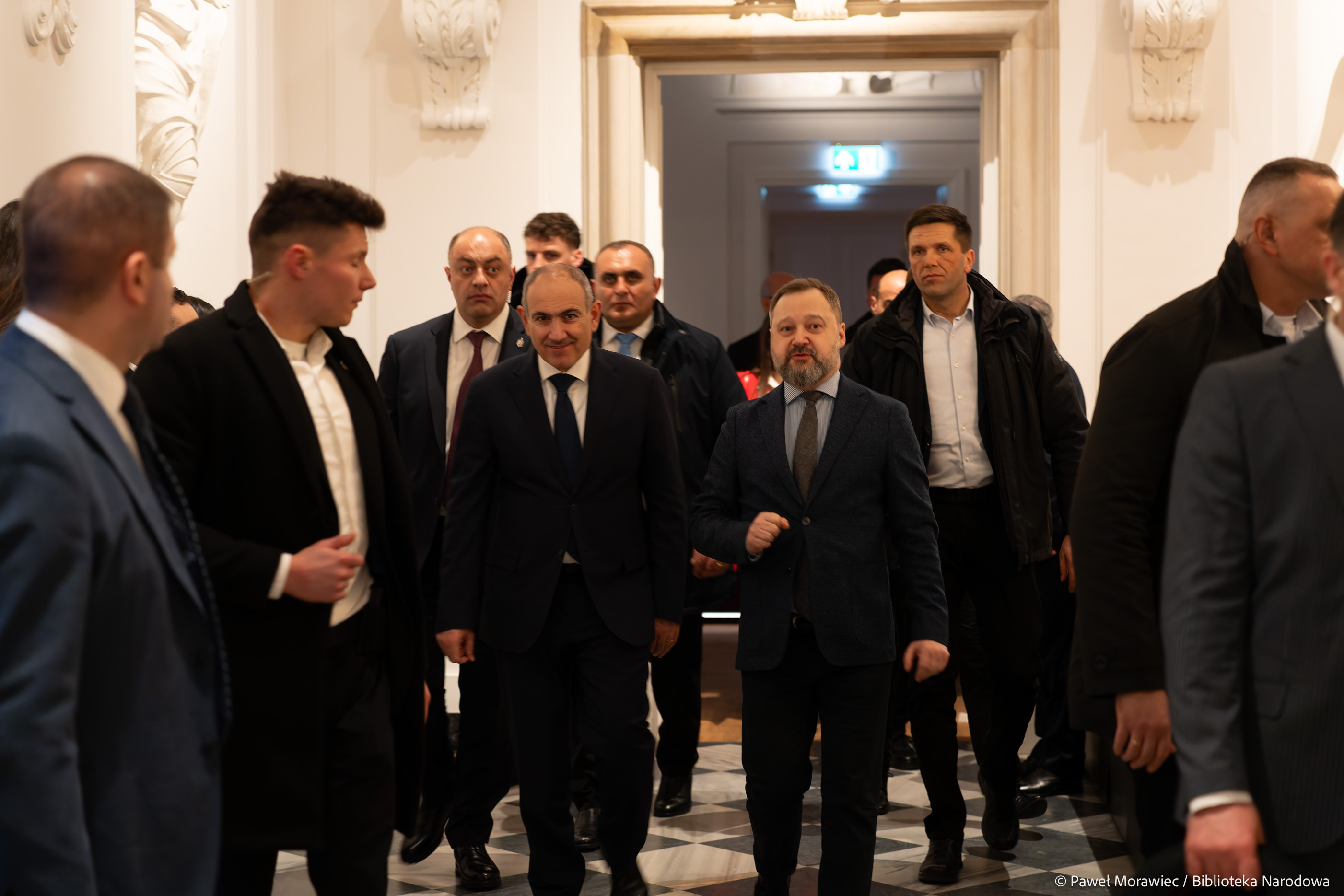
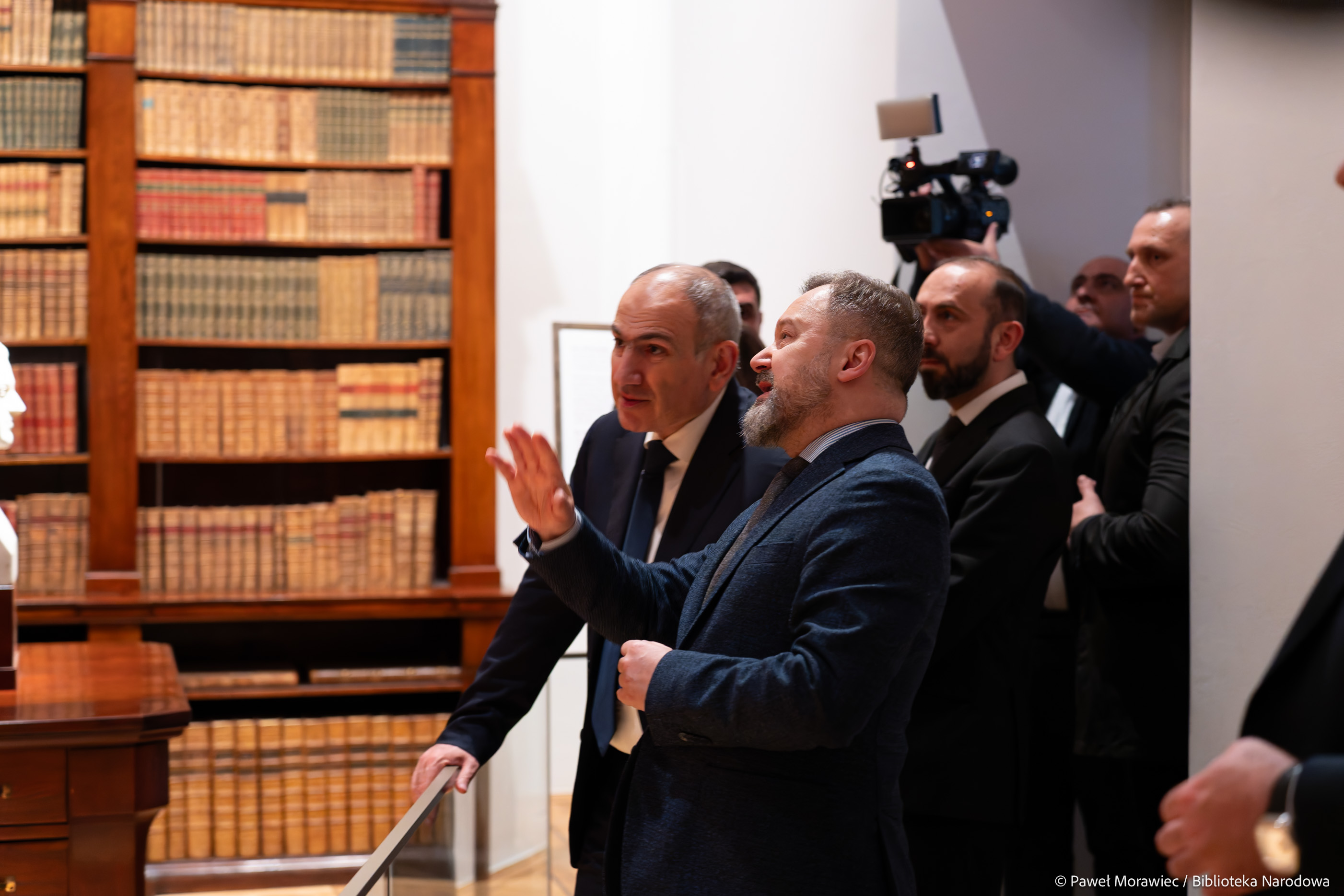
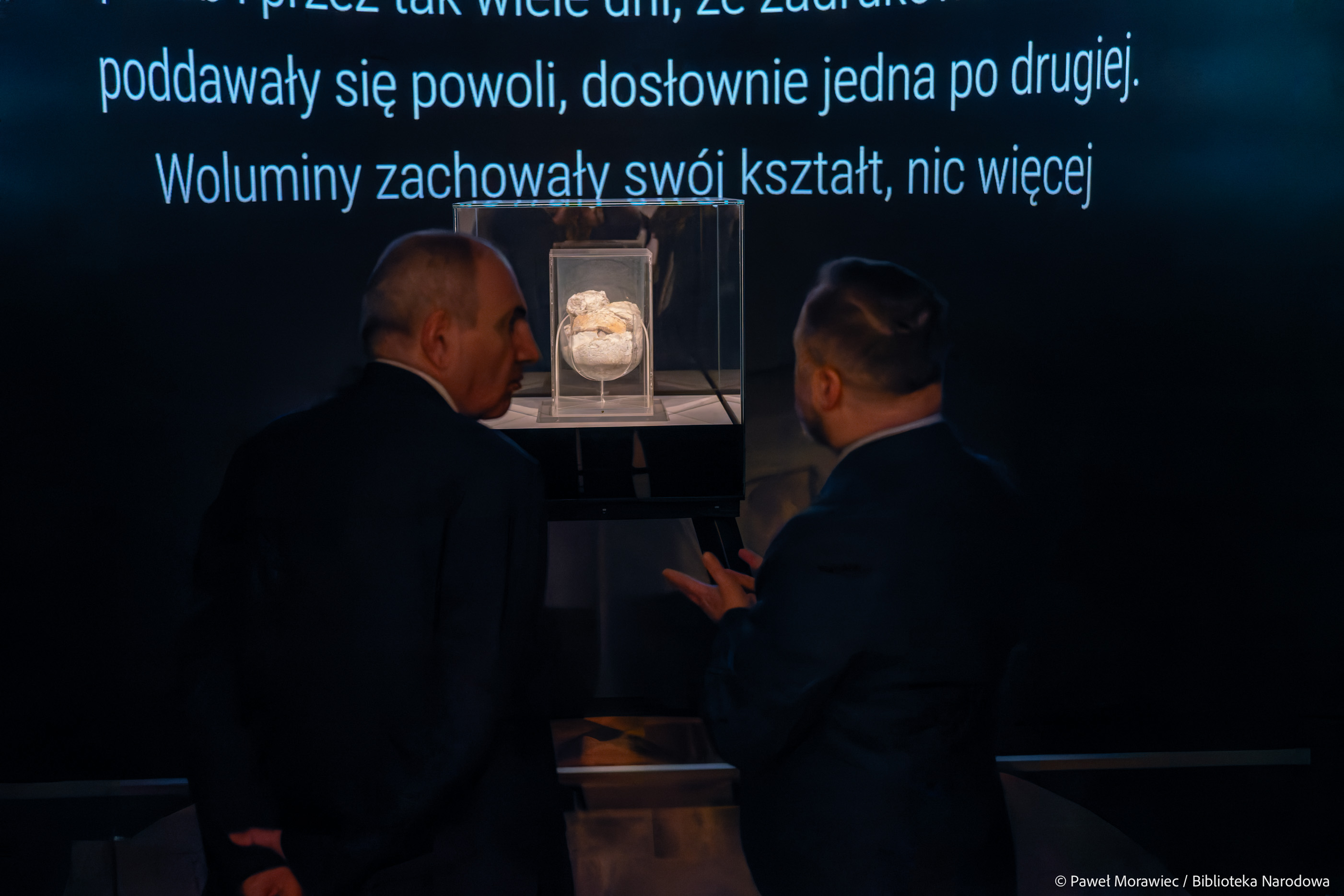
The Prime Minister of Armenia, Nikol Pashinyan, recently visited the National Library of Poland in Warsaw. During his visit he was accompanied by the Library’s Director, Dr Tomasz Makowski, who personally guided him through the Palace of the Commonwealth and presented some of the Library’s most precious treasures.
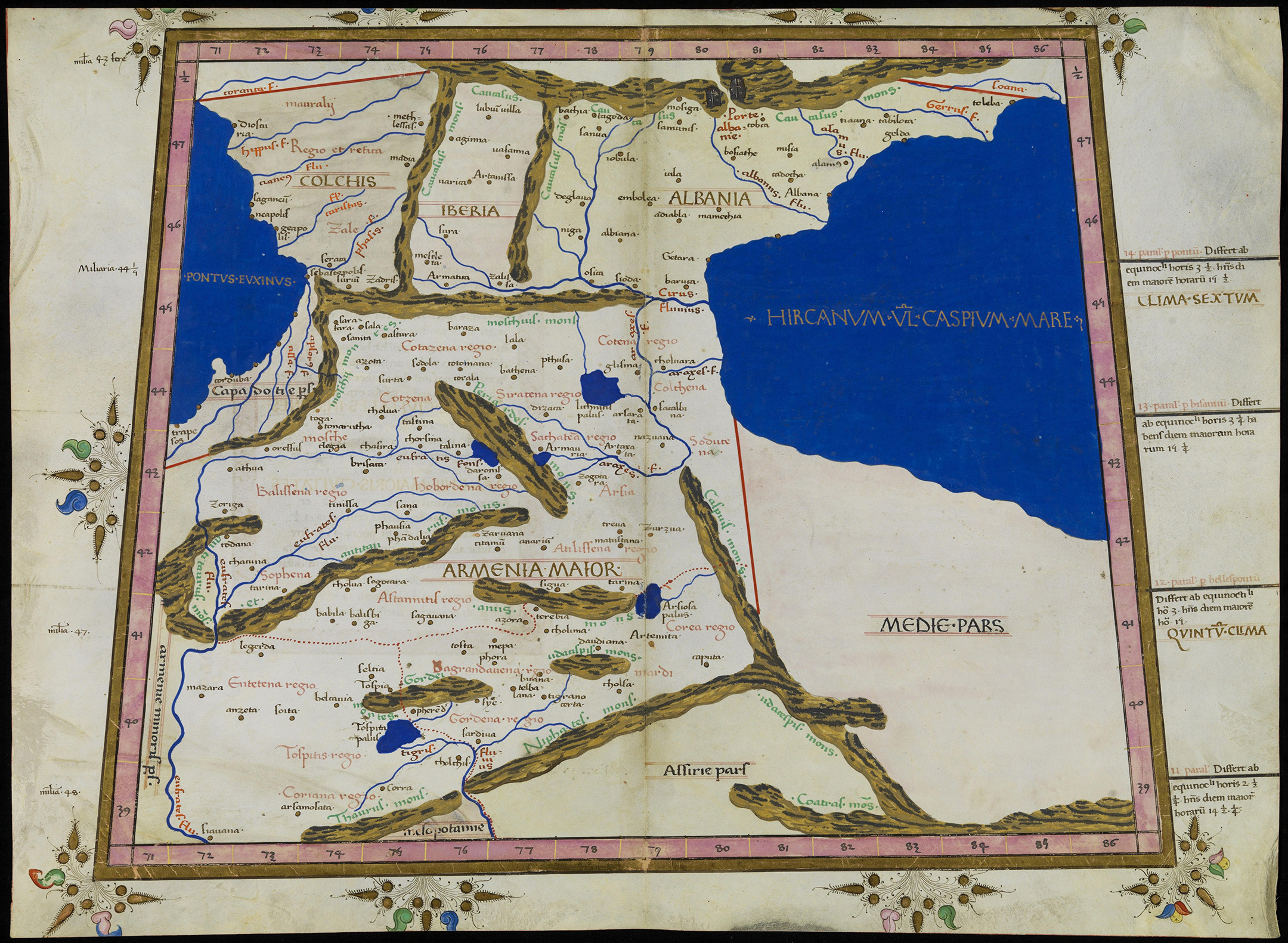
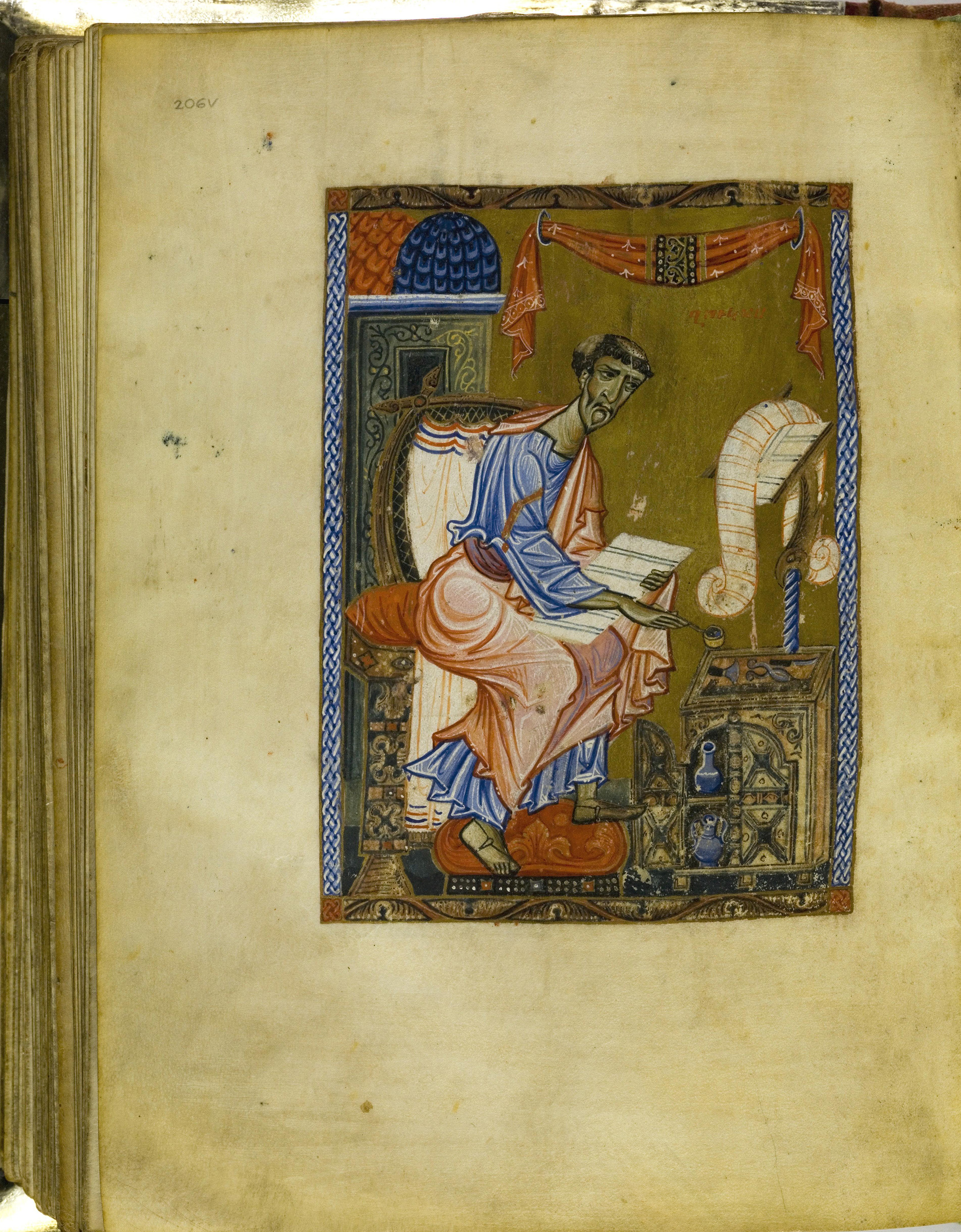
During the tour, Dr Makowski outlined the history and significance of the Palace as a venue dedicated to presenting the finest works of written heritage preserved by the National Library of Poland. Particular attention was given to the permanent display of the Skevra Evangeliary – a parchment manuscript dating from 1197 – as well as to a map depicting Armenia, prepared for Pope Paul II in 1460.
The illuminations of the Skevra Evangeliary are attributed to Grigor of Skevra, while the manuscript was commissioned by Nerses of Lambron. According to a commemorative inscription, the codex was completed in the year 647 of the Armenian calendar, corresponding to 1198-99, during the reign of King Levon I of the Rubenid dynasty and under Catholicos Grigor V Apirat.
Armenians first appeared in the Kingdom of Poland in the mid-fourteenth century, after King Casimir III the Great incorporated Red Ruthenia, with Lwów (now Lviv in Ukraine), into the Crown, where a sizeable Armenian community was already established. In 1356 the monarch confirmed the Armenians’ religious, municipal and judicial autonomy. The privileges granted by Casimir the Great and his successors formed the legal and political foundation of the Armenian presence in Poland. From that time onwards their numbers in the eastern territories of the Commonwealth steadily increased, and Armenian communities were established in successive towns and cities.
Armenian communities in Poland enjoyed their own system of self-government and operated on the basis of customary law brought from Armenia. The majority of Armenians living in the Commonwealth were engaged in trade with the East, a sphere they gradually came to dominate almost entirely. Others practised goldsmithing, producing works of exceptional craftsmanship, while some developed carpet weaving in Poland.
Polish Armenians were, for the most part, well-educated. Owing to their commercial contacts with the East, they were fluent in Oriental languages, a skill frequently called upon by Polish kings and magnates – indeed, most official diplomatic missions to Persia or Turkey were entrusted to Armenians.
The National Library of Poland also preserves other objects that document the rich historical and cultural heritage of the Armenians, forming an important part of Europe’s shared legacy.
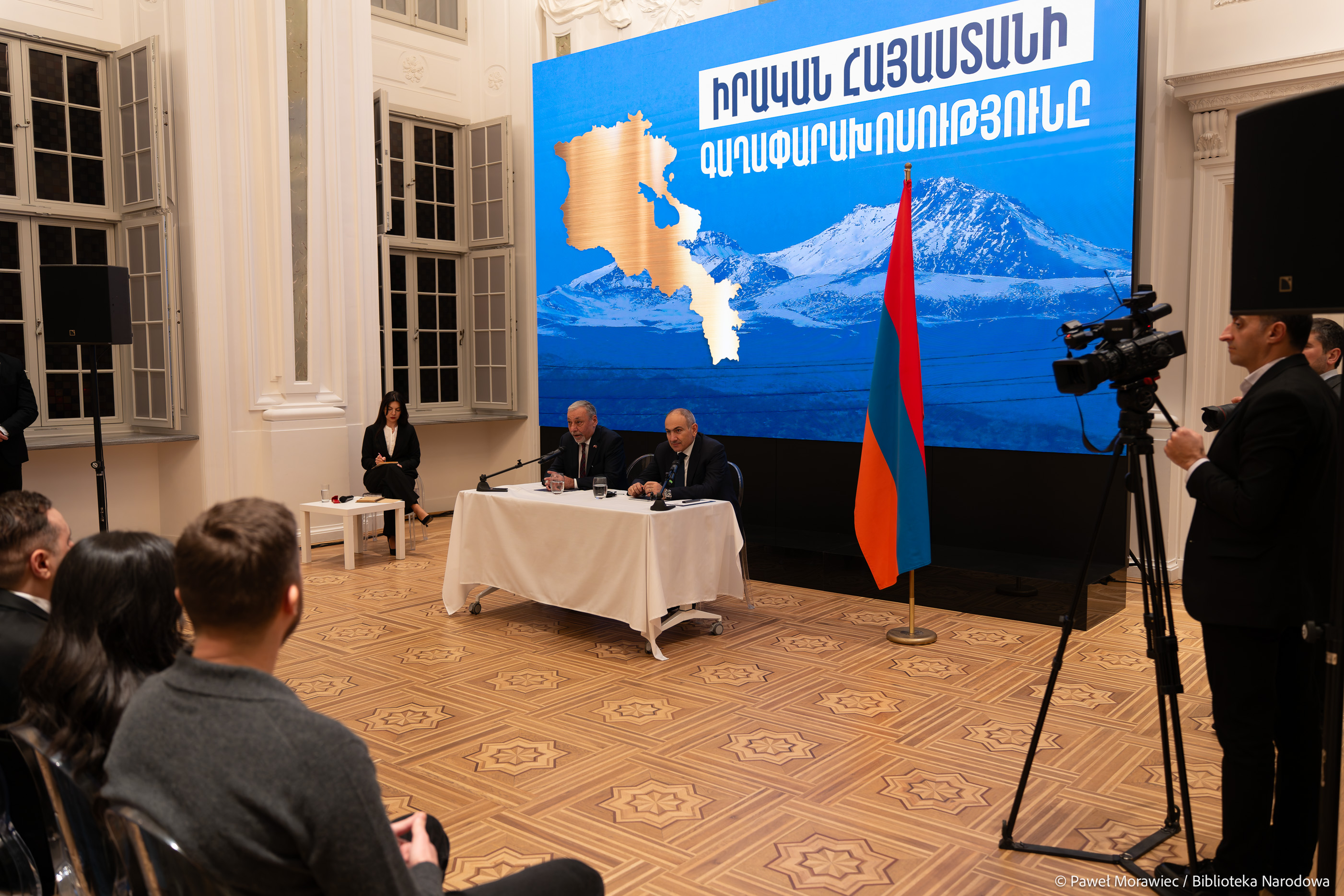
Following the tour, Prime Minister Pashinyan, together with the Ambassador of Armenia to Poland, Alexander Arzoumanian, met with representatives of the Armenian diaspora in Poland.
The Prime Minister’s visit provided an opportunity to underline the importance of cultural cooperation and to highlight the role of the National Library of Poland as an institution dedicated to safeguarding and making accessible priceless historical artefacts.