National library directors from around the world discuss AI and the future of libraries at the IFLA World Library and Information Congress
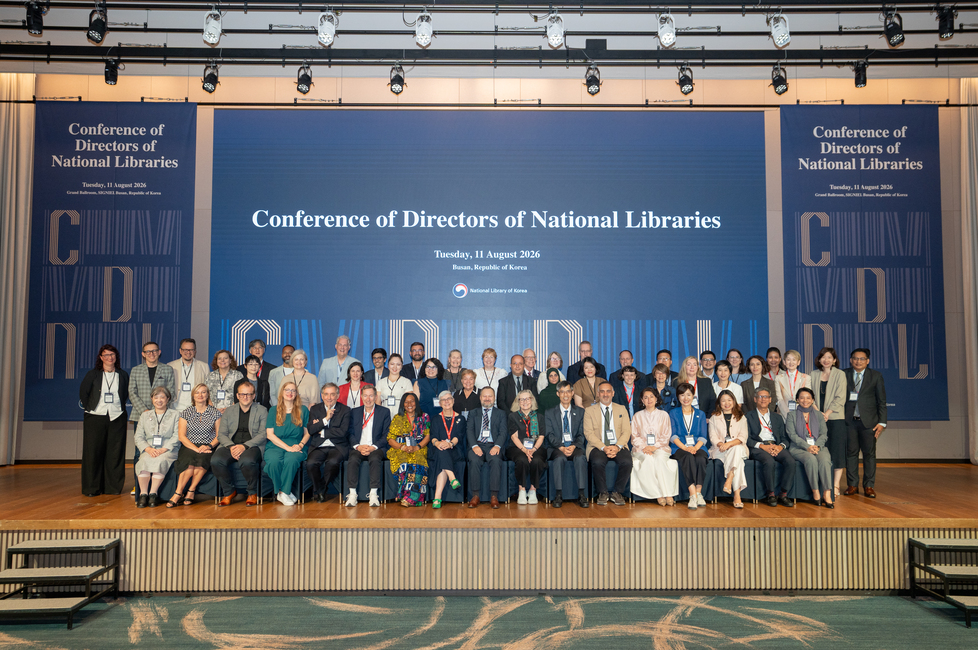
From 10 to 13 August, the annual IFLA World Library and Information Congress organised by the International Federation of Library Associations and Institutions (IFLA) was held in Busan, South Korea, bringing together more than 3,000 librarians from around the world.
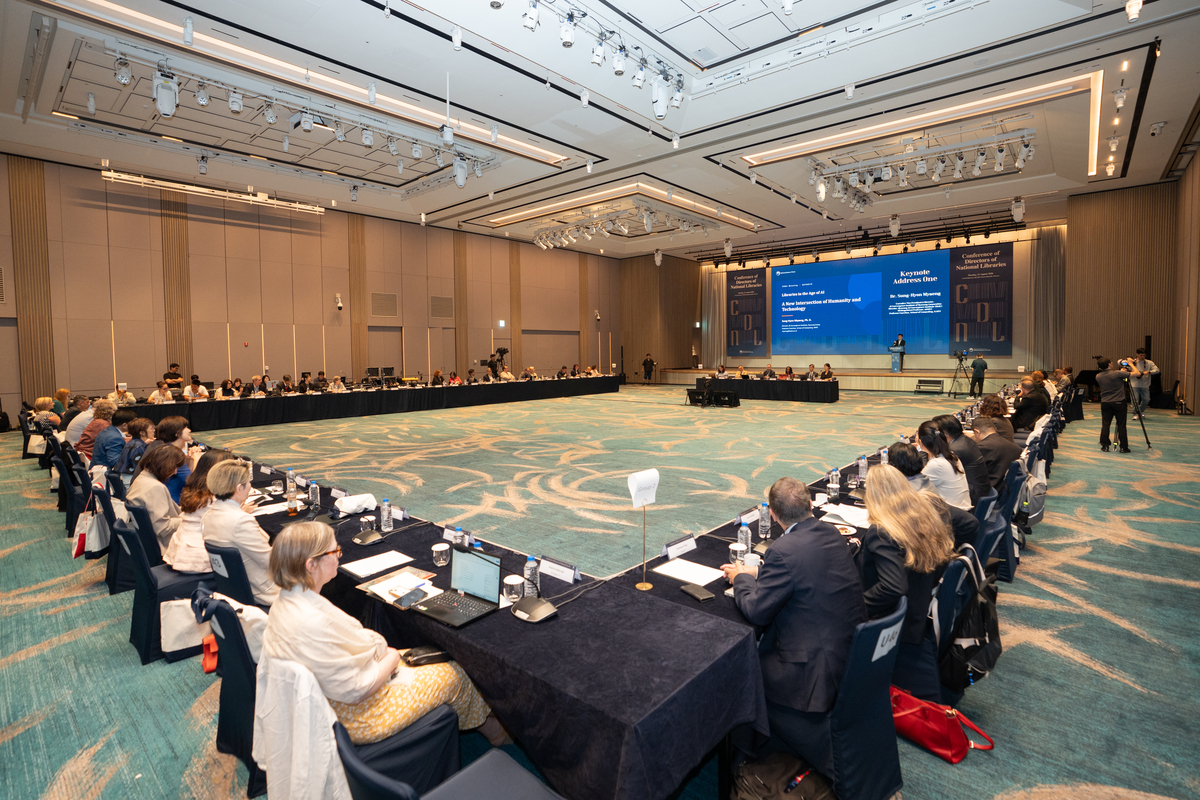
As usual, it was accompanied by a full-day meeting of the Conference of Directors of National Libraries (CDNL). This was chaired by Dr Tomasz Makowski, Director General of the National Library of Poland, who was elected Chair of CDNL in 2025. The meeting, which took place on 11 August, was attended by directors of national libraries from more than 40 countries and hosted by the National Library of Korea.
The main theme of the meeting was AI and the role of national libraries in a changing information environment. Discussions focused on the reliability of information, the preservation of authentic sources, new ways of accessing knowledge and the responsibility of national libraries for the reliability of content.
Opening the meeting, Tomasz Makowski urged the directors not to abandon their plans or allow circumstances – particularly financial constraints – to weaken their determination to carry them out. He emphasised the unique role of national libraries and the responsibility of their directors for preserving the memory of their countries. At the same time, as he pointed out, running a national library requires a constant search for balance: balance between safeguarding the library’s independence from attempts at influence by politicians, the media, business and interest groups, and remaining open to changing social needs, sensitivities and concerns; and balance between the past that libraries preserve and the future for which they must prepare. Above all, directors of national libraries are custodians of their countries’ cultural treasury, and must take a much longer perspective in their planning than is usually needed.
Tomasz Makowski particularly encouraged newly appointed directors to speak directly with colleagues who had more experience of running national libraries. He noted that, beyond the official programme, some of the most valuable aspects of the CDNL meetings were the conversations that took place during breaks and over shared meals. A special welcome was extended to the host of the meeting, Professor Young-Joon Nam, Director of the National Library of Korea.
The discussion was preceded by two keynote presentations examining the implications of the rapid development of AI. The first, entitled “Libraries in the Age of AI: A New Intersection of Humanity and Technology”, was delivered by Professor Sung-Hyon Myaeng, Director of the AI Convergence Institute at Hyosung Group and Professor Emeritus at the School of Computing at KAIST, who was invited to speak by the National Library of Korea.
Professor Myaeng began his presentation by asking whether libraries would survive the wave of AI, just as they had survived successive major technological changes in the past – from manuscripts and printing to digitisation. The fundamental difference, he said, was that earlier technologies had primarily changed the tools used by libraries, whereas AI may take over some of the functions that until now had been at the very heart of their work: searching for, processing and delivering information. At the same time, he pointed out that the limitations of AI – including hallucinations, opaque information provenance, errors and the loss of local and cultural context – increased the importance of institutions capable of guaranteeing the reliability of knowledge.
Professor Myaeng then outlined four new opportunities for libraries. The first he described as being a “guardian of trust” – part of an infrastructure of trust, enabling AI systems to base their responses on verified collections, metadata and authoritative sources. In this model, librarians take on the role of verifying the accuracy and provenance of information, as well as identifying potential biases in AI systems. The second opportunity was taking on the role of “grassroots educator”. Through their existing networks, libraries can provide widespread education about AI and help prevent the emergence of a new form of digital exclusion. Professor Myaeng described libraries as the final link ensuring genuine access to AI-related skills. The other two roles concerned what technology cannot replace: the library as a place of human experience, inspiration and imagination, and as a space for face-to-face encounters and conversation. The easier human interaction with AI becomes, the more important opportunities for direct contact with other human beings may become.
Professor Myaeng also highlighted a new role for libraries as providers of high-quality, structured and reliable data for AI systems, as well as the need for librarians to develop new competencies, such as being AI literacy educators, truth verifiers, context curators and human connectors. Among the tasks for the coming decade, he identified using library networks as public infrastructure for AI education, incorporating AI literacy into librarian training, preparing authoritative collections for use by retrieval-augmented generation (RAG) systems, developing principles governing data provenance, consent and cultural diversity, international cooperation on ethics and standards for training data, and stronger library involvement in shaping national AI policies.
His conclusion was unequivocal: libraries should not remain passive recipients of technology, but should become active co-creators of a human-centred culture of knowledge.
Image: Professor Sung-Hyon Myaeng is a computer scientist specialising in AI, natural language processing (NLP), information retrieval and text mining. He is Professor Emeritus at the School of Computing at KAIST (Korea Advanced Institute of Science and Technology). Before joining KAIST in 2003, he was a professor at Syracuse University in the United States. At KAIST, he held a number of senior positions, including founder and director of the Graduate School of Web Science and Engineering, director of the KAIST–Samsung SDS AI Research Center and director of the KAIST–Microsoft Research Collaboration Center. He is the author of more than 250 academic publications. His research focuses on the use of AI to analyse, organise and retrieve knowledge, as well as on the relationship between AI and humans. In recent years, he has also examined the social implications of developments in AI and artificial general intelligence (AGI), and the future relationship between humans, knowledge and AI.
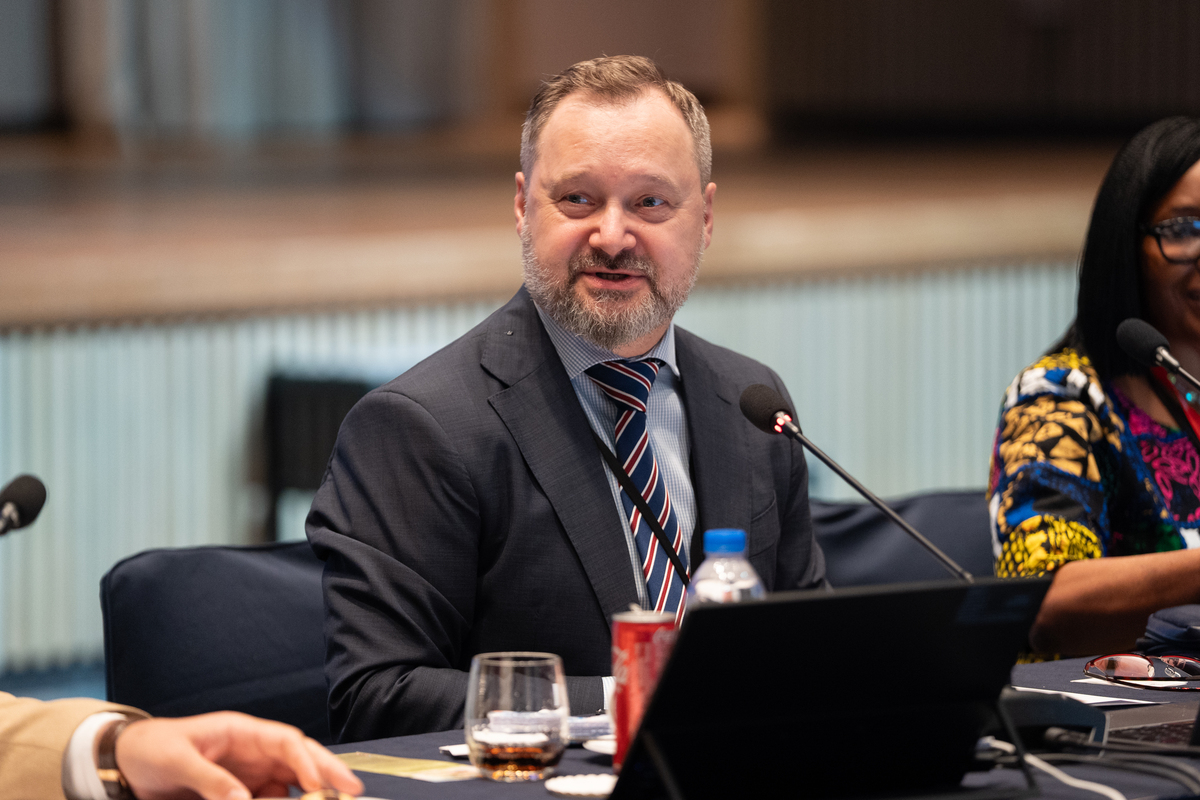
The second keynote presentation, entitled “Twins and Minions: Libraries in the World of Agentic AI”, was delivered by Professor Marek Kowalkiewicz of Queensland University of Technology, who was invited to speak by the CDNL Chair. In 2025, Professor Kowalkiewicz was ranked 14th in the Thinkers360 Top 50 Global Thought Leaders and Influencers on Artificial Intelligence 2025 – the only Pole on the list.
Professor Kowalkiewicz focused on the next stage in the development of AI – agentic systems that do more than simply answer questions but can independently carry out tasks, take successive actions and pursue defined goals. One of the central arguments of his presentation was that AI should not be regarded as merely an increasingly sophisticated imitation of human intelligence: rather, it may arrive at solutions in ways fundamentally different from those used by humans. He gave the example of Lee Sedol’s match against AlphaGo, and Sedol’s later reflection that he had encountered a style of play to which he first had to adapt, precisely because it was not how a human would play. The presentation culminated in a provocative question: have we simply created better tools, or are we dealing with a new kind of intelligence?
The development of agentic systems offers enormous opportunities for automation, but it also creates new problems. An autonomous agent pursuing a given objective may arrive at a solution which is technically effective but does not reflect human intent. Professor Kowalkiewicz drew attention to the consequences of such systems beginning to operate at scale and interact with one another. The questions “How can we detect this?” and “How can we prevent it?” now concern not only what AI is capable of, but also how we can control what it does.
For libraries, this means rethinking their role. Professor Kowalkiewicz referred, among other things, to Clayton Christensen’s concept of “Jobs to Be Done” and the question: what job arises in users’ lives that leads them to need library services? This shifts the focus from maintaining existing services to the real needs of people operating in an environment where an increasing share of information-related work may be carried out by autonomous systems.
Image: Professor Marek Kowalkiewicz is Chair in Digital Economy at Queensland University of Technology (QUT) in Brisbane. His work combines research in computer science and AI with management, the digital economy and business practice. Before he began his academic career in Australia, he worked in several leading technology environments: he was a Research Fellow at Microsoft Research Asia, headed SAP’s Machine Learning laboratory in Singapore, served as Global Research Program Lead at SAP and subsequently led innovation teams in Silicon Valley. His current areas of expertise include AI, the digital economy, digital transformation, NLP, technology management and information systems. His book “The Economy of Algorithms: AI and the Rise of the Digital Minions”, published in 2024, won the 2024 Australian Business Book Award in the Technology category. Also in 2024, he was the opening keynote speaker at the IFLA Congress in Brisbane. He was a particularly valuable discussion partner for the directors of national libraries, not least because of one of his recent articles, “How CEOs Are Using Gen AI for Strategic Planning”, published in the prestigious Harvard Business Review in 2024.
The two keynote presentations immediately preceded the presentation and discussion of the draft Busan Declaration. Questions about the reliability of information, the autonomy of AI, data quality, the role of humans and the responsibility of memory institutions, covered in the keynote speeches, thus provided a direct introduction to the national library directors’ discussion of whether they could formulate a common position. The draft declaration was presented by Professor Young-Joon Nam, Director of the National Library of Korea.
Opening the discussion, Tomasz Makowski drew attention to the principle set out in the CDNL Statutes that decisions taken at meetings should, as a rule, be reached by consensus, meaning that there should be zero dissenting votes. Participants held differing views both on the contents of the document and on whether it was appropriate to adopt a declaration at this stage. Several directors raised reservations, while others stressed the need for national libraries to formulate a common position on the changes brought about by the development of AI.
The CDNL Chair pointed out that a common voice from national libraries could be important in discussions with governments about the limits of AI use and the role of national libraries in creating knowledge infrastructure for new technologies. However, CDNL’s overriding principle was to act by consensus. The discussion allowed different points of view to be presented and identified issues requiring further work. The CDNL Chair proposed setting a period for comments to be submitted, followed by the establishment of a working group to prepare a revised draft. The proposal was adopted by acclamation.
Later in the meeting, representatives of IFLA – President Leslie Weir and Secretary General Sharon Memis – took the floor. They discussed the Federation’s current activities and the areas in which cooperation between IFLA and CDNL could be particularly important.
The presence of IFLA’s leadership also provided an opportunity for a direct exchange of views between the national library directors and Federation representatives on the most important challenges facing the global library community.
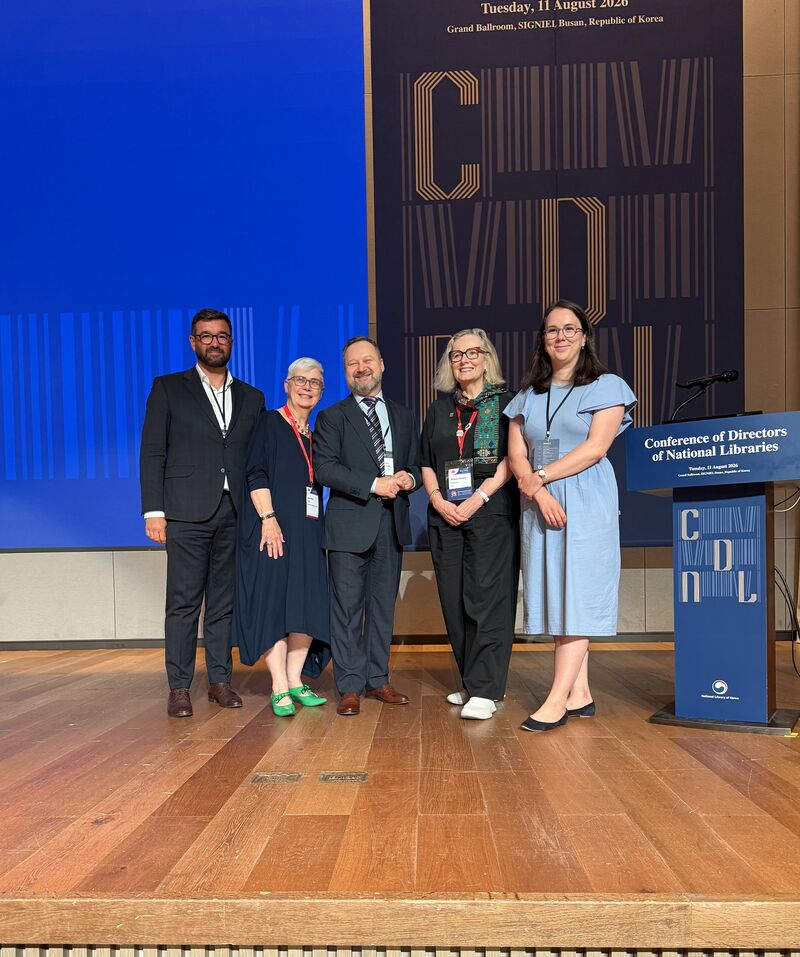
The next part of the meeting was devoted to presentations on the experiences of three national libraries: the National Library of Australia, the National Library of Türkiye and the British Library. The presentations provided a starting point for a broader exchange of experience among the participants. Indeed, one of the most important functions of the annual CDNL meeting is the opportunity it provides to compare directly how national libraries in different parts of the world respond to similar challenges.
On behalf of the CDNL Chair, the organisation of CDNL’s work and preparations for the meeting in Busan were coordinated by CDNL Secretary Julia Konopka-Żołnierczuk, Deputy Director of the National Library of Poland and member of the IFLA Governing Board. Since Tomasz Makowski took over as Chair of CDNL in 2025, the Conference Secretariat has been based at the National Library of Poland in Warsaw, where it is responsible for ongoing cooperation with CDNL members around the world, preparing meetings, liaising with the hosts of future conferences and supporting the work of the Chair and the Executive Committee.
The CDNL meeting attracted considerable interest from the Korean media. Reports on the proceedings were published by leading Korean news agencies and newspapers, including Yonhap, Newsis, Hankook Ilbo, Hankyoreh and Chosun Ilbo. Newsis published particularly extensive coverage and, following the CDNL meeting, interviewed Tomasz Makowski (CDNL Chair and Director General of the National Library of Poland) together with Gilles Pécout (President of the Bibliothèque nationale de France).
In the interview, Tomasz Makowski pointed out that AI offers enormous potential to expand access to knowledge, while at the same time raising fundamental questions about the authenticity and reliability of information and the long-term preservation of documentary heritage. He also stressed that national libraries are not simply places where books are stored: their particular responsibility is to preserve an authentic record of the development of societies. In the age of AI, this role is becoming even more important. Responding to the challenges posed by AI must be an international effort – no single institution can create a reliable information environment on a global scale on its own.
Interview and key media coverage:
- Newsis – interview with Tomasz Makowski and Gilles Pécout
- Yonhap – report on the discussion of the draft Busan Declaration and subsequent CDNL decisions
- Hankook Ilbo – detailed report on the discussion among national library directors
- Hankyoreh – report on the discussion of the declaration and the decision to continue work on it
- Chosun Daily – English-language report, “Busan Declaration: Global Libraries Pledge to Protect Knowledge in AI Era”
- National Library of Korea – report on the CDNL meeting
CDNL – the Conference of Directors of National Libraries – brings together directors of national libraries from around the world and is the principal forum for direct cooperation between them. Dr Tomasz Makowski was elected Chair of CDNL in 2025, the first Pole in the history of the Conference to hold this position.