A Lost Comedy from 1625 Discovered at the National Library of Poland
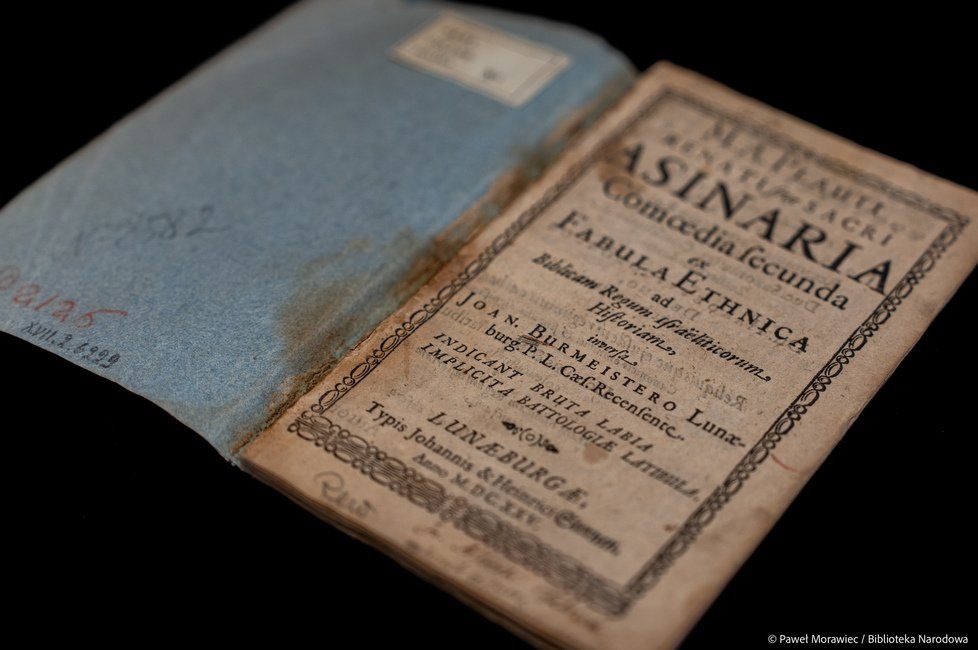
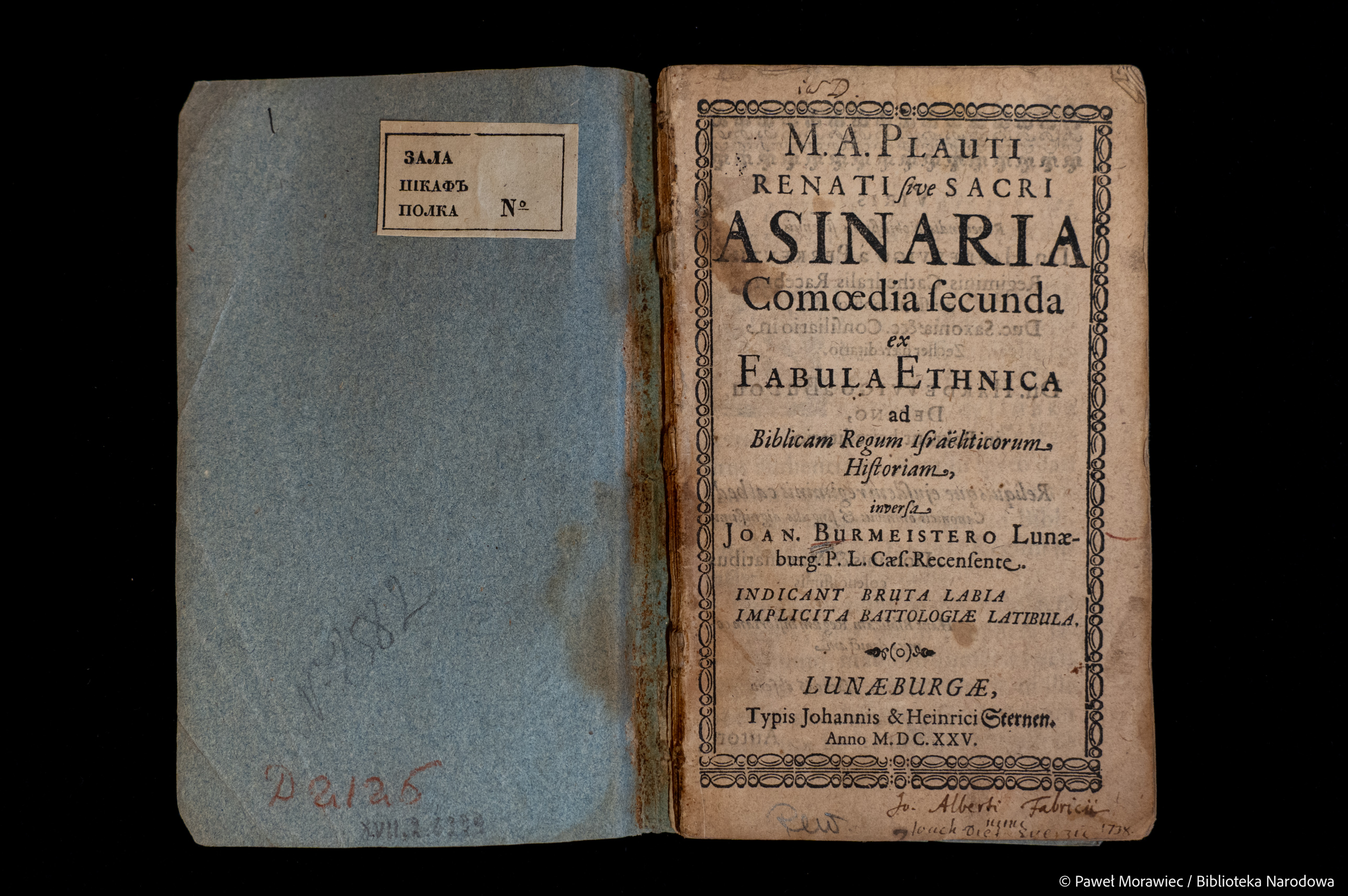
Tymoteusz Mikołajczak, a member of the Early Printed Books Department, has identified a copy of Asinaria by Joannes Burmeister, a comedy published in Lüneburg in 1625, in the collections of the National Library of Poland (call number: SD XVII.2.6229). The work had previously been described in scholarly literature as lost. Until now, the only evidence of its existence was an auction catalogue of Johann Albert Fabricius’s library dating from 1738. Burmeister’s rediscovered Asinaria is a paraphrase of Plautus’s comedy of the same title (literally, “The Comedy of Asses”), which, according to Plautus himself, was an adaptation of an unidentified Greek comedy.
The author of the paraphrase, Johann (Joannes) Burmeister (1576–1638), was one of the most original Neo-Latin poets and playwrights of his time. Having been crowned poet laureate by the Count Palatine of the Rhine in 1600, he studied theology in Rostock and was ordained a deacon in Lauenburg in 1601. For a quarter of a century, he earned a modest living as a pastor in Gützow, in the Duchy of Saxe-Lauenburg (1603–1628). His relatively stable life was disrupted by the turmoil of the Thirty Years’ War and the invasion by Catholic League forces in 1627, which forced him to seek refuge in Hamburg. Having been elected superintendent of the Duchy of Lauenburg in 1628, Burmeister spent the final years of his life as rector of a church in Uelzen (1635–1638).
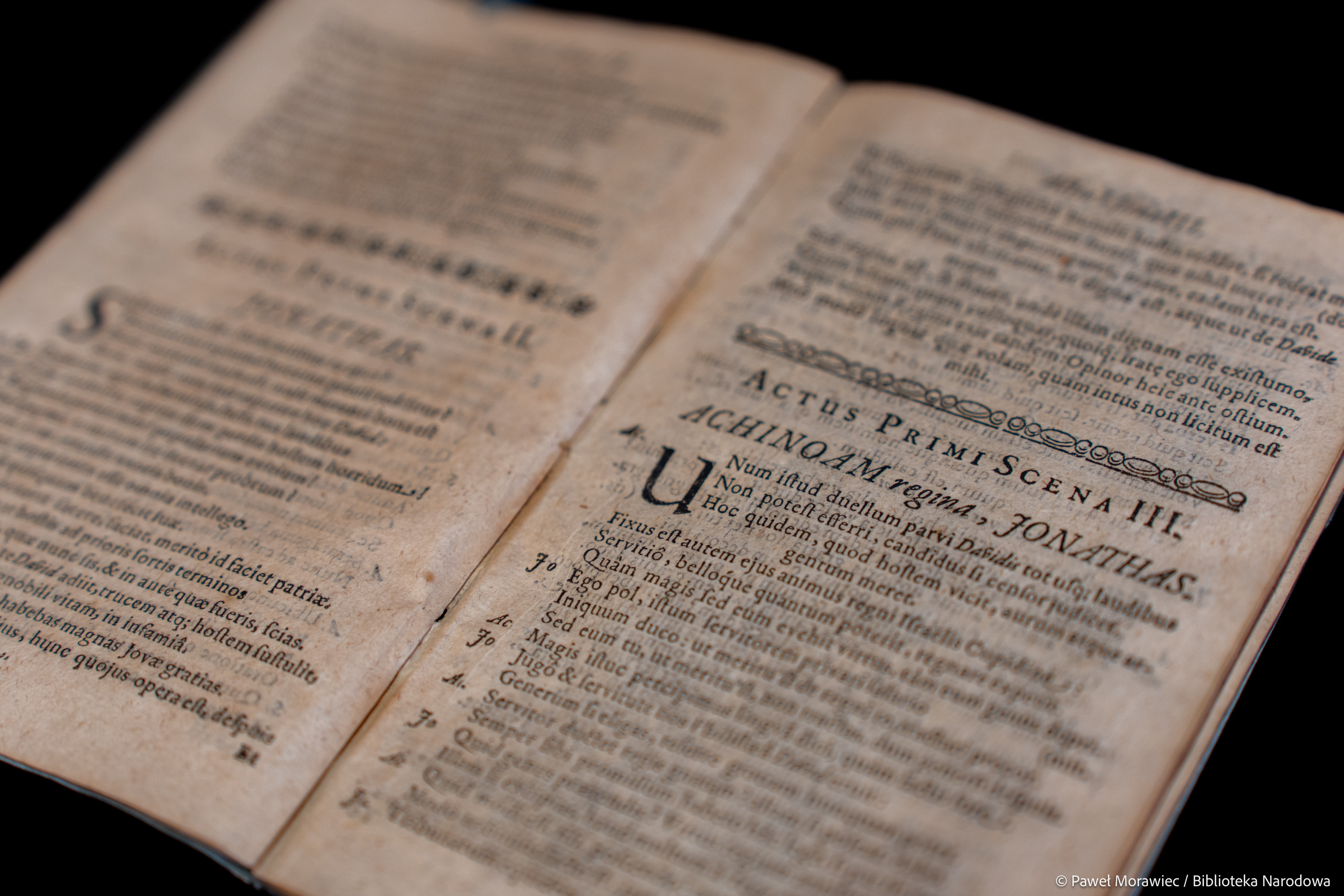
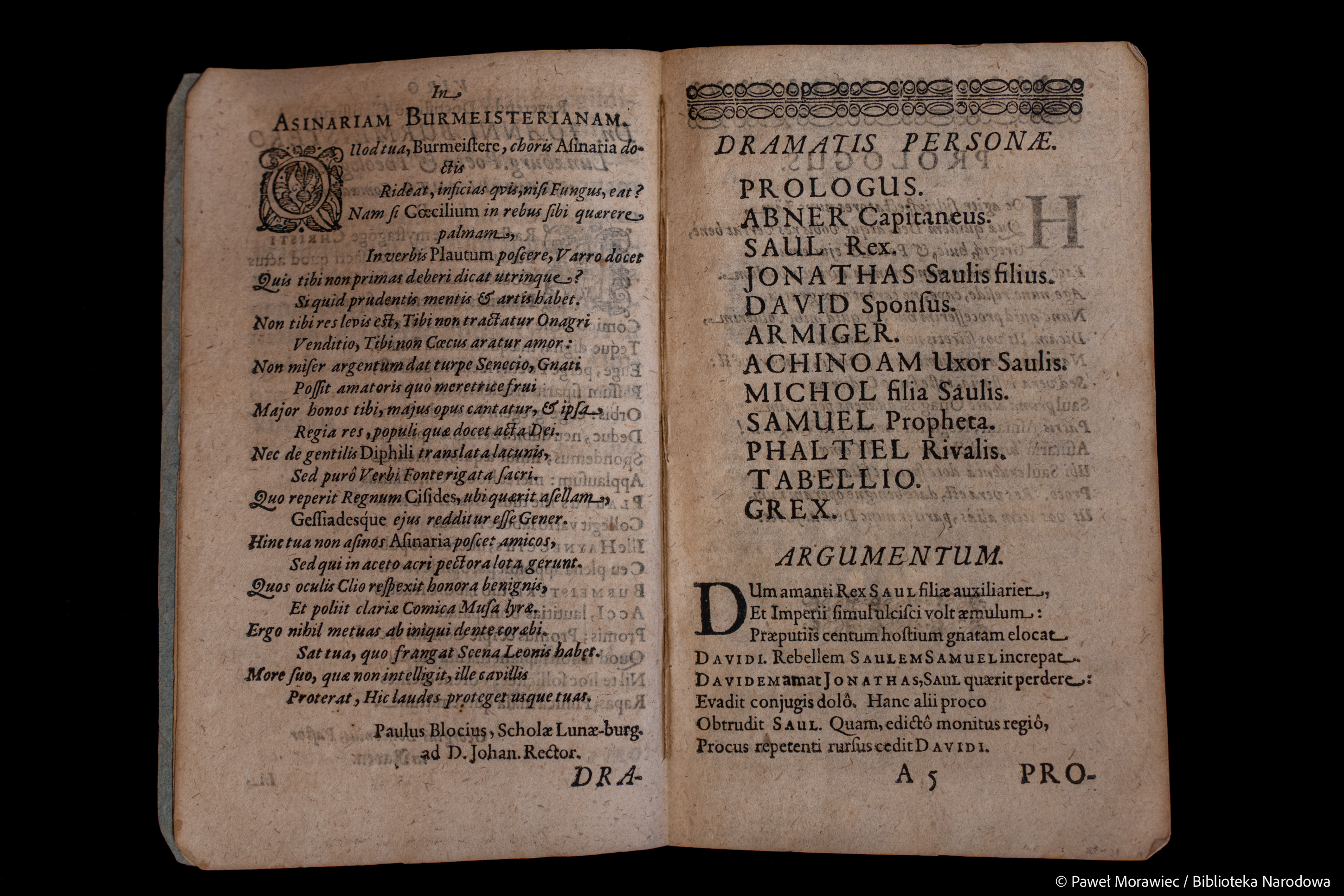
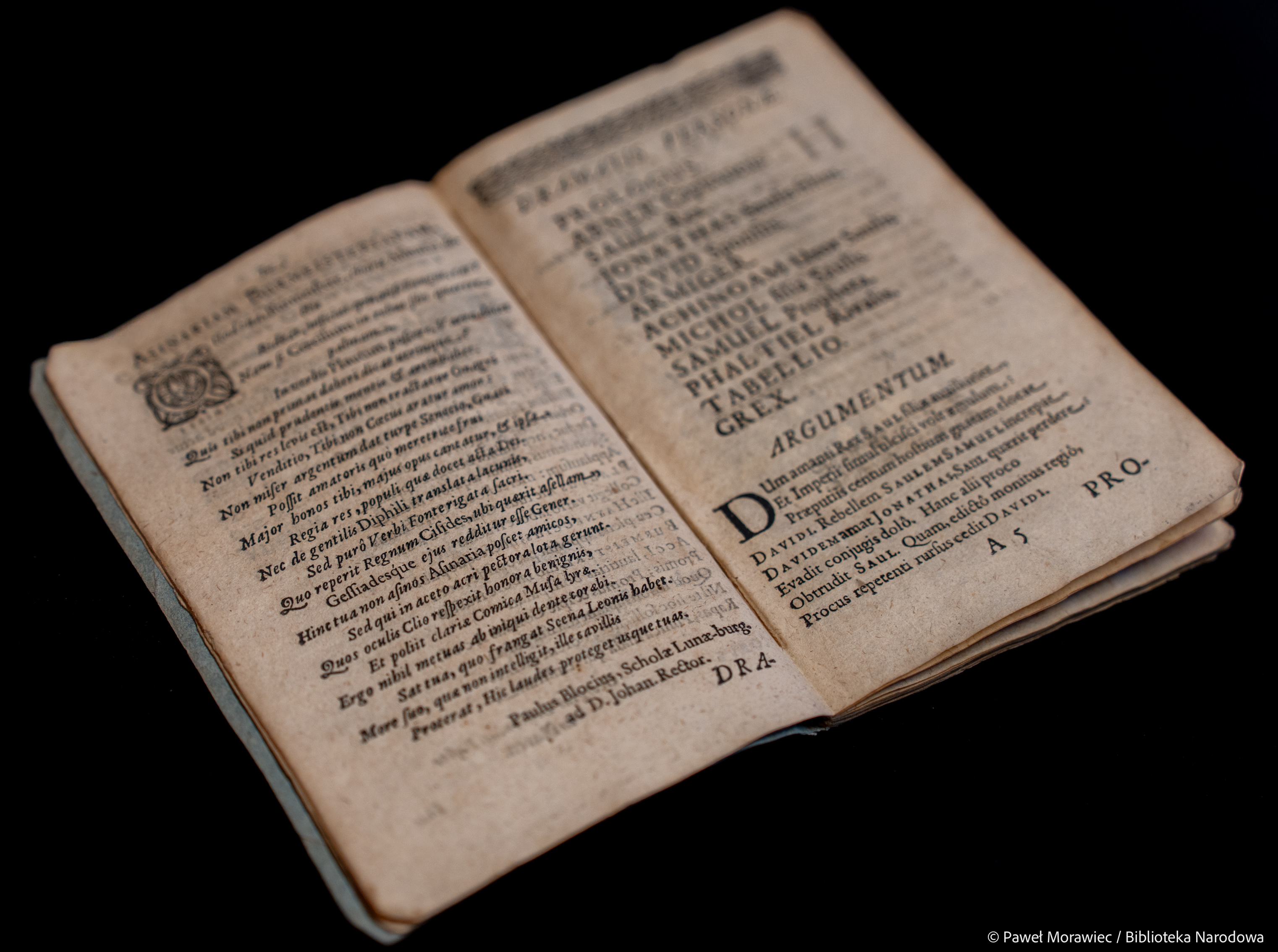
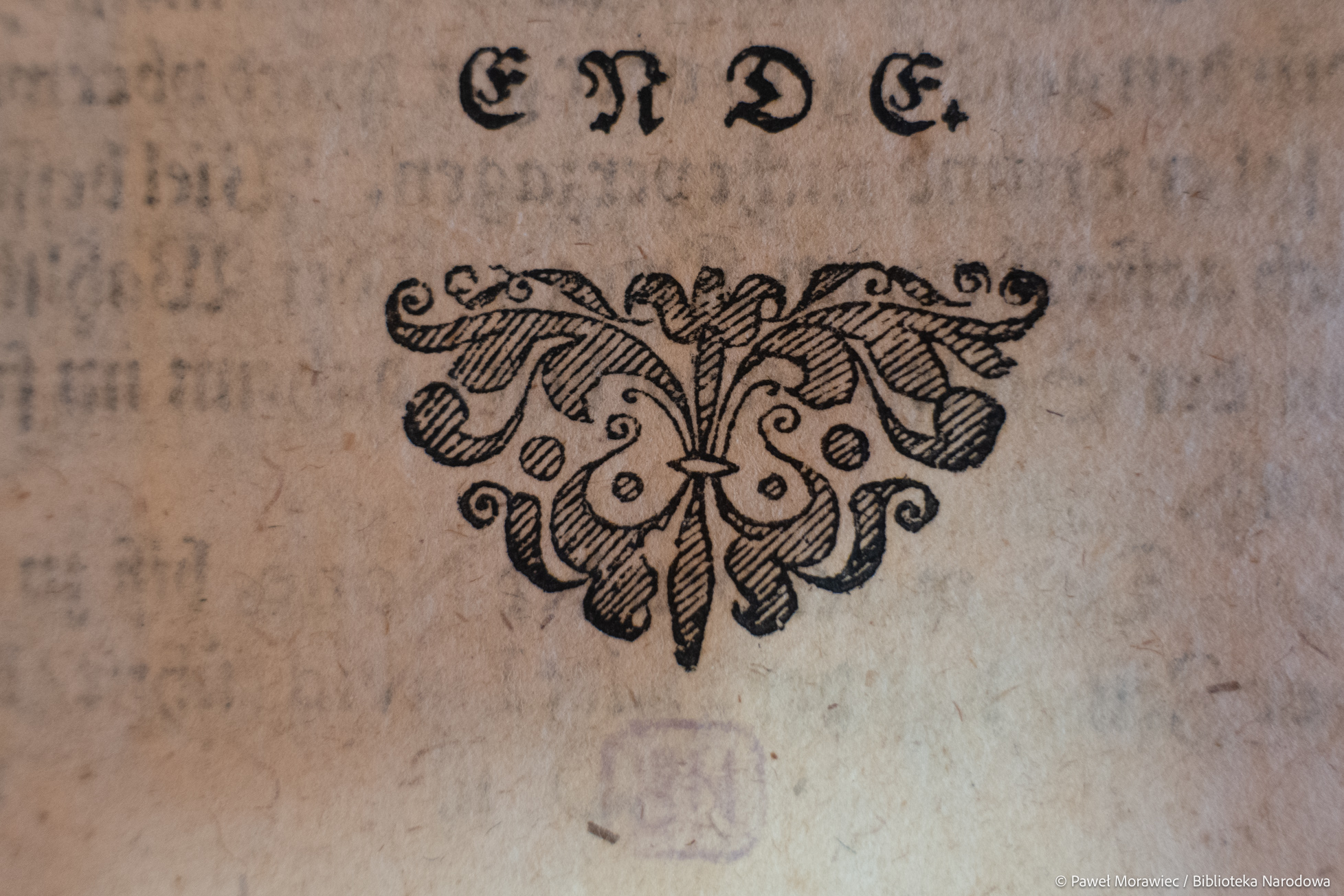
Burmeister’s literary work belongs to the humanist tradition of poetic imitation and contrafactum, in which the external form of classical works was adapted to convey Christian, particularly biblical, themes and motifs. This technique was first theoretically established as a distinct literary genre (parodia sacra) in the sixteenth century, notably in treatises by Henri Estienne and Julius Caesar Scaliger. From the mid-sixteenth century onwards, it was widely practised by both Protestant and Catholic authors.
In his Asinaria, published in 1625, Burmeister undertook the remarkable task of transforming one of Plautus’s most risqué comedies, known by the same title (“The Comedy of Asses”). In the Roman original, the plot revolves around a young man, Argyrippus, wishing to secure exclusive one-year access to services of the courtesan Philaenium, daughter of the procuress Cleareta, against a payment of twenty minae. He is assisted in this scheme by his father, Demaenetus, and the slaves Libanus and Leonida. The two slaves resort to trickery to obtain the money, while Demaenetus, though willing to help his son, makes his assistance conditional on being allowed to spend the first night with Philaenium. Eventually, the entire scheme is exposed, and Demaenetus must face the wrath of his wife, Artemona. Plautus’s Asinaria thus combines deception, sexual bargaining, generational conflict and the reversal of social roles, all characteristic features of Roman comedy.
These elements of the original, together with its social and moral setting and the distinctive qualities of Plautus’s language, illustrate the formidable challenge of adapting the comedy to the requirements of Lutheran didactic and moral literature. Burmeister transposed the plot into a biblical setting, combining the structure of Asinaria primarily with the story of David, Saul and Michal from the First Book of Samuel. The transaction involving a courtesan is replaced by David’s marriage to Michal, Saul’s daughter, while the monetary demand in Plautus’s comedy becomes Saul’s biblical requirement that David provide the foreskins of Philistines.
In 1 Samuel 18, Saul demands one hundred Philistine foreskins from David, hoping that the young man will be killed in battle. David, however, obtains two hundred and presents them to the king. In Burmeister’s adaptation of Asinaria, this episode becomes one of the principal points of connection between Plautus’s plot and the biblical narrative. The sexual and financial transaction at the heart of the Roman comedy is thus transformed into a story of marriage, loyalty, royal hostility, and God’s plan for David.
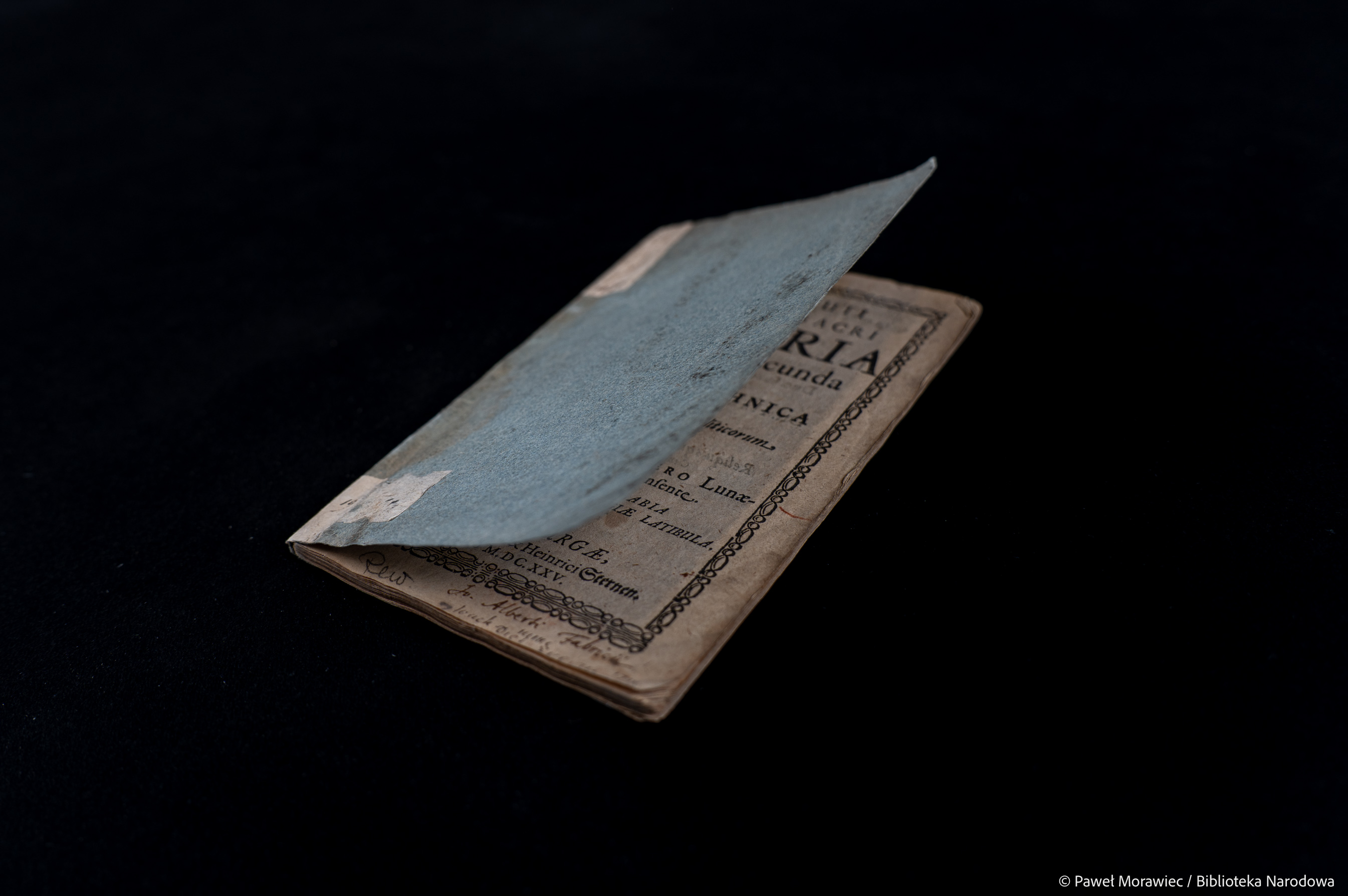
The book is remarkable not only for its content but also for its history, which is closely intertwined with that of Polish libraries. Ownership inscriptions have survived on the title page, making it possible to establish that the copy held by the National Library of Poland is the very one described in the 1738 catalogue of Fabricius’s library. Johann Albert Fabricius (1668–1736) was a bibliophile, classical philologist, and theologian who served as rector of gymnasium academicum in Hamburg. Following his death, his extensive collection of books was offered for sale in several parts, as documented by surviving auction catalogues from 1738 and 1739. The book subsequently entered the collection of his son-in-law, Joachim Dieterich Evers, a lawyer and professor at the same Akademisches Gymnasium, who also inscribed his name on the title page.
The book then passed into the possession of Józef Załuski (1702–1774), as indicated by the characteristic red-chalk underlining of the first letter of the author’s surname on the title page, as well as a three-letter notation at the top of the page, possibly reading “i ed. D”. Józef Załuski marked his books according to a distinctive classification code, in which the letter “D” denoted drama as a literary genre.
By Załuski’s time, the work must already have been confined to a simple pamphlet binding, which has survived to the present day. Earlier, possibly even before it came into Fabricius’s possession, it may have formed part of a bound volume containing several works. This is suggested by traces of old flat binds on the front cover and a cropped numeral “2” at the bottom of the title page.
The book was undoubtedly part of the Załuski Library, Poland’s first national library and one of the largest libraries in Europe, as evidenced by old shelfmarks on the verso side of the front cover and two labels attached to the spine. The work shared the tragic fate of this library, which, following the Third Partition of Poland, was seized and transported to St Petersburg on the orders of Empress Catherine II.
Its presence in the Imperial Public Library in St Petersburg during the nineteenth century is confirmed by an unfilled shelfmark label on the inside of the front cover, characteristic of the period when Modest Korf served as director (1849–1861). The copy of Asinaria returned to Poland as part of the restitution of cultural property under the provisions of the Treaty of Riga, implemented between 1923 and 1934, as confirmed by a pencil inscription in the book.
Fortunately, the book survived the Second World War. Unlike the manuscripts and early printed books from the pre-war National Library’s collections that were of greatest importance to Polish culture, it was not transferred by the Germans in 1941 to the Krasiński Library building on Okólnik Street. It is almost certain that, as a foreign-language printed work, it remained at the University of Warsaw Library throughout the war.
The collections stored at the Krasiński Library were burned by German troops, a tragedy commemorated to this day by the urn containing the ashes of books, displayed at the Palace of the Commonwealth.
Professor Michael Fontaine of Cornell University in the United States, a scholar specialising in the works of Joannes Burmeister, has been informed of the discovery of this unique copy in the collections of the National Library of Poland. He plans to undertake further in-depth research into Asinaria.
The complete work, which has survived to the present day not only through a fortunate combination of circumstances but also thanks to the foresight and care of generations of librarians, can be viewed in the Polona digital library.
We also encourage readers to explore the article Sacrum na sterydach. Wielkie odkrycie w Bibliotece Narodowej (The Sacred on Steroids: A Major Discovery at the National Library), published in the Polish weekly Polityka.