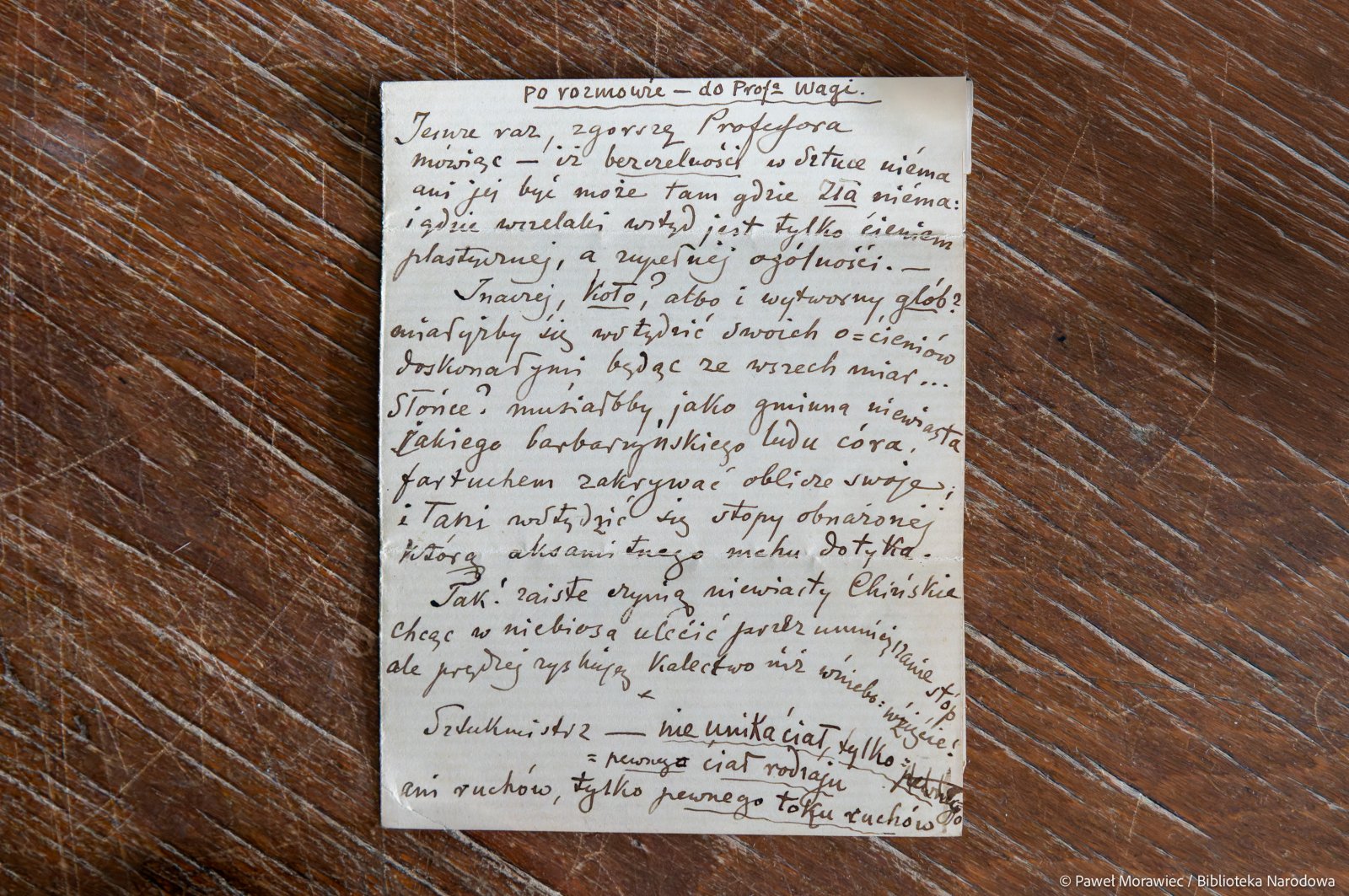
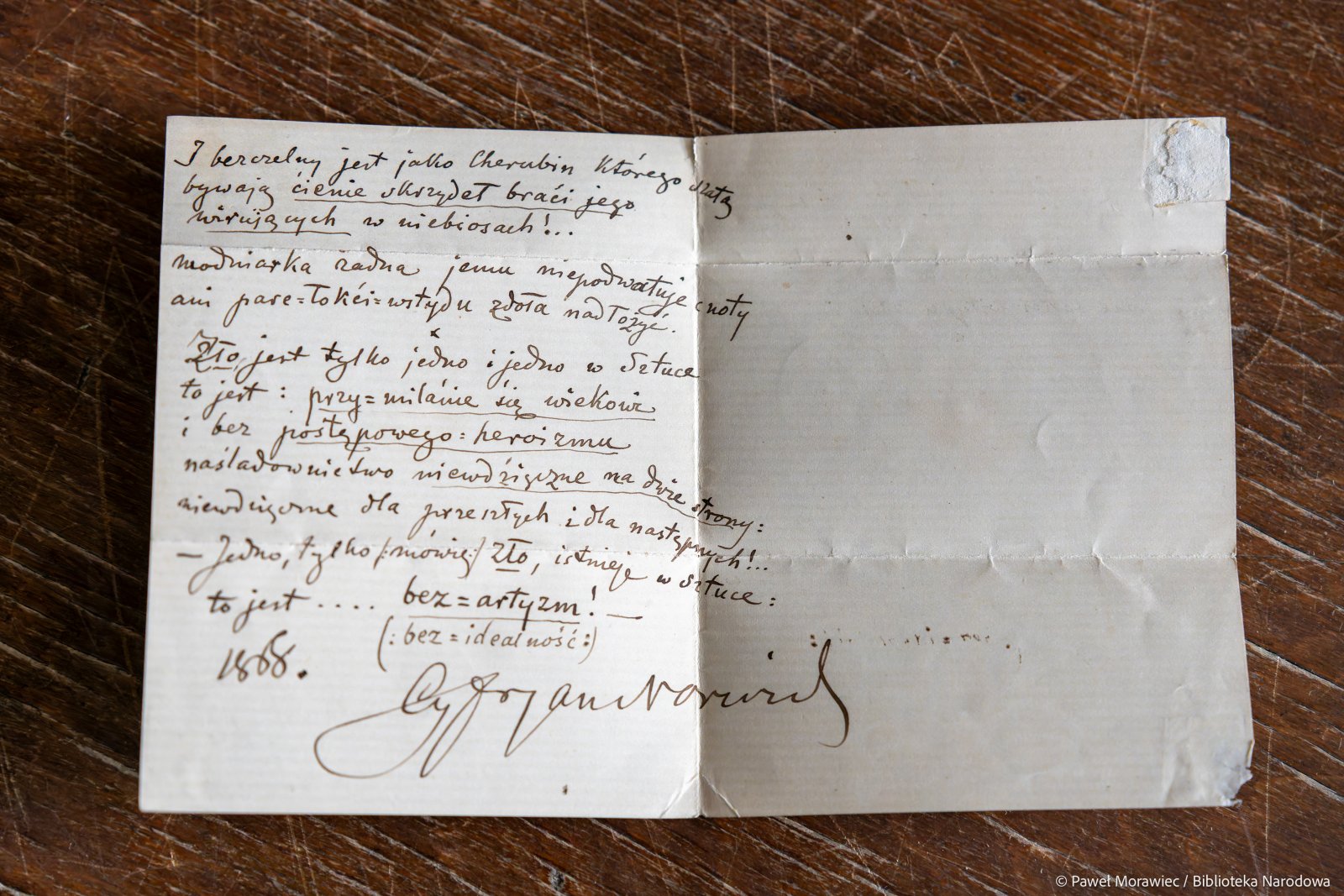
There is no such thing as indecency in art. A previously unknown letter by Cyprian Kamil Norwid acquired for the National Library
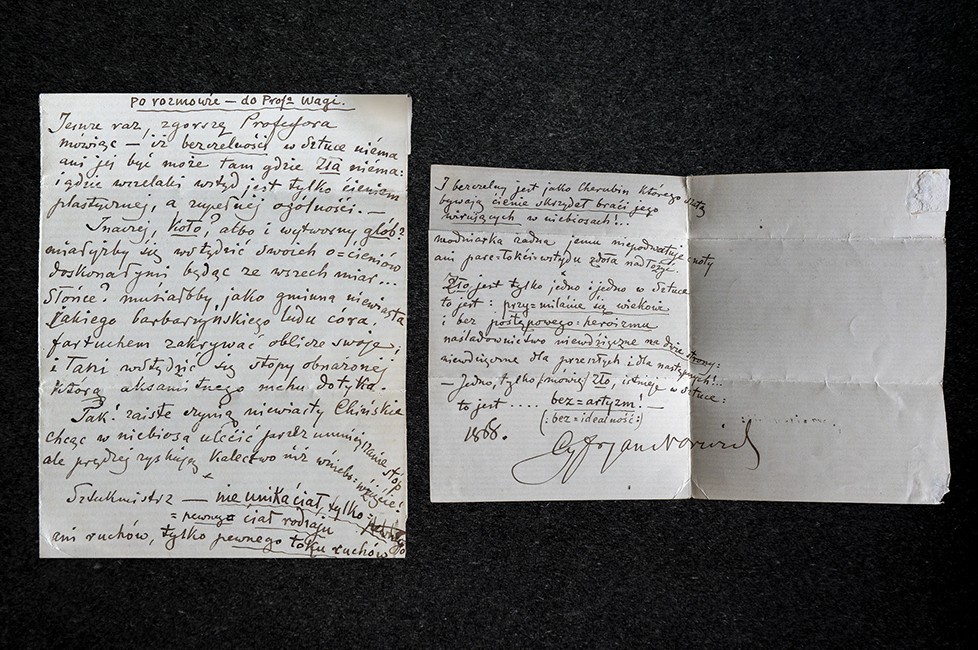
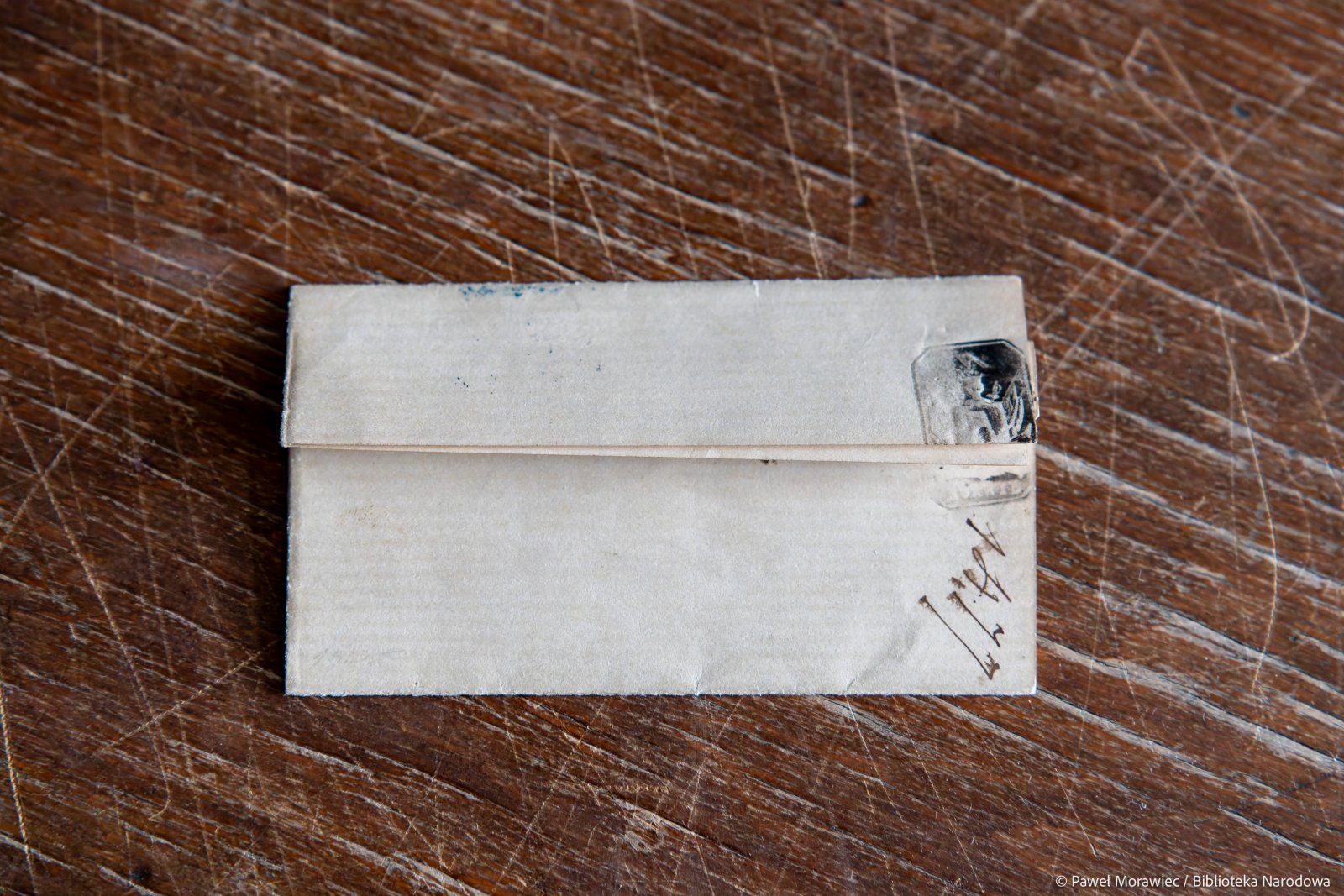
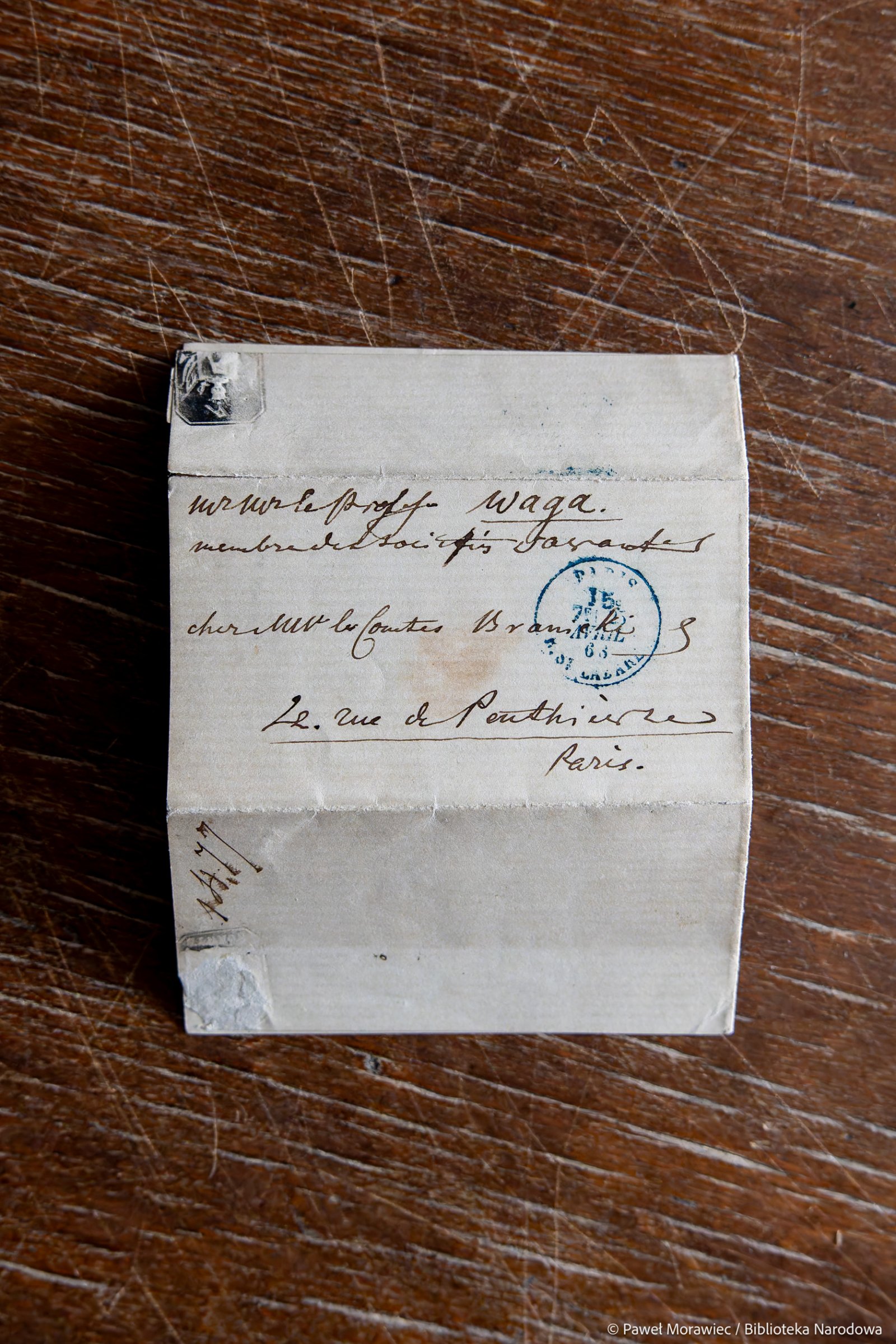
The National Library has acquired a previously unknown letter from Cyprian Norwid to Antoni Waga, an eminent naturalist and former teacher of the poet. The discovery is of considerable significance for research into Norwid’s life and work.
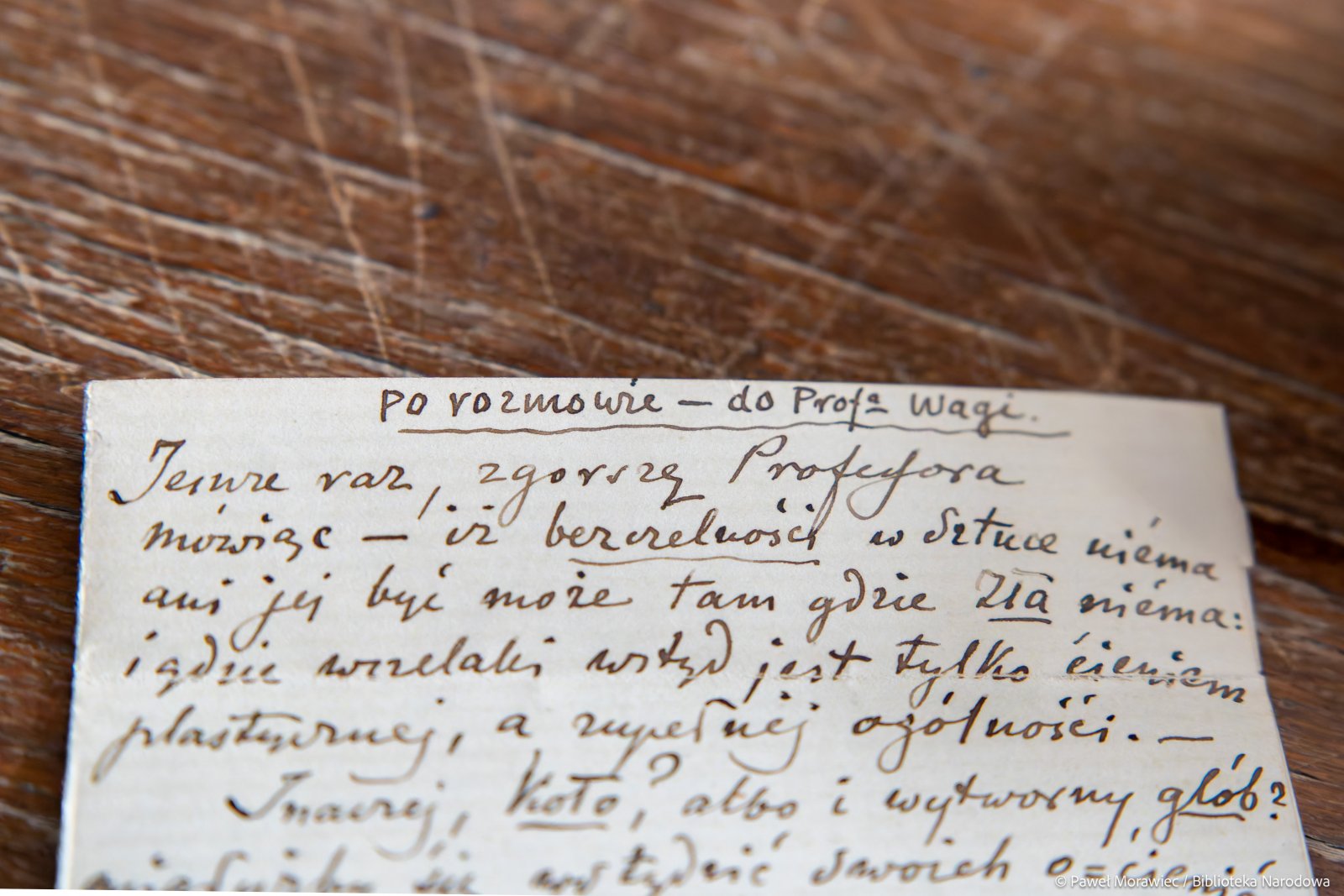
Norwid opens the letter with the assertion: “There is no such thing as indecency in art.” He goes on to say: “The artificer shuns not bodies, but a certain kind of body; not movements, but a certain manner of movement.”
He states emphatically: “There is but one evil, one alone, in art: courting the favour of the age and, without the heroism of progress, indulging in imitation that is doubly ungrateful: ungrateful to those who came before and ungrateful to those who are yet to come!”
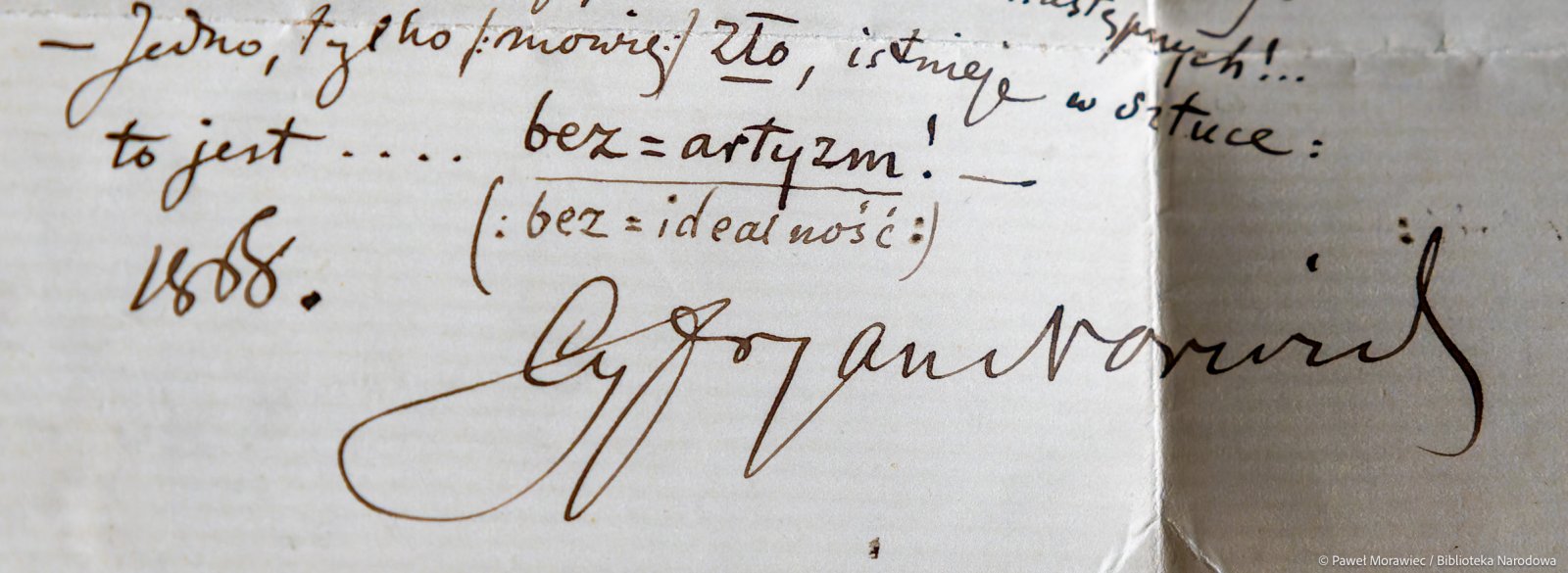
He concludes: “One evil alone, I say, exists in art: it is… non-artistry!”
Professor Karol Samsel, a specialist in Norwid’s work and the author of an expert report for the National Library, notes that the text is unusual in its genre. It is essentially a commentary on a conversation between Norwid and Waga, or a continuation of that conversation in writing. Under what circumstances might the conversation have taken place? Samsel suggests that Norwid, having misunderstood Waga on this occasion, was hoping for financial support from Branicki for his work on the painting The Vision of Saint Stanislaus Kostka. It soon became clear that no such support would be forthcoming, but the unfortunate misunderstanding may have prompted Waga to meet Norwid in person to clear it up. “Norwid extends an invitation to visit his studio” – the invitation was addressed to Branicki, but it was Waga who came. The newly discovered text, now in the collection of the National Library, appears to document a conversation between the two men that evidently turned to artistic matters.
Antoni Waga (1799-1890), an eminent entomologist and ornithologist, taught Norwid at the Practical and Pedagogical Secondary School on Leszno Street in Warsaw. In 1866-67, he accompanied Counts Konstanty and Aleksander Branicki on scientific expeditions to the Iberian Peninsula and Algeria. Norwid dedicated a poem entitled Waga to his former teacher. The Branicki brothers, collectors, travellers and enthusiasts of the natural sciences, took part in numerous scientific expeditions and provided financial support for their organisation.
Until now, only a handful of letters from Norwid to Antoni Waga were known, dating from 1860 and 1867. The newly acquired manuscript is not recorded in the latest edition of Norwid’s Complete Works (Letters, vols. 2-4, edited by Jadwiga Rudnicka, Lublin-Warsaw, 2016-2022).
The purchase of this exceptionally valuable manuscript was made possible by a financial donation from Krystyna Piórkowska, who for many years has generously supported the National Library in building and enriching its collections.
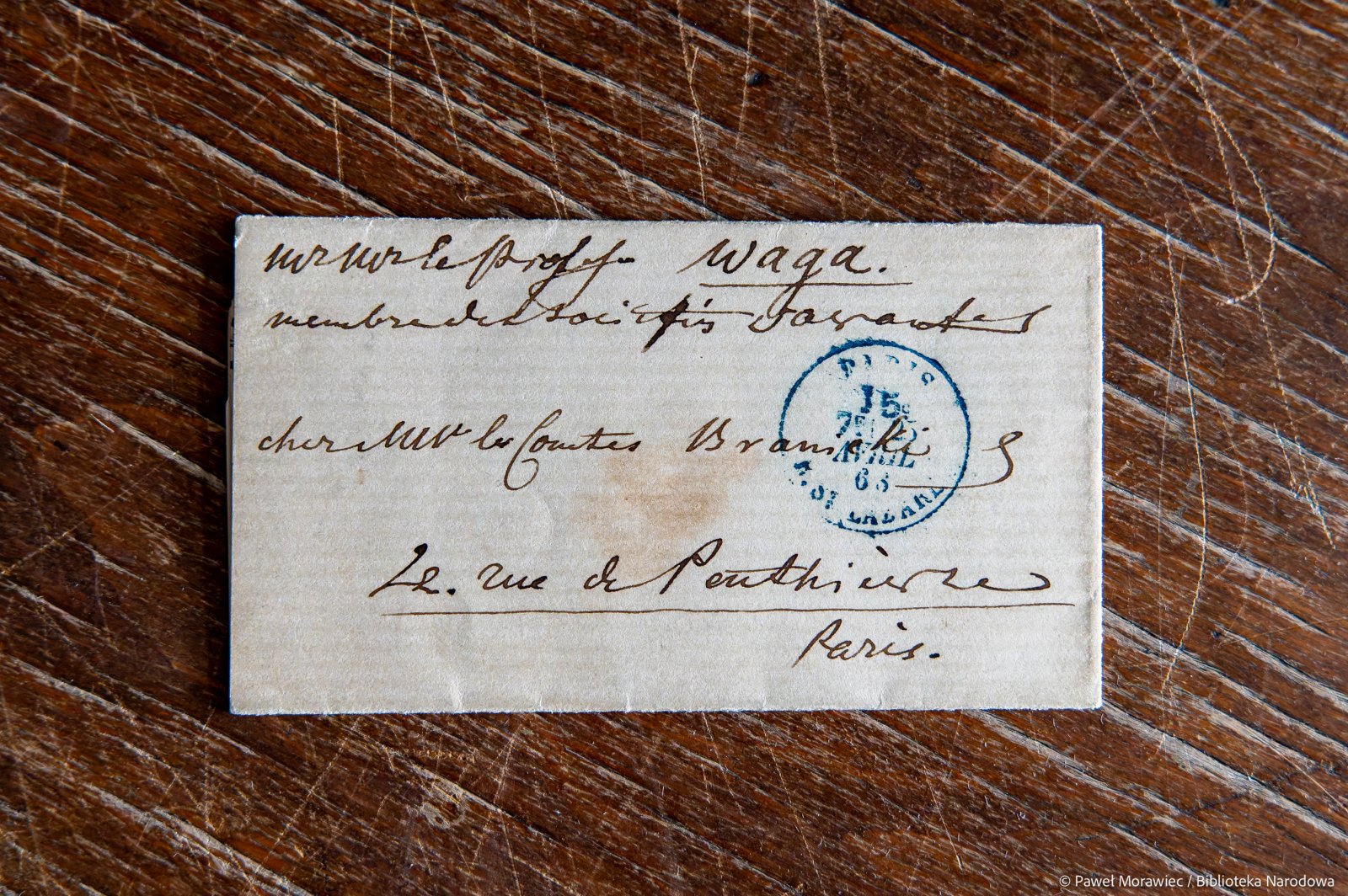
A discovery of major significance
The manuscript was examined by Professor Karol Samsel, Norwid scholar and lecturer at the University of Warsaw, whose publications include Norwid – Conrad: Epic in the Perspective of Modernism and The Invalid of Intention: Studies on Norwid. Samsel confirms the authenticity of the text and highlights its scholarly value. He regards the finding of a previously unknown letter by the poet as a discovery of major significance. He draws particular attention to Norwid’s characteristic neologisms, the distinctive graphic features of the text and his reflections on the nature of art, the duties of the artist and heroism. The newly discovered text thus provides valuable insights into the poet’s aesthetic views and his thinking on the role of the creative artist.
Examination of the manuscript
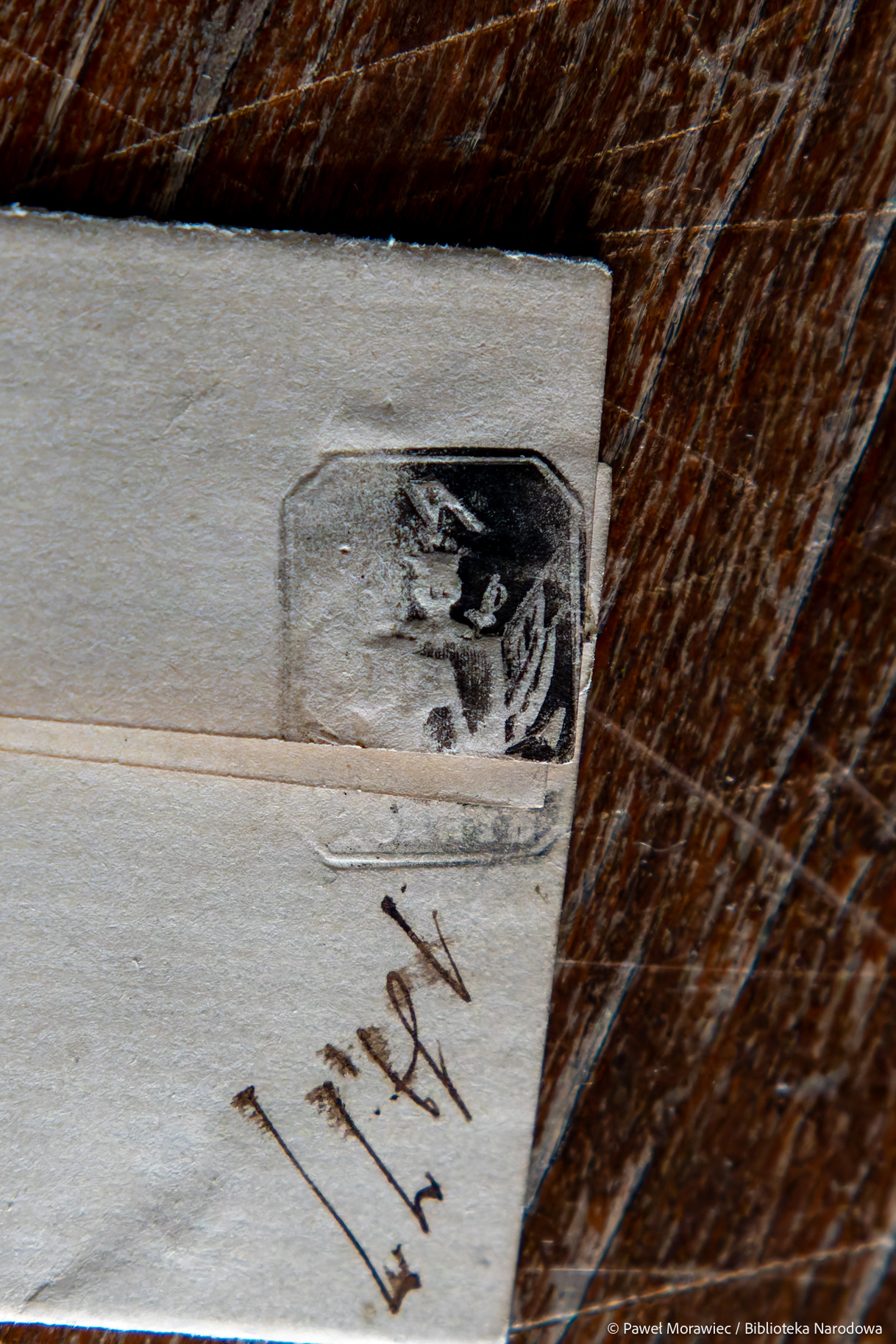
In October 2026, the collector and philatelist Przemysław Jerzy Lasek offered the National Library the opportunity to purchase a letter attributed to Cyprian Norwid. Norwid’s authorship of the manuscript was confirmed by Anna Romaniuk, Head of the National Library’s Manuscripts Department, on the basis of extensive comparative material from the collections of the National Library and other institutions holding autograph manuscripts by the poet. The manuscript was also examined by Justyna Król-Próba, Head of the National Library’s Institute for the Conservation of Library Collections. She found it to be in good condition, noting only minor damage attributable to its age and the way in which the letter had been folded.
Acquired thanks to the generosity of Krystyna Piórkowska, the letter is an exceptionally valuable addition to the National Library’s manuscript collections relating to the life and work of Cyprian Kamil Norwid. A digital collection of his works is available in the Polona digital library, while selected works can be seen in the permanent exhibition at the Palace of the Commonwealth.
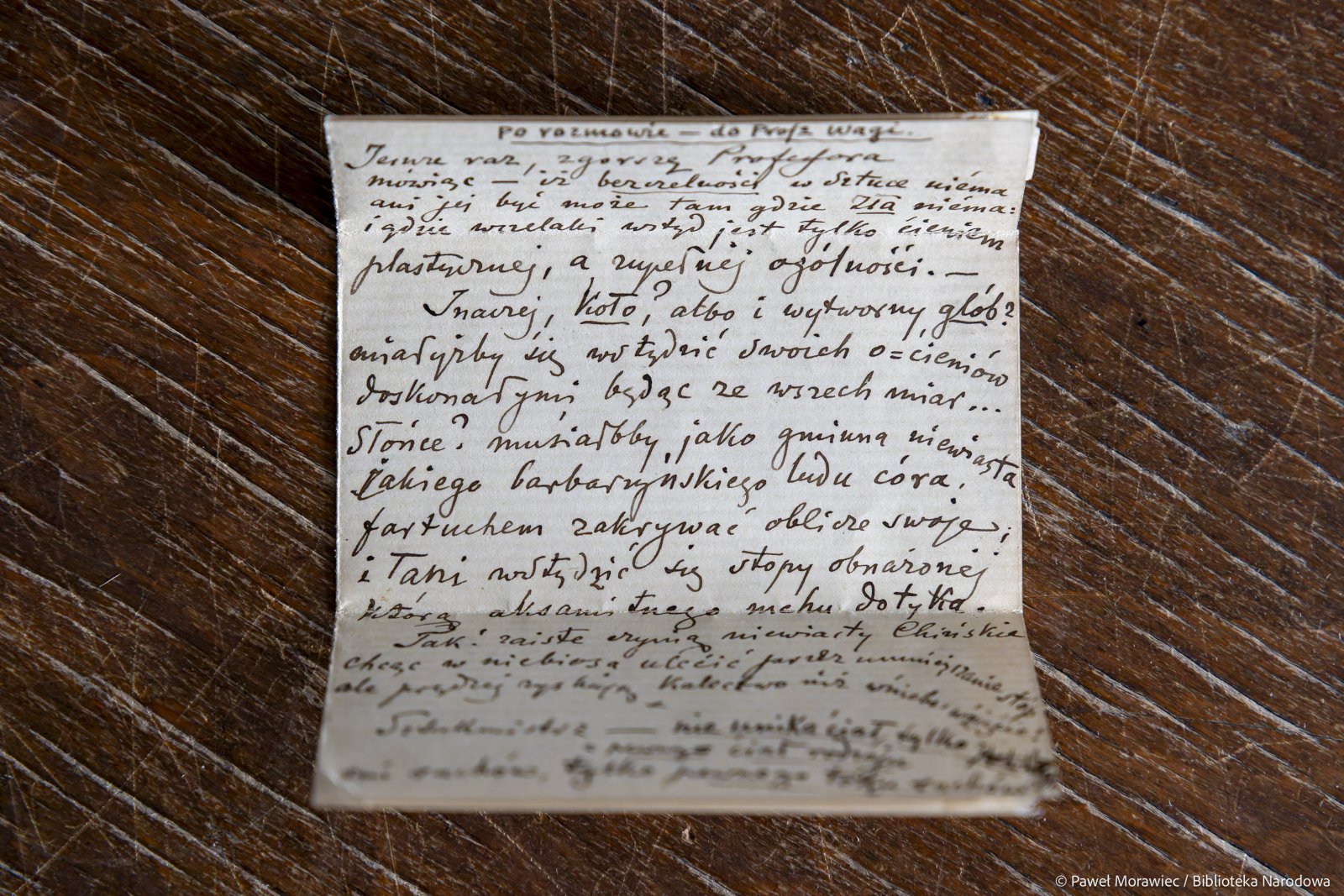
The letter in full
fol. 1r
Following our conversation – to Prof. Waga
Once again, I shall scandalise the Professor by saying – that there is no such thing as indecency in Art, nor can indecency exist where there is no Evil: and where all shame is but the shadow of a plastic and complete universality. –
Otherwise, should a circle? or even an exquisite sphere? be ashamed of their curving contours, perfect as they are in every respect…? The Sun? Like a woman of the common people, a daughter of some barbarous nation, it would have to hide its face with its apron, and the hind would have to be ashamed of the bare foot with which she touches the velvety moss.
Yes! Indeed, this is what Chinese women do, hoping to soar to heaven by diminishing the size of their feet. But they will sooner attain deformity than assumption into heaven!
The artificer – shuns not bodies, but = a certain = a certain kind of body; not movements, but a certain manner of movement
fol. 1v
And he is as indecent as a Cherub whose raiment is sometimes formed by the shapes of the wings of his brethren whirling in the heavens!..
No dressmaker can pad his virtue, nor add a few=ells=of=shame.
There is but one Evil, one alone, in Art: courting the favour of the age and, without the heroism of progress, indulging in imitation that is doubly ungrateful: ungrateful to those who came before and ungrateful to those who are yet to come!..
– One Evil alone /:I say:/ exists in Art: it is… non-artistry! – (: non-ideality:)
1868.
Cypryan Norwid