Mały karuzel
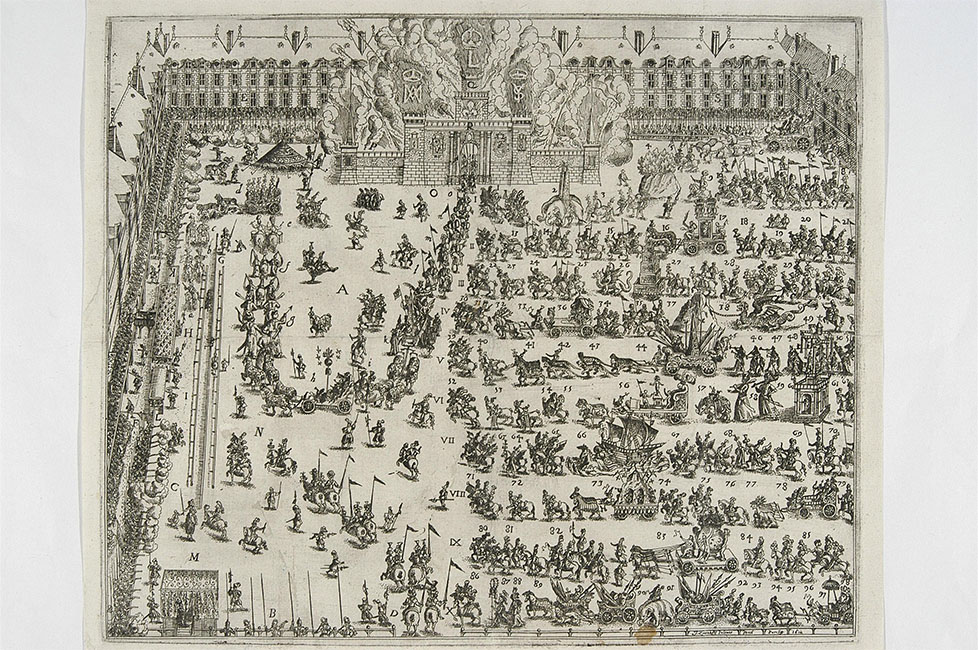
Jan Ziarnko, Karuzel na Place Royale (mały)
Wykonana przez Jana Ziarnkę w roku 1612 akwaforta przedstawia uroczysty pochód na dziedzińcu Palais Royal w Paryżu, który odbył się z okazji ogłoszenia podwójnego mariażu:Ludwika XIII z Anną Austriaczką i młodszej siostry Delfina – Elżbiety z przyszłym władcą Hiszpanii Filipem IV. Zaaranżowane z powodów politycznych małżeństwa mogły być faktycznie zawarte dopiero kilka lat później (w roku 1612 przyszli małżonkowie mieli zaledwie od 7 do 11 lat), lecz wzmocnienie zawartego między Francją i Hiszpanią sojuszu wymagało natychmiastowego i szerokiego rozpowszechnienia informacji potwierdzającej siłę aliansu. Okazała rycina ma więc wybitnie propagandowy charakter i z pewnością należy do najbardziej spektakularnych prac Ziarnki. Trwający trzy dni karuzel to widowisko łączące paradny wjazd rycerstwa z popisami turniejowymi i występami artystycznymi zawierającymi elementy teatralne, baletowe i jeździeckie. Uroczystość zaplanowana z wielkim rozmachem miała olśnić zarówno zgromadzoną szlachtę, ambasadorów, zaproszonych gości, jak i ludność Paryża. Z kolei drukowane opisy, relacje i afisze miały wieść o traktacie uczynić powszechnie znaną w całej Europie. Huczne obchody inaugurowały jednocześnie nową przestrzeń miejską – paryski Plac Królewski (obecnie Place des Vosges), po raz pierwszy sytuując tego typu królewskie uroczystości poza murami Luwru. Jest to druga redakcja tematu dotyczącego wydarzenia, którego artysta był niewątpliwie bezpośrednim świadkiem. Ujęcie sceny z góry i nieznaczne przesunięcie z osi kadru sugeruje, że artysta szkicując kompozycję znajdował się na jednym z poddaszy bliżej zachodniej pierzei placu. Wśród uwiecznionych elementów uroczystości widzimy iluminację budowli i pokaz sztucznych ogni, kolejne grupy postaci, alegoryczne wozy i ruchome machiny tworzące barwny korowód. Scenariusz wydarzenia osnuto na motywach tekstów klasycznych i legend arturiańskich o Rycerzach Chwałybroniących Pałacu Szczęśliwości. Na dziedziniec kolejno wchodziły zastępy złożone z ubranych w jednolite stroje trębaczy, piechurów prowadzących konie i konnych paziów. Po nich pojawiały się egzotyczne lub mityczne zwierzęta: słonie, lamparty bądź jednorożce, które poprzedzały wjazd ozdobnych wozów (w formie rydwanów, a nawet okrętów). Na końcu zjawiali się rycerze – przedstawiciele najznakomitszych rodów Francji. Każda z grup powiązana była z konkretnym programem alegorycznym i zaprojektowana tak, by kolory i elementy strojów oraz dekoracje machin i wozów triumfalnych stanowiły spójną całość, na przykład Rycerzom Słońca towarzyszyły motywy solarne: słonie, żołnierze w strojach afrykańskich, wóz z Apollem i muzami oraz kareta Słońca.
Jan Ziarnko, rytownik pochodzący ze Lwowa, działał w Paryżu od roku 1608, dokumentującwydarzenia na dworze królewskim, np. Posiedzenie Stanów Generalnych w 1614 roku. Sygnował swoje prace jako: Jan Ziarnko, Polonus, Leopoliensis lub Jean le Grain. Tworzył ryciny w technice akwafortowej oraz miedziorytniczej, frontyspisy do książek, ilustracje do Biblii, znaki heraldyczne i portrety.
Rycina zakupiona w roku 1994.
Zobacz obiekt online w bibliotece cyfrowej polona.pl.
Jan Ziarnko, Carousel at the Place Royale (small)
Etching by Jan Ziarnko, created in 1612. The work depicts a ceremonial procession at the Place Royale in Paris on the occasion of the announcement of a double marriage: of the Dauphin Louis XIII to Anne of Austria, and of the Dauphin’s younger sister Elisabeth to the future Spanish ruler Philip IV. Although the politically arranged marriages could not actually take place until a few years later – in 1612, the future spouses were between just seven and 11 years old –strengthening the alliance between France and Spain required immediate widespread dissemination of the news. This impressive etching, with its clearlypropagandistic message, is one of Ziarnko’s most spectacular works.
The three-day “carousel” was a spectacle combining the ceremonial entry of the Knights with tournament displays and artistic performances, including elements of theatre, ballet and horsemanship. The ceremony was planned on a grand scale to dazzle the assembled nobility, ambassadors, invited guests and the people of Paris. Printed descriptions, reports and posters were designed to publicise the alliance throughout Europe. The lavish celebrations also marked the opening of a new urban space – the Place Royale (now Place des Vosges) in Paris, taking this type of royal ceremony outside the walls of the Louvre for the first time.
This is the second version of the composition illustrating the event, which the artist undoubtedly witnessed firsthand. The bird’s-eye view and slightly off-centre perspective suggest that he sketched the composition from one of the attics towards the western side of the square. Among the elements of the celebration that have been captured, we can see the illumination of the building and the fireworks display, as well as groups of figures, allegorical chariots and moving machines, all forming a colourful procession.
The event was based on classical texts and Arthurian legends about the Knights of the Round Table defending the Palace of Happiness. Processions of trumpeters in uniform, infantrymen leading horses and mounted pages entered the courtyard one after the other. They were followed by exotic or mythical animals: elephants, leopards or unicorns, which preceded a procession of ornate carriages in the form of chariots or even ships. At the end of the procession, the Knights, representing the leading French families, entered the square. Each group was associated with a specific allegorical theme and designed in such a way that the colours and elements of the costumes as well as the decorations of the machines and triumphal chariots formed a coherent whole. For example, the Knights of the Sun were accompanied by elephants, soldiers in African costumes, a chariot with Apollo and the Muses, and a Sun Chariot.
Jan Ziarnko, an etcher from Lviv, was active in Paris from 1608 onwards, documenting events at the royal court such as the meeting of the Estates General in 1614. He signed his works variously as Jan Ziarnko, Polonus, Leopoliensis and Jean le Grain. He produced etchings using aquaforte and copperplate techniques, frontispieces for books, illustrations for Bibles, heraldic signs and portraits.
Purchased in 1994.