Srebrna oprawa
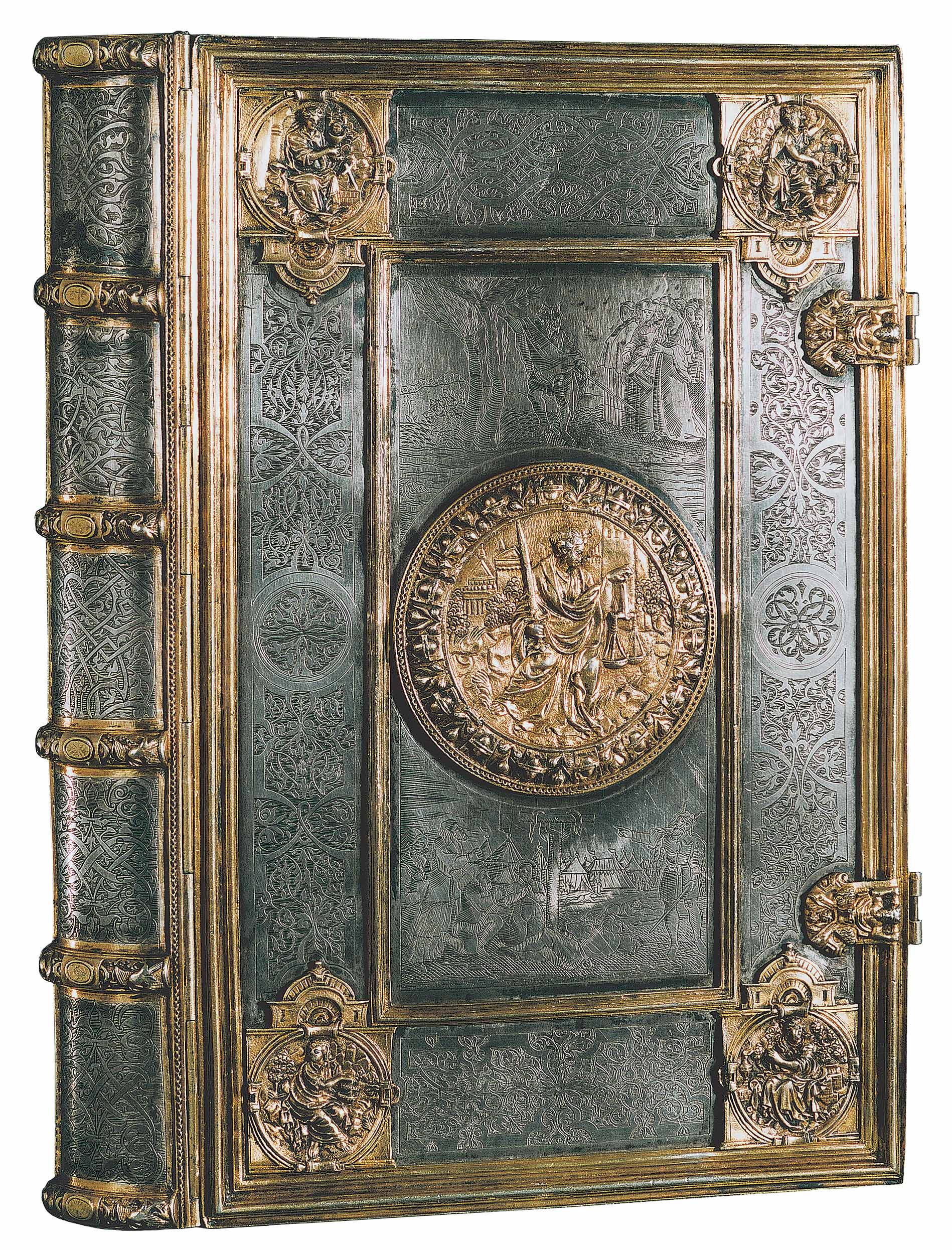
Oprawa ze srebrnej biblioteki Księcia Albrechta
Arcydzieło renesansowego złotnictwa. Mianem Srebrnej Biblioteki określa się kolekcję druków, którą książę pruski Albrecht Hohenzollern polecił uświetnić przez wykończenie okładzin wyrobami rzemiosła artystycznego z drogocennych kruszców.
Prezentowaną oprawę z około 1555 roku wykonał złotnik z Bazylei Paul Hoffmann. Deski i grzbiet pokrył srebrną blachą, do wypukłych elementów wykorzystał złoto. W środku okładziny górnej znajduje się plakieta z alegorią Sprawiedliwości. Powyżej i poniżej niej sceny ze Starego Testamentu, w których występuje Mojżesz – proroka można poznać po rogach na głowie, jak często był przedstawiany w średniowieczu i wczesnej nowożytności. W narożnikach – plakietki z alegoriami Wiary, Cierpliwości, Umiarkowania i Nadziei. Okładzina dolna z plakietą ze śpiącym amorem, a w narożnikach plakietki z alegoriami Nadziei, Męstwa, Miłości i Sprawiedliwości.
Srebrna Biblioteka należała do Biblioteki Państwowej i Uniwersyteckiej w Królewcu. W 1943 roku jej zbiory ewakuowano z miasta i uległy rozproszeniu. Księga przepadła, ocalała oprawa trafiła do zbiorów Biblioteki Narodowej.
Zobacz obiekt online w bibliotece cyfrowej polona.pl.
Book binding from the silver libr ary of Duke Albrecht of Prussia
A masterpiece of Renaissance goldsmith - ing. The “Silver Library” is the name given to the collection of prints for which Duke Albrecht Hohenzollern of Prussia had artistic cover decorations made of precious metals.
The binding dates from around 1555 and was made by the Basel-based goldsmith Paul Hoffmann. He covered the boards and the back of the volume with silver sheeting and used gold for the reliefs. In the centre of the upper cover is a plaque showing an allegory of justice. Above and below it are scenes from the Old Testament featuring Moses, who can be recognised by the horns on his head, common in medieval and early modern depictions of the prophet. In the corners are plaques showing allegories of faith, patience, temperance and hope. The lower cover features a plaque with a sleeping cupid, and in the corners are further plaques containing allegories of hope, fortitude, love and justice.
The Silver Library belonged to the State and University Library in Königsberg. In 1943 the collection was removed from the city and dispersed. The book itself was lost, but the binding survived and became part of the collection of the National Library of Poland.