Faraon
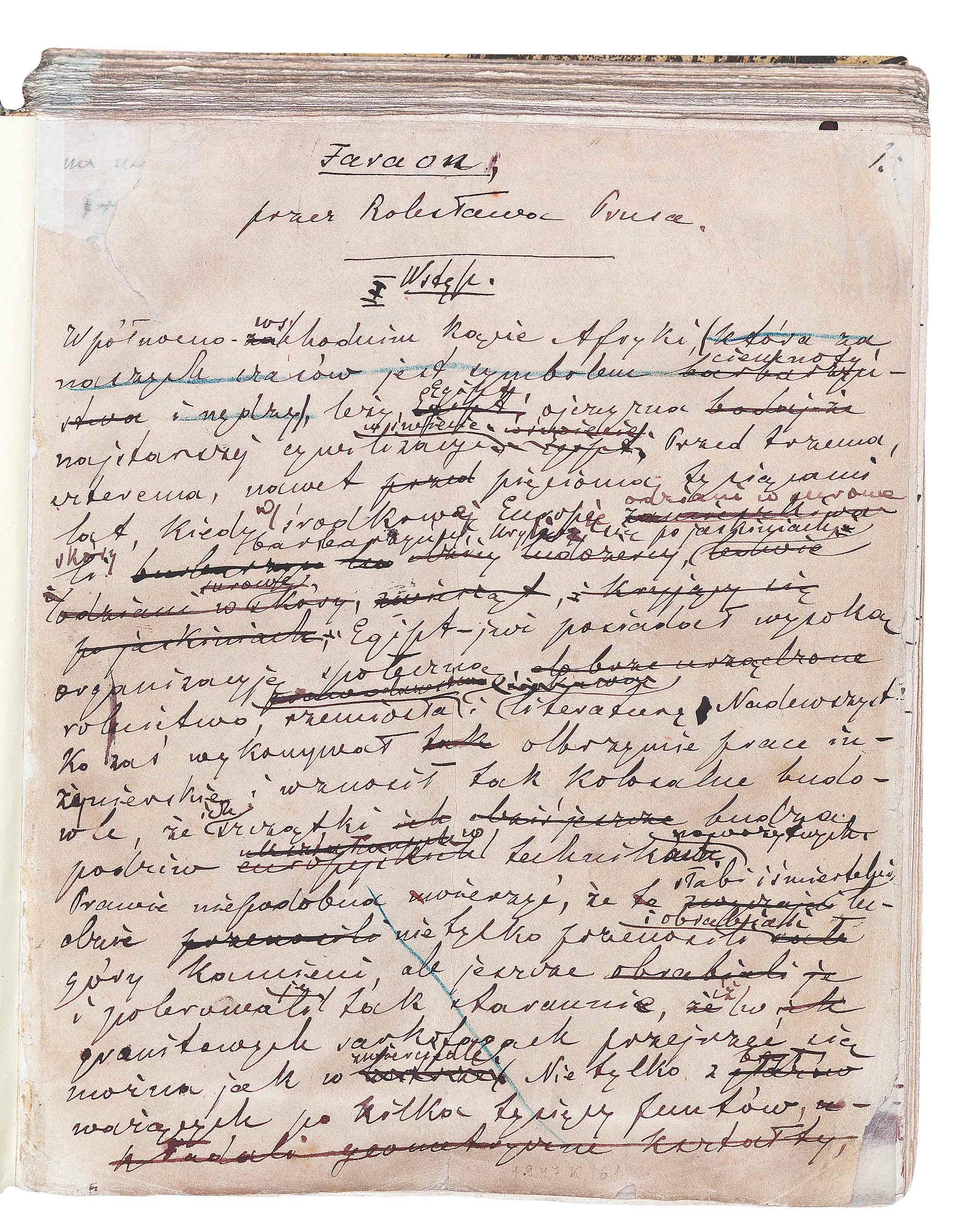
Bolesław Prus, Faraon, [1894-1895]
Autograf powieści historycznej z czasów starożytnego Egiptu autorstwa mistrza prozy realistycznej. Prus w swoim utworze ukazuje zmagania młodego władcy-żołnierza Ramzesa XIII z władzą kapłanów, opartą na sile i wiedzy. Brak doświadczenia politycznego, porywczość i lekceważenie wiedzy, jaką dysponowali kapłani, doprowadziły do śmierci młodego faraona i objęcia tronu przez arcykapłana Herhora.
Pierwotnie powieść ukazywała się w odcinkach w „Tygodniku Ilustrowanym” w latach 1895–1896. Pierwsze wydanie wyszło w warszawskim wydawnictwie Gebethner i Wolff w roku 1897. Filmowa adaptacja w reżyserii Jerzego Kawalerowicza z Jerzym Zelnikiem w roli głównej miała miejsce w roku 1965. W prezentowanym rękopisie pierwszego tomu powieści widoczne są liczne poprawki. Mimo to z łatwością można odczytać pierwsze zdanie: „W północno-wschodnim kącie Afryki leży Egipt, ojczyzna najstarszej cywilizacyi w świecie”.
Rękopis pochodzi z archiwum wydawnictwa Gebethner i Wolff. Następnie był w posiadaniu historyka prof. Ludwika Kolankowskiego, który sprzedał go Bibliotece Narodowej w roku 1947.
Zobacz obiekt online w bibliotece cyfrowej polona.pl.
Bolesław Prus, Pharaoh
A manuscript copy of a historical novel set in ancient Egypt by Bolesław Prus, a master of realist prose, written in the author’s own hand. Prus portrays the struggles of the young ruler-soldier Ramses XIII against the power of the priests, in which Ramses draws on his own strength and knowledge. However, the young Pharaoh’s lack of political experience, impulsiveness and disregard for the knowledge of the priests lead to his death and to the High Priest Herhor assuming the throne.
The novel was originally published in 1895–96 in serial form in the weekly illustrated magazine Tygodnik Ilustrowany. The first edition was published by Gebethner & Wolff in Warsaw in 1897. A film adapta- tion, directed by Jerzy Kawalerowicz and starring Jerzy Zelnik, appeared in 1965. There are numerous corrections but the first sentence can still be read easily: “W północno-wschodnim kącie Afryki leży Egipt, ojczyzna najstarszej cywilizacyi w świecie” (“In the north-eastern corner of Africa lies Egypt, the home of the oldest civilisation in the world”).
The manuscript was initially in the archives of the publishers Gebethner and Wolff. It was later owned by the historian Professor Ludwik Kolankowski, who sold it to the National Library of Poland in 1947.