Krzyżacy
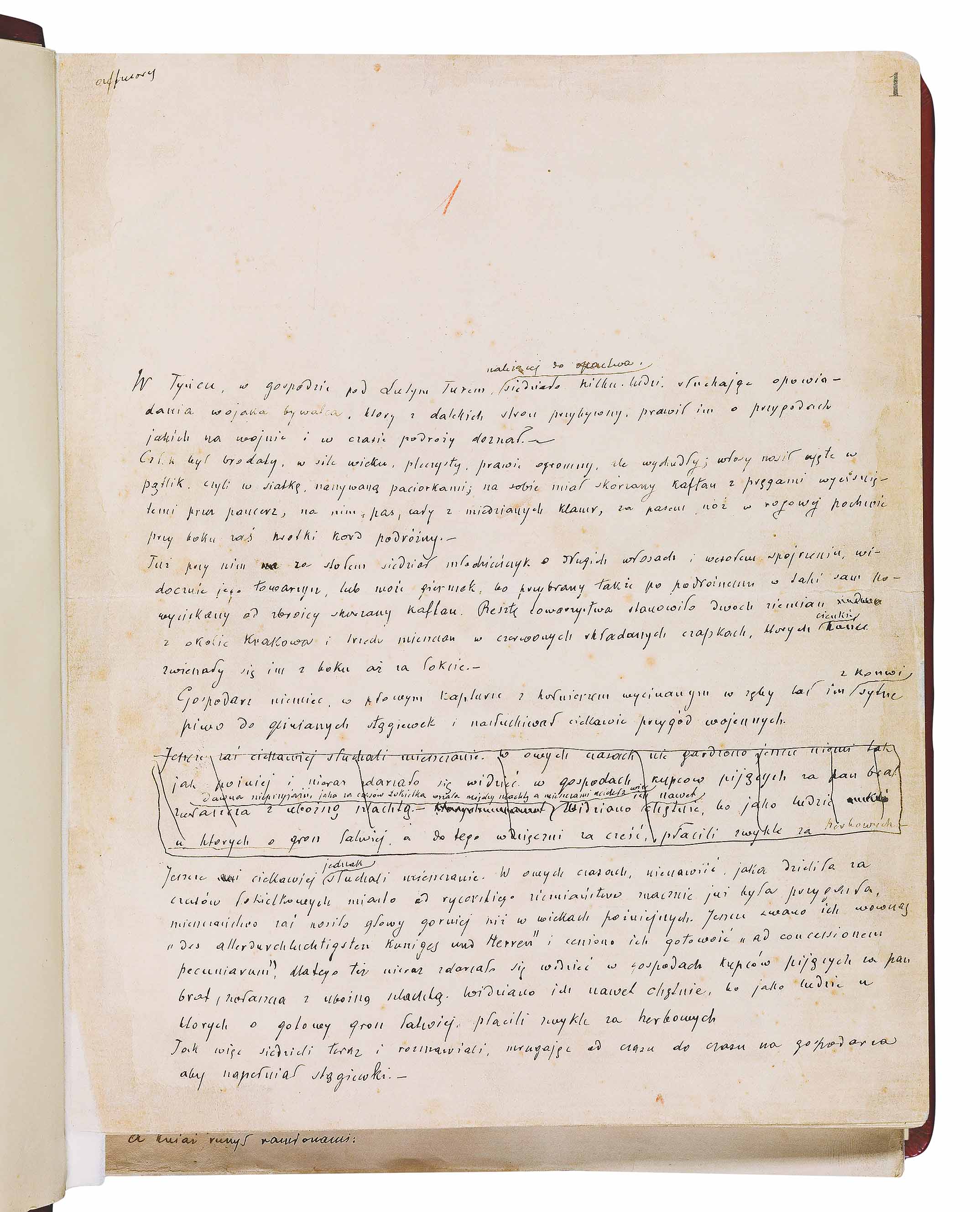
Henryk Sienkiewicz, Krzyżacy, [1896-1899]
Autograf jednej z najpopularniejszych polskich powieści, której akcja – obejmująca lata 1399–1410 – osnuta została wokół konfliktu polsko-krzyżackiego, zakończonego zwycięstwem wojsk Władysława Jagiełły pod Grunwaldem. Utwór był pomyślany jako protest przeciw germanizacyjnej polityce władz zaboru pruskiego.
Początkowo publikowana w odcinkach w „Tygodniku Ilustrowanym” w latach 1897–1900, osobno wydana w całości w roku 1900. Wielokrotnie wznawiana, doczekała się też ekranizacji w reżyserii Aleksandra Forda w roku 1960.
Rękopis wykorzystany przy pierwszym wydaniu w warszawskim wydawnictwie Gebethner i Wolff znalazł się w posiadaniu historyka prof. Ludwika Kolankowskiego, który w 1947 roku sprzedał go Bibliotece Narodowej. Posiadał on luki. Jedną z brakujących kart odnaleziono w BN w zbiorach Biblioteki Ordynacji Zamojskiej. Końcowa partia należała do znanego inżyniera Stefana Bryły, a w 1947 roku została podarowana BN przez wdowę.
Zobacz obiekt online w bibliotece cyfrowej polona.pl.
Henryk Sienkiewicz, The Knights Of The Cross
An autograph copy of one of the most popular Polish novels, the plot of which, covering the years 1399–1410, is set against the background of the Polish-Teutonic conflict, ending with the victory of Władysław II Jagiełło’s army at Grunwald. The work was intended as a protest against the policy of Germanization pursued by the Prussian authorities during the Partitions of Poland.
Initially published in serial form between 1897 and 1900 in the weekly illustrated magazine Tygodnik Ilustrowany, Sienkiewicz’s novel first appeared separately in its entirety in 1900. Reprinted many times, it was turned into a film by Polish director Aleksander Ford in 1960.
The beginning of the book describes a scene in the inn “Pod lutym turem” belonging to the Benedictine monks in Tyniec, where the reader is first introduced to the characters Maćko and Zbyszek of Bogdaniec. Additions and deletions made during the initial editing process can be seen in the text.
This copy of the manuscript was used as the basis for the first edition by the Warsaw publishing house Gebethner and Wolff. It was previously in the possession of the historian Professor Ludwik Kolankowski, who sold it to the National Library of Poland in 1947. The manuscript had a number of missing pages, one of which was found at the National Library in the collection from the library of the Zamoyski family fee tail. The final section of the manuscript belonged to the well-known engineer Stefan Bryla and was donated to the National Library of Poland by his widow in 1947.