Przesłanie Pana Cogito
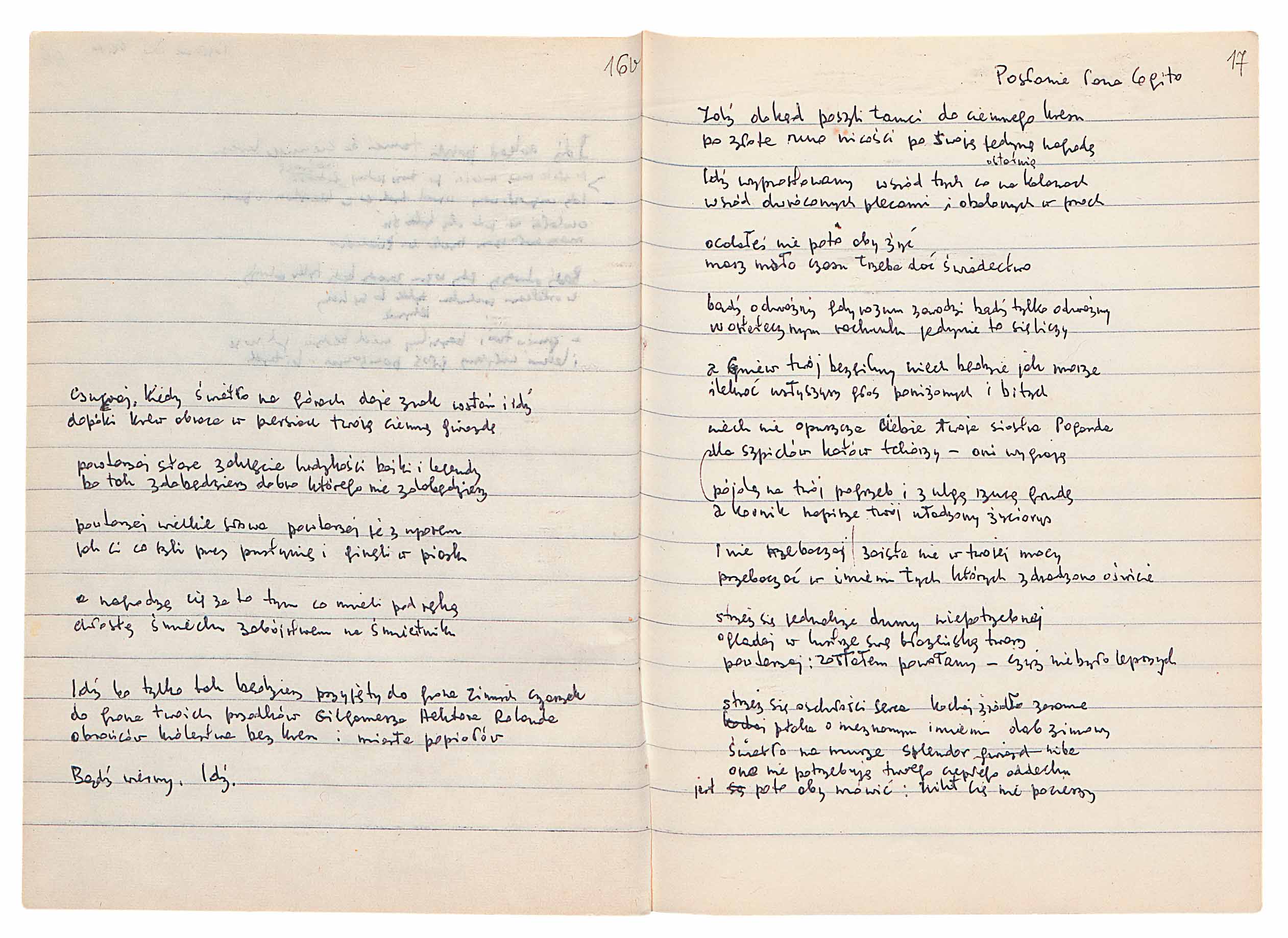
Zbigniew Herbert, Przesłanie Pana Cogito
Jeden z najważniejszych utworów literatury polskiej XX wieku. Kwintesencja dojrzałego stylu poety, łączącego głęboką erudycję z wiernością zasadniczym humanistycznym wartościom. Wiersz pochodzi z tomu Pan Cogito opublikowanego w 1974 roku. Herbert wprowadził w nim postać Pana Cogito (z łacińskiego cogito – myślę), wrażliwego inteligenta uwikłanego w codzienność realnego socjalizmu.
Utwór składa się z moralnych przykazań i wskazówek dotyczących godnego i odważnego życia. Mimo wewnętrznych komplikacji związanych z postawą prezentowaną przez Pana Cogito wiersz stał się głosem sumienia dla kolejnych pokoleń walczących o wolność. Wiele metafor i sformułowań trafiło do codziennego języka, przede wszystkim kończące utwór wezwanie: „Bądź wierny, idź”.
Rękopis należy do Archiwum Zbigniewa Herberta, zakupionego przez Bibliotekę Narodową od wdowy po pisarzu – Katarzyny i siostry – Haliny Herbert‑Żebrowskiej.
Zbigniew Herbert, Przesłanie Pana Cogito (The Message of Mr Cogito)
One of the most important works of 20th century Polish literature, Przesłanie Pana Cogito (The Message of Mr Cogito) repreents the quintessence of Zbigniew Herbert’s mature poetic style, combining deep erudition combined with a strong commitment to fundamental humanist values. The poem comes from the volume Pan Cogito, published in 1974, in which Herbert introduces the figure of Mr Cogito (from the Latin cogito – “I think”), a sensitive intellectual caught up in everyday life under “real socialism”.
The poem consists of moral precepts and instructions for a dignified and courageous life. Despite the internal compli- cations of the stance taken by Mr Cogito, the poem became a voice of conscience for subsequent generations of Poles in their struggle for freedom. Many metaphors and formulations from the work found their way into everyday language, above all the exhortation at the end of the work: “Bądź wierny, idź” – “Be faithful, go”.
The manuscript is part of the Zbigniew Herbert Archive, purchased by the National Library of Poland from the writer’s widow, Katarzyna Dzieduszycka-Herbert, and sister, Halina Herbert-Żebrowska.