Tren Fortynbrasa
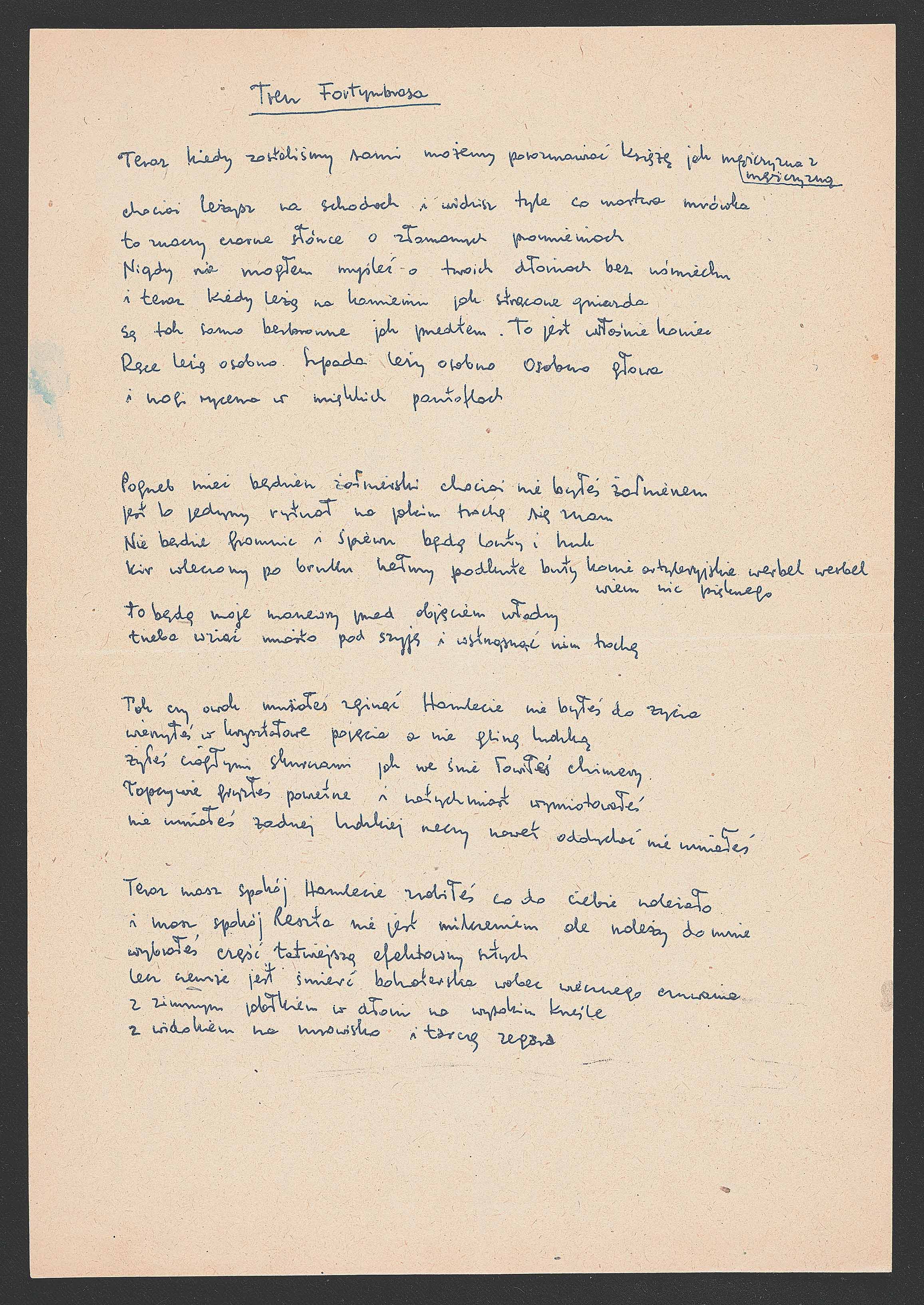
Zbigniew Herbert, Tren Fortynbrasa
Wiersz z trzeciego tomu poezji zatytułowanego Studium przedmiotu z 1961 roku, znakomicie przyjętego przez krytyków literackich i czytelników. W zbiorze znalazły się, uznane później za kanoniczne, wiersze: Apollo i Marsjasz, Mona Liza, Kamyk, Powrót prokonsula czy Tren Fortynbrasa. Ten ostatni utwór doczekał się największej liczby przekładów i opracowań krytycznoliterackich.
W Trenie Fortynbrasa Herbert perfekcyjnie wykorzystał metodę liryki roli, rozwijając wątek z zakończenia Hamleta Wiliama Szekspira. Tytułowy Fortynbras pojawia się na scenie po śmierci Hamleta i wypowiada do zmarłego kunsztownie skonstruowany monolog zwycięzcy. Poeta udziela głosu przyszłemu królowi, aby zderzyć dwie postawy: nieskuteczny idealizm i brutalny pragmatyzm. C
zystopis utworu należy do Archiwum Zbigniewa Herberta, zakupionego przez Bibliotekę Narodową od wdowy po pisarzu – Katarzyny i siostry – Haliny Herbert-Żebrowskiej.
Zbigniew Herbert, Tren Fortynbrasa ((Elegy of fortinbras)
A poem from Herbert’s third volume of poetry, Studium przedmiotu (Study of the Object), published in 1961. The collection was very positively received by both literary critics and readers. It includes a number poems today considered absolutely canonical, including Apollo i Marsjasz (Apollo and Marsyas), Mona Liza (Mona Lisa), Kamyk (Pebble), Powrót prokonsula (The Return of the Proconsul) and Tren Fortynbrasa (Elegy of Fortinbras). The last of these has been translated the greatest number of times and been the subject of the most literary criticism.
Elegy of Fortinbras is a technically highly accomplished poem. It is written in the voice of Fortinbras, the Norwegian prince in Shakespeare’s Hamlet, who will be crowned ruler after Hamlet’s death. Fortinbras appears on stage after Hamlet has been killed and speaks an artfully constructed victor’s monologue to the deceased. The poet, through Fortinbras, juxtaposes two contrasting stances: ineffectual idealism and brutal pragmatism.
The fair copy belongs to the Zbigniew Herbert Archive, purchased by the National Library of Poland from the writer’s widow, Katarzyna Dzieduszycka-Herbert, and sister, Halina Herbert-Żebrowska.