Ewangeliarz Anastazji
Ewangeliarz Anastazji
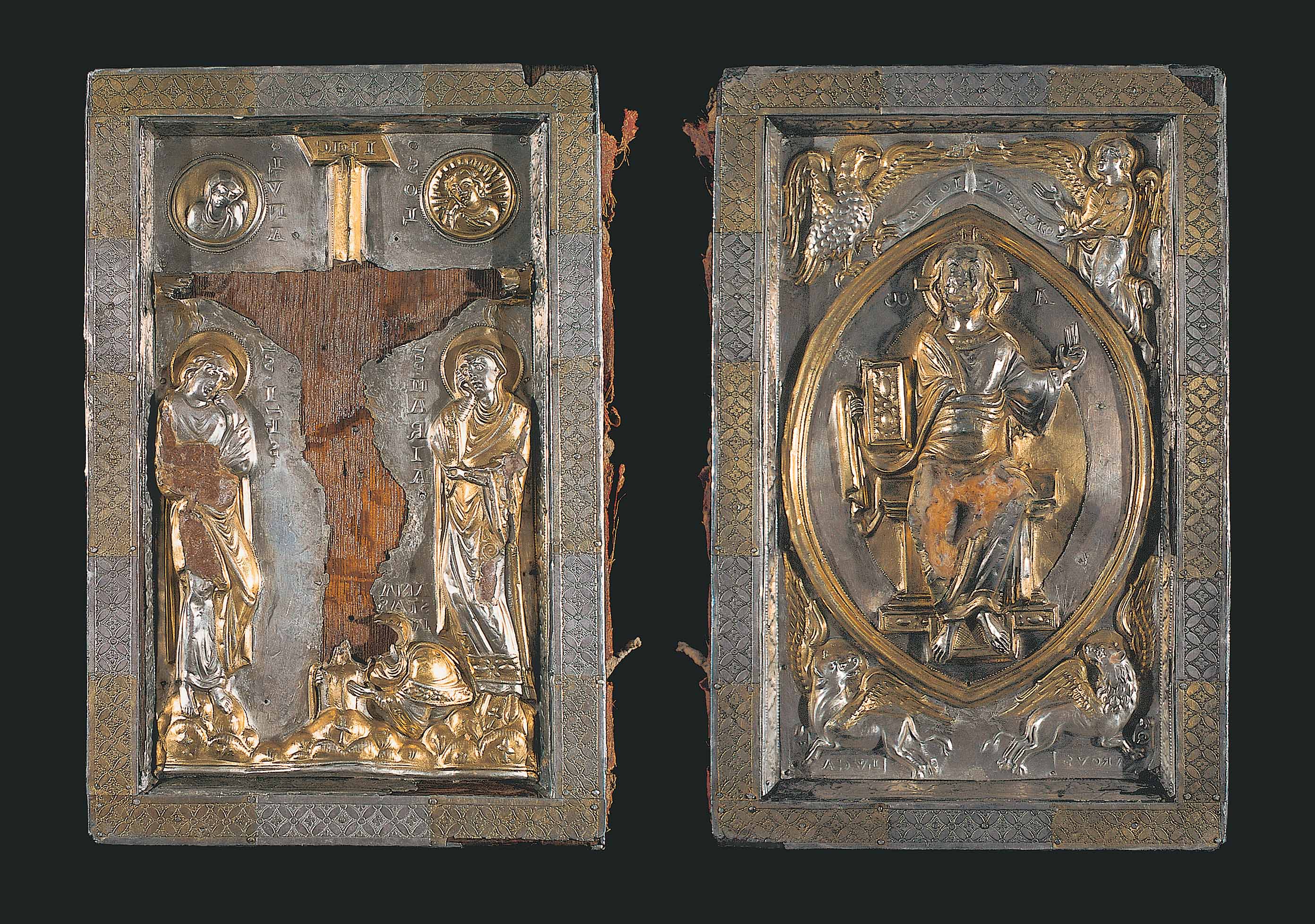
Pergaminowy rękopis z XII wieku wciąż posiada oryginalną, bogato zdobioną oprawę. Wykonano ją z dębowego drewna pokrytego srebrem. Przednia, niekompletna, okładka przedstawiała ukrzyżowanego Jezusa oraz Marię, św. Jana i postać podpisaną jako „Anastasia”. Postać Jezusa na krzyżu, prawdopodobnie pozłacana, została wyrwana przez Szwedów podczas potopu. Medaliony po obu stronach krzyża przedstawiają słońce i księżyc. Na tylnej okładce widzimy Maiestas Domini – Chrystusa na majestacie. W narożnikach znajdują się symbole czterech ewangelistów: człowiek – symbol Mateusza, orzeł – Jana, lew – Marka oraz wół – Łukasza.
Oprawa chroni rękopis pergaminowy z około 1160 roku, którego powstanie wiąże się z osobą księżnej Anastazji, czyli Wierzchosławy, żony księcia mazowieckiego Bolesława Kędzierzawego. Rękopis należał do klasztoru kanoników regularnych laterańskich w Czerwińsku. W czasie zaborów księga została zagrabiona i wywieziona do Petersburga, skąd powróciła po traktacie ryskim z roku 1921. Przed wybuchem II wojny światowej Biblioteka Narodowa ewakuowała rękopis razem ze skarbcem do Kanady, skąd wrócił w 1959 roku.
Zobacz obiekt online w bibliotece cyfrowej polona.pl.
Duchess Anastasia’s Gospel Book
This parchment manuscript from the 12th century still has its original, richly decorated binding made of oak covered with silver. The front cover, which is incomplete, originally depicted a crucified Jesus and his mother Mary, St John and a figure indicated as “Anastasia”. The figure of Christ on the cross, probably gilded, was torn off by the Swedes during the Swedish Invasion of Poland in 17th century. The medallions on either side at the top of the cross depict the sun and moon. On the back cover is a Maiestas Domini (Christ in Majesty). In the corners are the symbols of the four evangelists: a man for St Matthew, an eagle for St John, a lion for St Mark and an ox for St Luke.
Inside the binding is a parchment manuscript from around 1160, the origins of which are connected with Duchess Anastasia, or Viacheslava of Novgorod, wife of Bolesław IV, Duke of Masovia. The manuscript belonged to the monastery of the Canons Regular in Czerwińsk. During the Partitions of Poland the book was plundered and taken to St Petersburg, returning after the 1921 Treaty of Riga. Before the outbreak of World War II the National Library of Poland sent the manuscript together with the Library’s treasury to Canada, from where it returned in 1959.