Graduał Augustianów Krakowskich
Graduał Augustianów Krakowskich
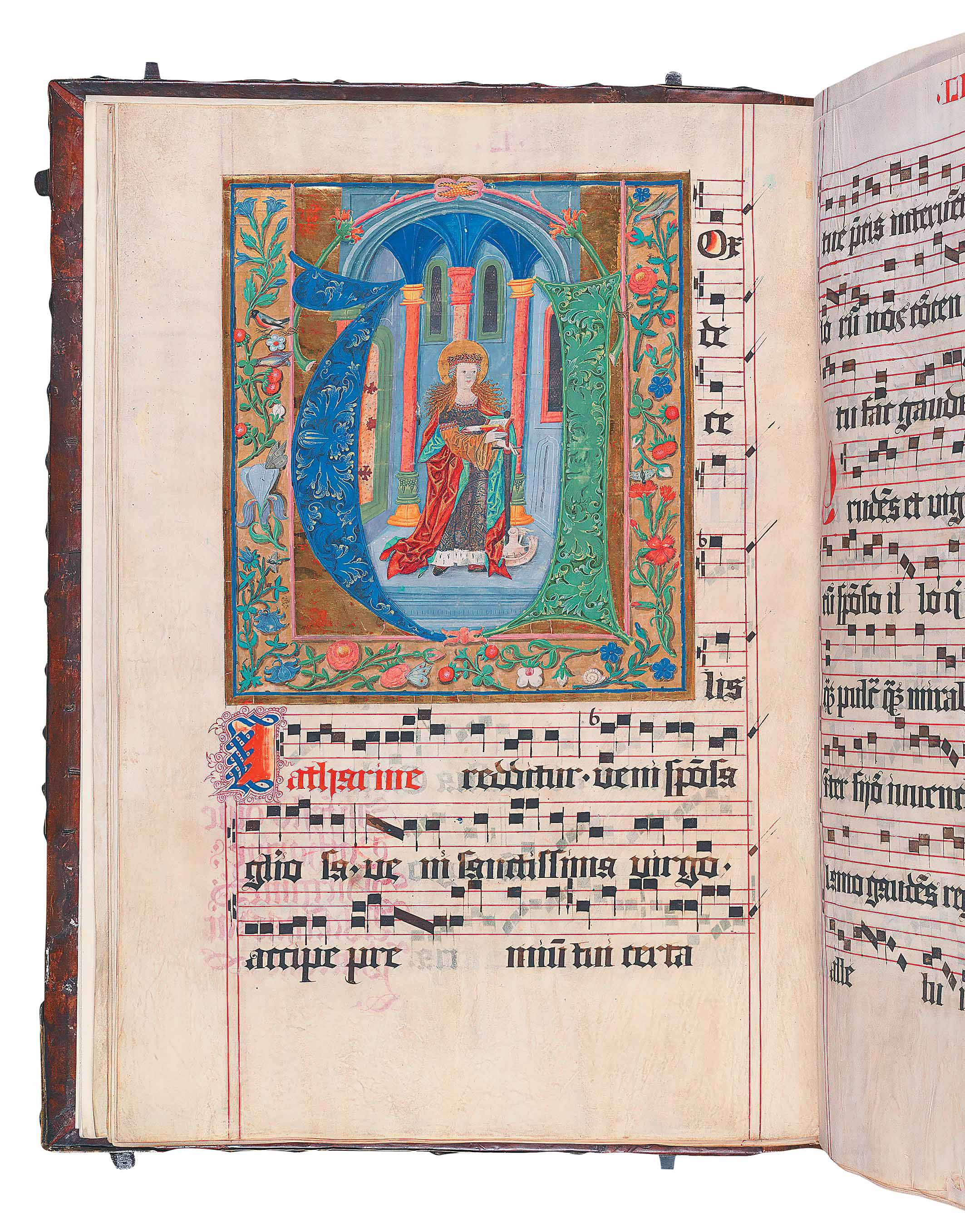
Rękopis łaciński z 1528 roku powstały i bogato iluminowany w klasztorze augustianów eremitów w Kazimierzu pod Krakowem (dziś dzielnica miasta). Spisał go w tamtejszym skryptorium brat Jan na potrzeby sprawowania liturgii przez zakonników. Księga zawiera śpiewy liturgiczne wraz z notacją muzyczną. Uwagę zwracają inicjały figuralne oraz liczne inicjały filigranowe (czyli wykonane piórem). Jedna z miniatur przedstawia patronkę klasztoru, św. Katarzynę Aleksandryjską. Można ją rozpoznać po atrybutach: księdze oraz mieczu i połamanym kole – symbolach jej męczeńskiej śmierci. Wokół postaci świętej znajdujemy realistyczne przedstawienia roślinne (róże, bławatki, goździki) i zwierzęce (ptaki, motyle, ślimaki). W czasie zaborów rękopis został zagrabiony przez Rosjan. Zwrócony Polsce po traktacie ryskim z roku 1921. Podczas II wojny światowej Niemcy wywieźli graduał do Krakowa. Po wojnie wrócił do zbiorów Biblioteki Narodowej.
Zobacz obiekt online w bibliotece cyfrowej polona.pl.
Gradual Of The Cracow Augustinians
A Latin manuscript from 1528, written and richly illuminated at the Augustinian Eremite monastery in Kazimierz near Cracow, now part of the city. It was produced in the monastery scriptorium by Brother Jan for the celebration of the liturgy by the monks.
The gradual contains the words and music of the liturgical chants. The figural initials and numerous penflourished initials are particularly worthy of note. One of the miniatures depicts the patron saint of the monastery, St Catherine of Alexandria. She can be recognised by her attributes: a book, a sword and a broken wheel, the symbols of her martyrdom. In the frame around the figure of the saint are realistic representations of plants (roses, cornflowers, carnations) and animals (birds, butterflies, snails).
During the Partitions of Poland the manu script was seized by the Russians, returning to Poland after the 1921 Treaty of Riga. During World War II the Germans transported it to Cracow. After the war it rejoined the collections of the National Library of Poland.