Psałterz floriański
Psałterz floriański
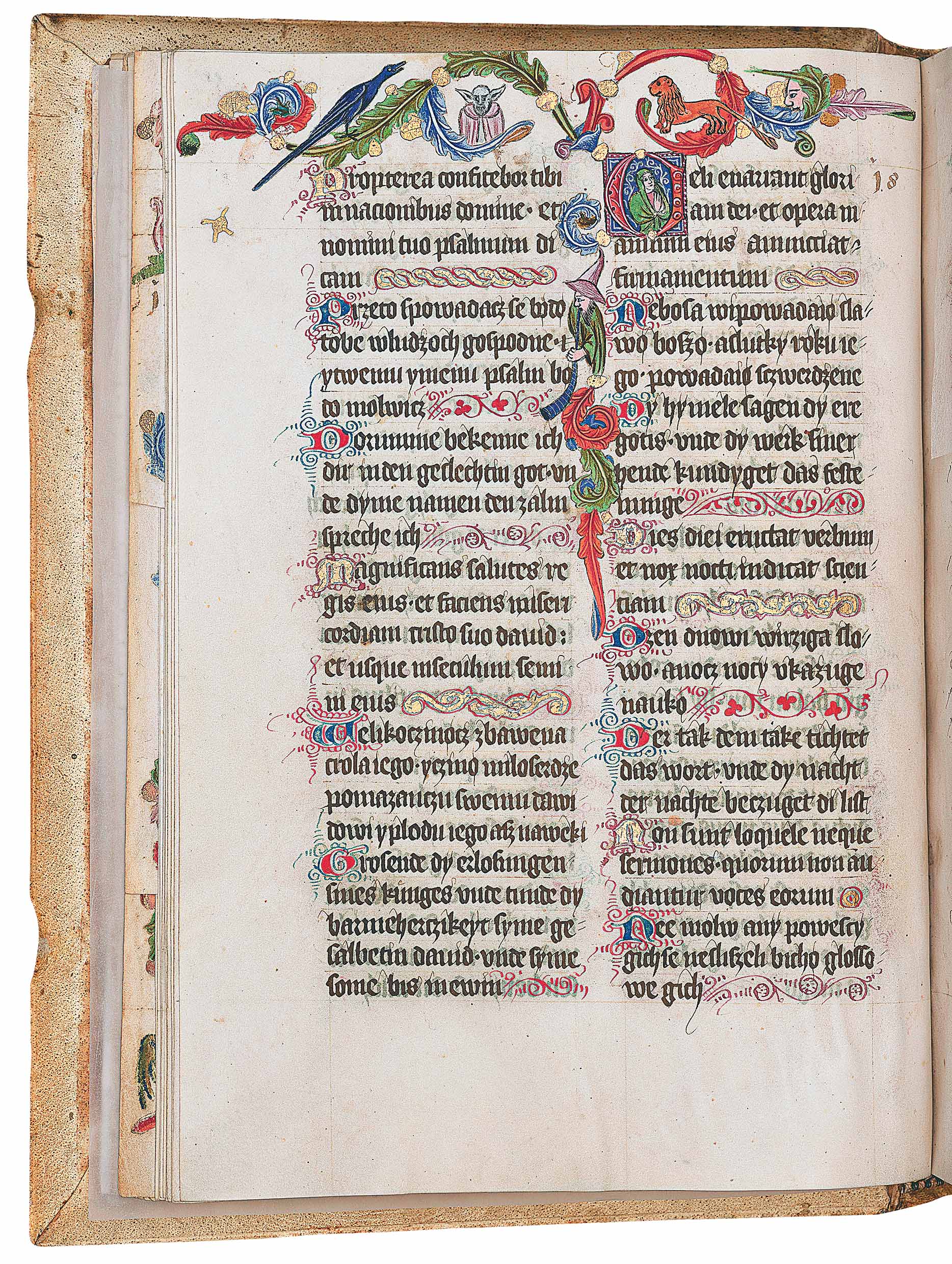
Najstarszy zachowany w całości zabytek języka polskiego, liczący ponad 600 lat. Na przełomie XIV i XV wieku zapisano w nim biblijne psalmy przełożone na trzy języki: polski, łaciński i niemiecki. Powstanie Psałterza floriańskiego wiązano z postacią królowej Jadwigi ze względu na herb dynastii Andegawenów przedstawiony na jednej z kart.
Uwagę przykuwają ornamenty roślinne, przedstawienia zwierząt i fantastycznych postaci, frywolne scenki oraz elementy humorystyczne umieszczone na marginesach i innych niezapisanych miejscach. Możemy tu znaleźć nagich jeźdźców ujeżdżających lwy i dziki, małpę ścigającą lwa, a także zaskakującą postać do złudzenia przypominającą… Mistrza Yodę z Gwiezdnych wojen.
Okoliczności powstania rękopisu pozostają nieznane. W pierwszej połowie XV wieku należał do węgierskiego patrycjusza Jana z Lipian. Wiemy też, że w 1557 roku niejaki Bartłomiej Siess (lub Süss) kupił księgę od włoskiego kupca za 7 soldów. Od 1637 roku Psałterz znajdował się w opactwie kanoników regularnych św. Floriana koło Linzu w Austrii – i temu miejscu zawdzięcza swą nazwę. W 1931 roku polski rząd, po uzyskaniu zgody opactwa i Watykanu, zakupił rękopis. Przed wybuchem II wojny światowej Biblioteka Narodowa ewakuowała go do Kanady. Do skarbca BN powrócił w roku 1959.
Zobacz obiekt online w bibliotece cyfrowej polona.pl.
Sankt Florian Psalter
The oldest fully preserved work in the Polish language, over 600 years old. Written in the late 14th, early 15th century, the Psalter contains Psalms from the Bible translated into three languages: Polish, Latin and German. Its origins are thought to be connected with Saint Queen Jadwiga due to the coat of arms of the Anjou dynasty depicted on one of its pages.
Particularly worthy of attention are the floral decorations, representations of animals and fantastic figures, drolleries, frivolous scenes and humorous elements appearing in the margins and other areas with no writing. The drawings include naked horsemen riding lions and boars, a monkey chasing a lion, and a startling figure that looks deceptively like Yoda from Star Wars.
The circumstances surrounding the manuscript’s creation remain unknown. In the first half of the 15th century it belonged to the Hungarian patrician Jan of Lipiany. We also know that in 1557 a certain Bartłomiej Siess (or Süss) bought the book from an Italian merchant for seven soldi. From 1637 onwards the Psalter was housed at the Abbey of the Canons Regular of Sankt Florian near Linz in Austria, to which it owes its name. In 1931 the Polish government, with the approval of the Abbey and the Vatican, purchased the manuscript. Before the outbreak of the Second World War the National Library sent it to Canada. It returned to the treasury of the National Library of Poland in 1959.