Rocznik świętokrzyski dawny
Rocznik świętokrzyski dawny
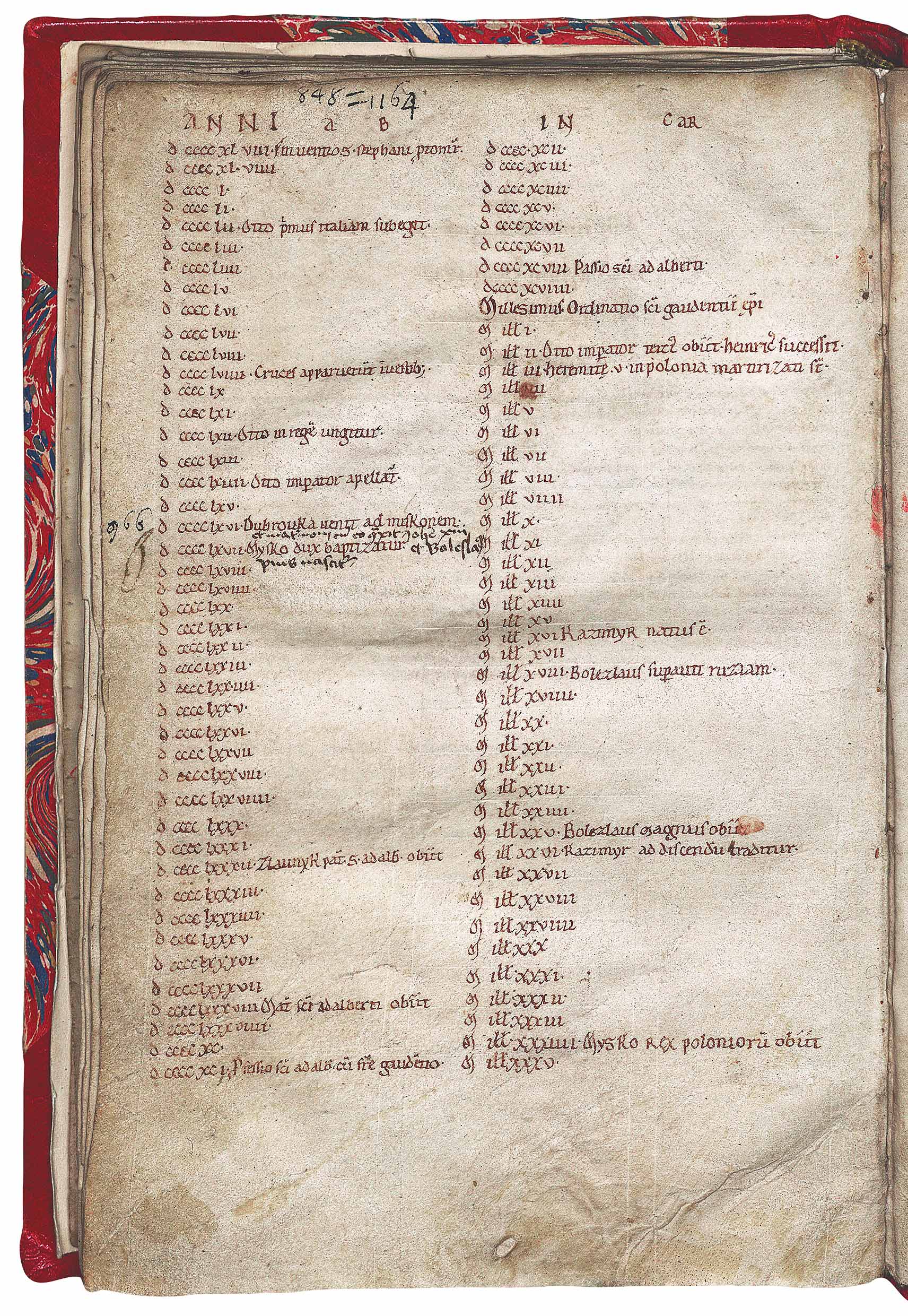
Pierwszy zabytek polskiej historiografii. Odnotowuje kluczowe wydarzenia z początków państwa polskiego. Twórca zaczerpnął informacje z niezachowanego do dzisiaj rocznika, który prawdopodobnie spisano na dworze pierwszych Piastów. Dzieło składa się z krótkich, jednozdaniowych łacińskich zapisków przyporządkowanych do poszczególnych lat. Wskutek pomyłki wszystkie notki aż do roku 1000 podają datę o rok późniejszą od ogólnie przyjętej, jak np. przybycie Dąbrówki do Mieszka (Dubrovka venit ad Miskonem) znajduje się pod rokiem 966 zamiast 965, a chrzest księcia (Mysko dux baptizatur) pod rokiem 967 zamiast 966.
Rocznik powstał między 1122 a 1136 rokiem, najprawdopodobniej w Krakowie. Jego tradycyjna nazwa pochodzi od miejsca przechowywania – zanim w wieku XVIII trafił do Biblioteki Narodowej, założonej w Warszawie przez braci Załuskich, należał do opactwa benedyktynów na Świętym Krzyżu.
Przed wybuchem II wojny światowej BN ewakuowała rękopis razem ze skarbcem do Kanady, skąd wrócił w 1959 roku.
Zobacz obiekt online w bibliotece cyfrowej polona.pl.
Old annals of the holy cross
The oldest Polish written history, recording key events from the very beginnings of the Polish state. Its creator took the information it contains from an earlier yearbook that has not survived, probably written at the court of the first Piasts, the first Polish rulers.
The work consists of short, one-sentence notes in Latin, assigned to individual years. All the notes up to the year 1000 are incorrectly assigned one year later than the generally accepted date. For example, the coming of Bohemian Princess Dobrawa to Polish ruler Mieszko (Dubrovka venit ad Miskonem) is assigned to the year 966 instead of 965 and the baptism of Mieszko (Mysko dux baptizatur) is assigned to 967 instead of 966. The yearbook was produced between 1122 and 1136, most likely in Cracow. Its name is traditional, deriving from the place where it was stored: before it came to the first National Library, founded by the Załuski brothers in Warsaw in the 18th century, it belonged to the Benedictine library at the Holy Cross Abbey on Łysa Góra.
Before the outbreak of the Second World War the National Library of Poland sent the manuscript together with the Libra ry’s treasury to Canada for safety, from where it returned to Poland in 1959.