Teatr Cnót Stanisława Hozjusza
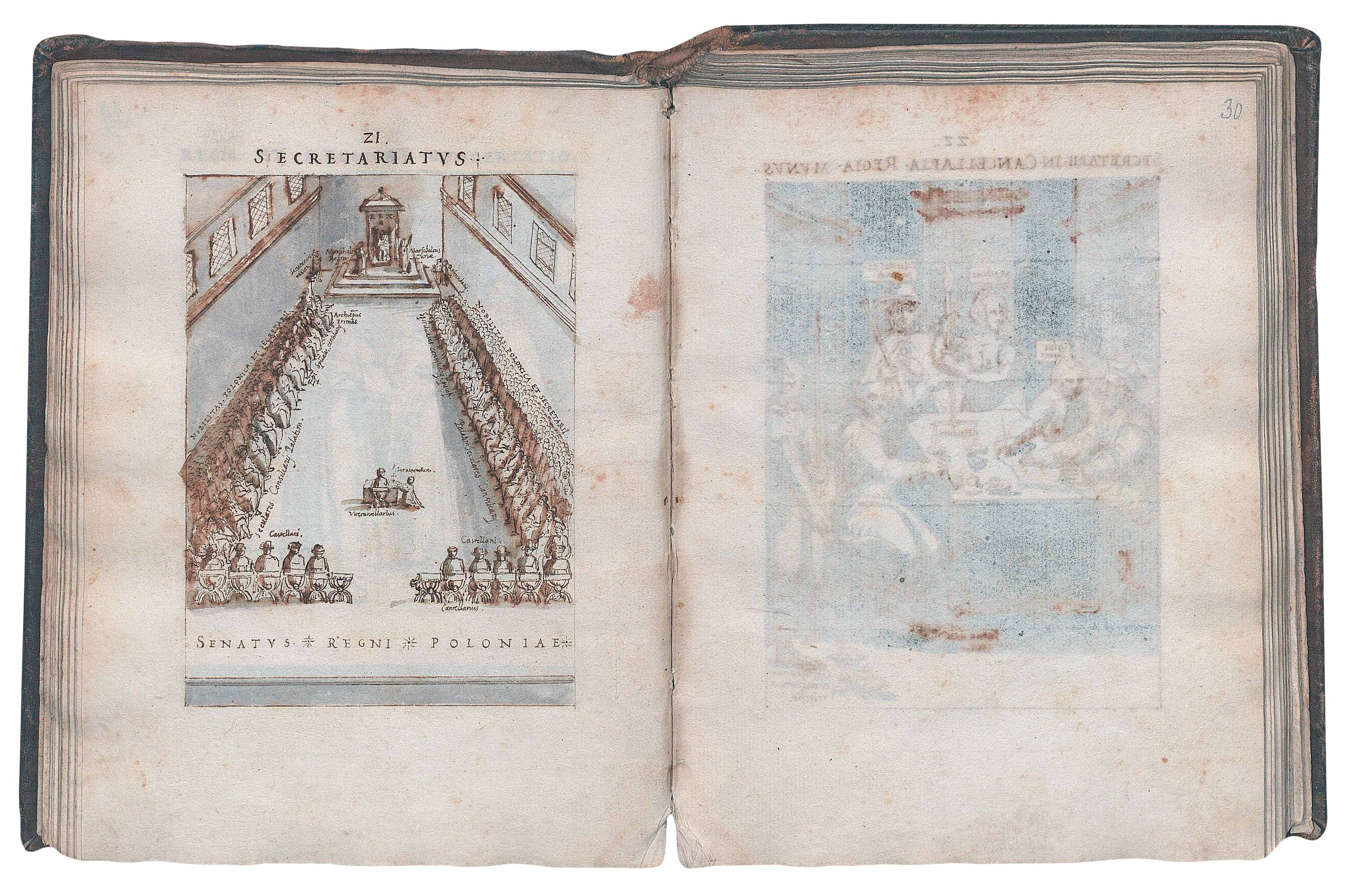
Tomasz Treter, Teatr Cnót Stanisława Hozjusza
Zbiór 105 rysunków wybitnego rytownika Tomasza Tretera, które przedstawiają biografię Stanisława Hozjusza – jednej z najważniejszych postaci europejskiej kontrreformacji. Zanim Hozjusz został biskupem warmińskim i kardynałem, sprawował funkcję sekretarza królewskiego – ważnego urzędnika kancelarii z dostępem do tajemnic państwowych. Jeden z rysunków pokazuje, jak mogła wyglądać przysięga sekretarska, która była warunkiem objęcia urzędu. Hozjusz klęczy przy kierującym kancelarią podkanclerzym podczas sejmu Królestwa. W posiedzeniu, któremu przewodniczy król siedzący na tronie, bierze udział rada koronna, czyli senat: arcybiskup, biskupi, wojewodowie, kasztelanowie oraz ministrowie – wspomniany podkanclerzy, kanclerz, marszałkowie koronny i nadworny. Przy tronie stoją sekretarz wielki i dwaj referendarze. Widać też tłoczącą się za plecami senatorów szlachtę, czyli przybyłych na sejm posłów ziemskich.
Rękopis należał do Biblioteki Ordynacji Zamojskiej. W czasie II wojny światowej uniknął zniszczenia wskutek ewakuacji z Warszawy w 1944 roku do Goerbitsch. Stamtąd Rosjanie przewieźli go do Moskwy. Po zwrocie do Polski w 1947 roku kodeks trafił wraz z innymi zbiorami BOZ do Biblioteki Narodowej. Obecnie BOZ jest własnością BN.
Zobacz obiekt online w bibliotece cyfrowej polona.pl.
Tomasz Treter, Theatre Of The Virtues Of The Venerable Stanislaus Hosius
A collection of 105 drawings by the eminent engraver Tomasz Treter, depicting the life of Stanislaus Hosius, one of the most important figures of the European Counter-Reformation. Before Hosius became Bishop of Warmia and a cardinal, he held the position of Royal Secretary, an important official in the Chancellery with access to state secrets.
One of the drawings depicts the swearing of the secretarial oath may have looked like, a condition for taking office. Hosius kneels beside the Sub-Chancellor, who was in charge of the Chancellery during the Sejm of the Kingdom of Poland. The ceremony is led by the King, sitting on the throne, and the Crown Council (Senate) consisting of the Archbishop, bishops, voivodes, castellans and ministers – the aforementioned Sub-Chancellor, Chancellor and marshals of the crown and court. Standing by the throne are the Grand Secretary and two registrars. Also visible, behind the senators, are the nobility, i.e. the landed deputies who have come to the Sejm.
The manuscript belonged to the library of the Zamoyski family fee tail. In 1944, during World War II, it avoided destruction by being sent from Warsaw to Goerbitsch. From there, the Russians transported it to Moscow. After its return to Poland in 1947 the manuscript found its way, along with other items from the library of the Zamoyski family fee tail, to the National Library of Poland.