Lekcjonarz
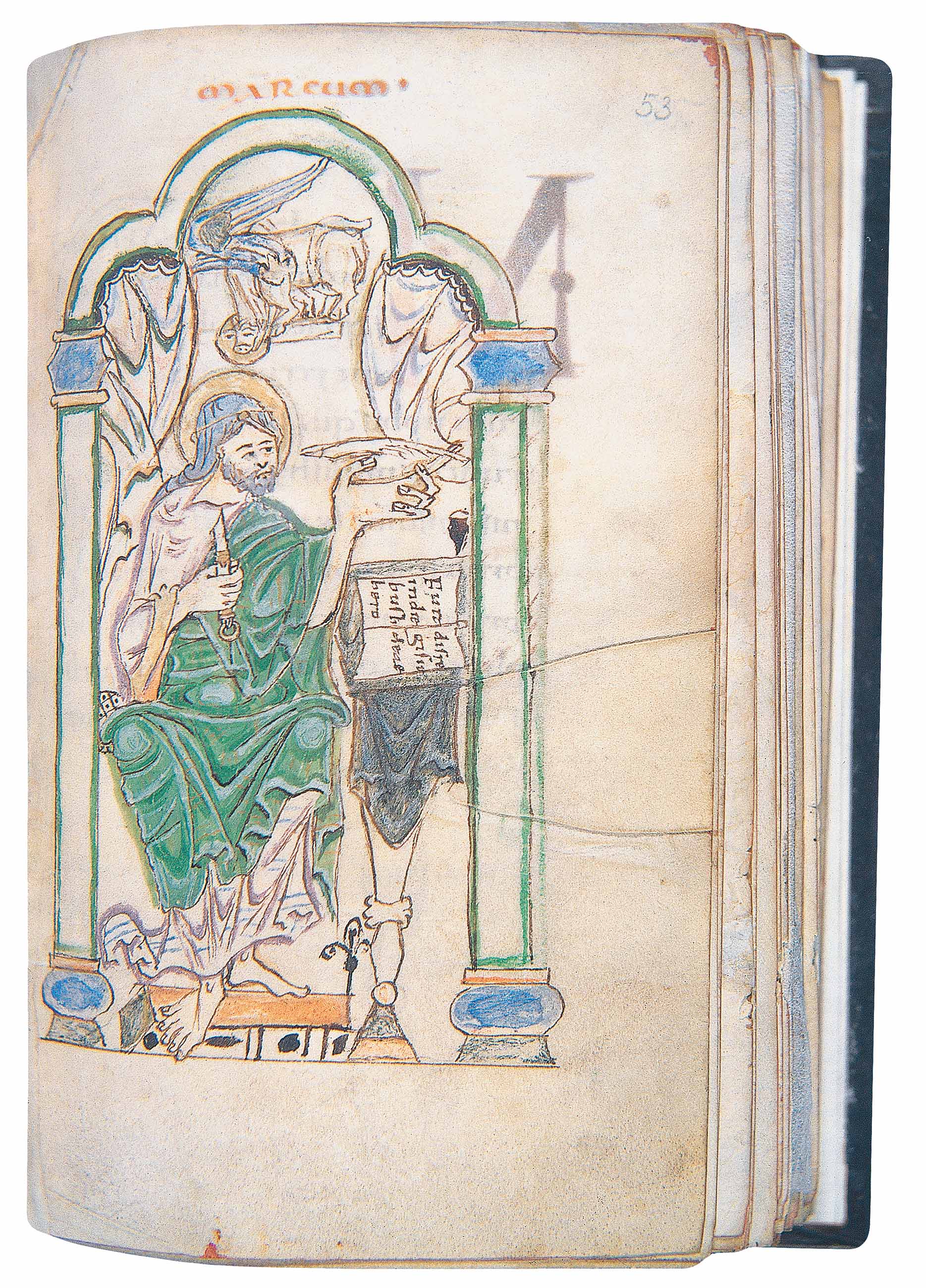
Najstarszy lekcjonarz anglosaski
Rękopis z czytaniami Ewangelii spisano około 1000 roku na pograniczu Francji i Flandrii, na co wskazują wpływy zachodniofrankijskie i anglosaskie w bogatych zdobieniach.
Księga zawiera trzy całostronicowe miniatury z wizerunkami Ewangelistów. Prezentowana miniatura przedstawia św. Łukasza, którego można poznać po namalowanym u góry wolejego symbolu. Ewangelistę oglądamy przy pracy – siedzi przed pulpitem z rozłożoną księgą, a w dłoni trzyma duży nóż do ostrzenia pióra. Kodeks prawdopodobnie został zakupiony za granicą do pierwszej Biblioteki Narodowej, otwartej w 1747 roku w Warszawie przez Józefa i Andrzeja Załuskich.
Po III rozbiorze Polski caryca Katarzyna II kazała przewieźć zbiory Biblioteki Narodowej (Biblioteki Rzeczypospolitej) do Petersburga. Kodeks podzielił ich los. Na mocy traktatu ryskiego z 1921 roku został zwrócony i umieszczony w BN. Przed wybuchem II wojny światowej BN ewakuowała rękopis razem ze skarbcem do Kanady, skąd wrócił w roku 1959.
Zobacz obiekt online w bibliotece cyfrowej polona.pl.
The oldest anglo-saxon lectionary
This manuscript, containing Gospel read - ings, was written around the year 1000 on the border between France and Flanders, as indicated by the West Frankish and Anglo-Saxon influences seen in its rich ornamentation.
The tome contains three full-page miniatures with images of the Evangelists. The one shown here is of St Luke, recognisable by his symbol – an ox – at the top of the page. The evangelist is seen at work: he is seated at a lectern with a book spread out in front of him, holding a large knife in his hand for sharpening his quill.
The manuscript was probably purchased abroad for the first Polish National Library, founded in 1747 in Warsaw by Józef and Andrzej Załuski. After the Third Partition of Poland the Russian Tsarina Catherine II had the collection of the National Library (known as the “Library of the Republic” or “Commonwealth”), including this manuscript, transported to St Petersburg. Under the terms of the Treaty of Riga, it was returned and placed in the National Library of Poland. Before the outbreak of the Second World War, the National Library sent the manuscript together with the Library’s treasury to Canada, from where it returned in 1959.