Objawienia św. Brygidy
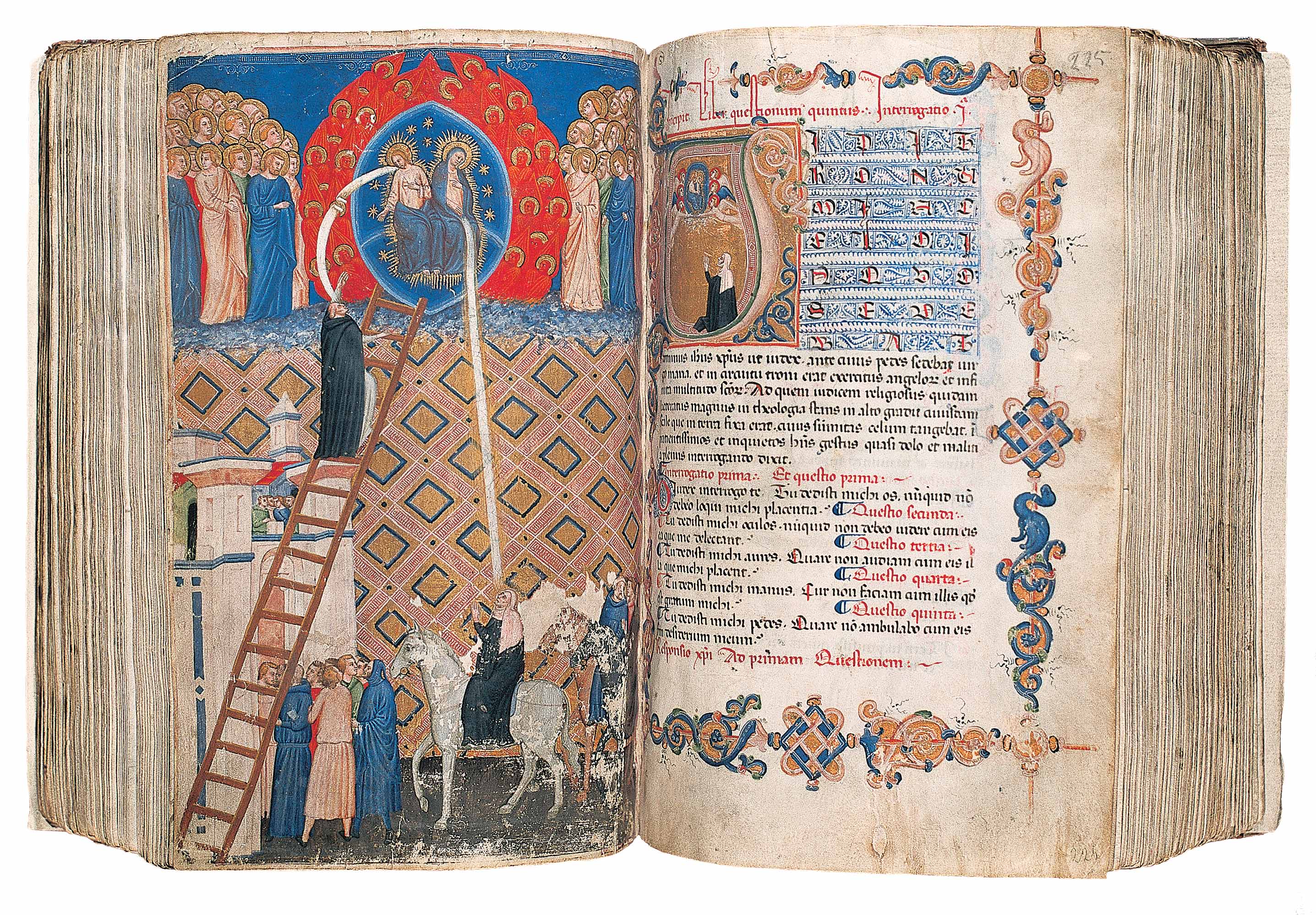
Objawienia Św. Brygidy
Jeden z najpopularniejszych tekstów religijnych średniowiecza. Rękopis należy do najstarszych zachowanych odpisów pierwotnej wersji Objawień, powstał we Włoszech w latach 1375–1377. Iluminacje przypisywane są neapolitańskiemu artyście, zwanemu Maestro del Seneca dei Girolamini. Jedyna całostronicowa miniatura ilustruje epizod z życia św. Brygidy – widzenie podczas podróży. Scena przedstawia świętą na czele orszaku, zamek, ku któremu zmierza, i jednocześnie wyraziste wyobrażenie jej objawienia: tronującego Chrystusa i Matkę Boską w otoczeniu świętych, a także zakonnika wspinającego się do nieba po „drabinie duchowej”.
W drugiej połowie XIV wieku rękopis trafił w Rzymie w ręce Mateusza z Krakowa, który przywiózł go do Polski. Po upadku powstania listopadowego dzieło zostało zagrabione przez Rosjan i wywiezione do Petersburga. Na mocy traktatu ryskiego z 1921 roku rękopis zwrócono i umieszczono w zbiorach Biblioteki Narodowej. Przed wybuchem II wojny światowej BN ewakuowała rękopis razem ze skarbcem do Kanady, skąd powrócił w roku 1959.
Zobacz obiekt online w bibliotece cyfrowej polona.pl.
Revelations of St Bridget
One of the most popular religious texts of the Middle Ages. This manuscript, produced in Italy between 1375 and 1377, is one of the oldest surviving copies of the original version of the Revelations. The illuminations are attributed to a Neapolitan artist known as “Maestro del Seneca dei Girolamini”. The only full-page miniature that the manuscript contains is an episode from the life of St Briget, a vision that she had during a journey. The scene depicts the saint at the head of her retinue, the castle she is headed towards and a striking picture of what she sees in her vision: Christ enthroned with the Virgin Mary, surrounded by saints, plus a monk climbing a heavenly ladder.
In the second half of the 14th century the manuscript was located in Rome in the possession of Matthaeus de Cracovia, who then brought it to Poland. After the defeat of the November Uprising it was seized by the Russians and taken to St Petersburg. Under the 1921 Treaty of Riga it returned to Poland and was placed in the collection of the National Library of Poland. Before the outbreak of the Second World War, the National Library sent it together with the Library’s treasury to Canada for safety, from where it returned to Poland in 1959.