Powieść o róży
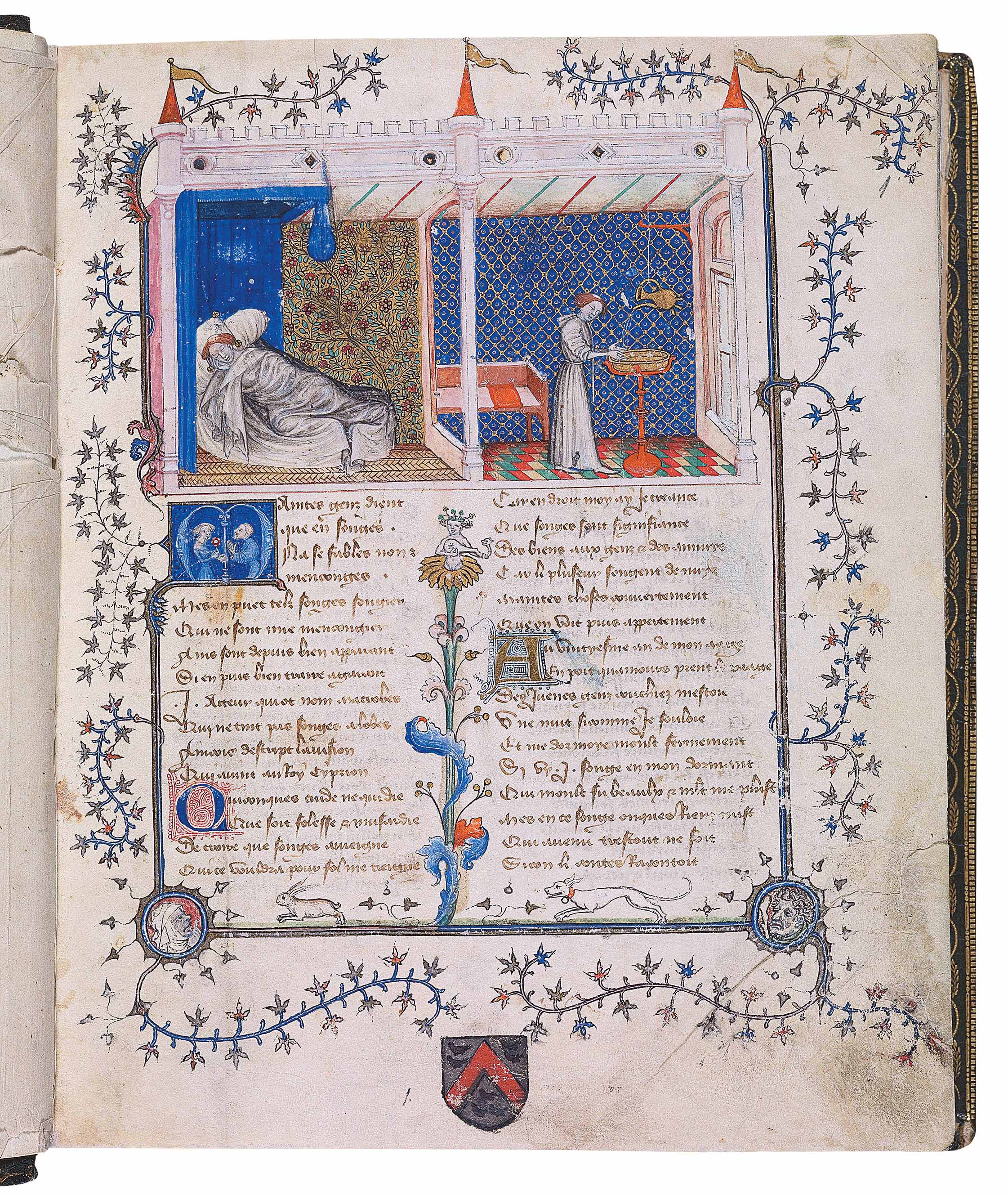
Guillaume De Lorris i Jean De Meun, Powieść o Róży
Jeden z najpopularniejszych tekstów o miłości, wielokrotnie przepisywany w średniowieczu i często pięknie zdobiony. Poemat składa się z dwóch części – pierwsza, autorstwa Guillaume’a de Lorris, powstała w pierwszej połowie XIII wieku i opowiada o młodzieńcu, który poszukuje swojej wybranki, zaklętej pod postacią róży w alegorycznym ogrodzie. Opowieść urywa się podczas prób zerwania róży przez bohatera. Prawie pół wieku później kontynuacji podjął się Jean de Meun. Druga część jest swoistą apoteozą miłości cielesnej. Dzieło było ostro krytykowane przez innych średniowiecznych twórców, a nawet zostało oficjalnie potępione przez arcybiskupa Paryża, jednak zyskało ogromną popularność wśród czytelników. Prezentowany odpis pochodzi z końca XIV wieku, iluminowany w Paryżu przez tzw. Mistrza Polikratyka. Zawiera 40 miniatur, spośród których najbardziej efektowana, jedyna barwna, znajduje się na karcie pierwszej. Przed wybuchem II wojny światowej Biblioteka Narodowa ewakuowała rękopis razem ze skarbcem do Kanady, skąd wrócił w roku 1959.
Zobacz obiekt online w bibliotece cyfrowej polona.pl.
Guillaume De Lorris and Jean De Meun, Roman De La Rose
One of the most popular texts about love, copied many times during the Mid - dle Ages and often beautifully decorated. Le Roman de la Rose (The Romance of the Rose) consists of two parts. The first, written by Guillaume de Lorris, dates from the first half of the 13th century and tells the story of a young man who is searching for his chosen one, who has been transformed into a rose in an allegorical garden. The story breaks off when the hero attempts to pick the rose. Writing almost half a century later, Jean de Meun continues the tale. His second part is a kind of apotheosis of carnal love. The work was strongly criticised by other medieval writers and was even officially condemned by the Archbishop of Paris, but it became immensely popular with readers.
The copy dates to the late 14th century, illuminated in Paris by the artist known as “the Polycratic Master”. It contains 40 miniatures, of which the most strik - ing and the only one in colour is found on the first page. Before the outbreak of the Second World War, the National Library of Poland sent the manuscript together with the Library’s treasury to Canada for safety, from where it returned to Poland in 1959.