Konstytucja 3 maja
Konstytucja 3 maja
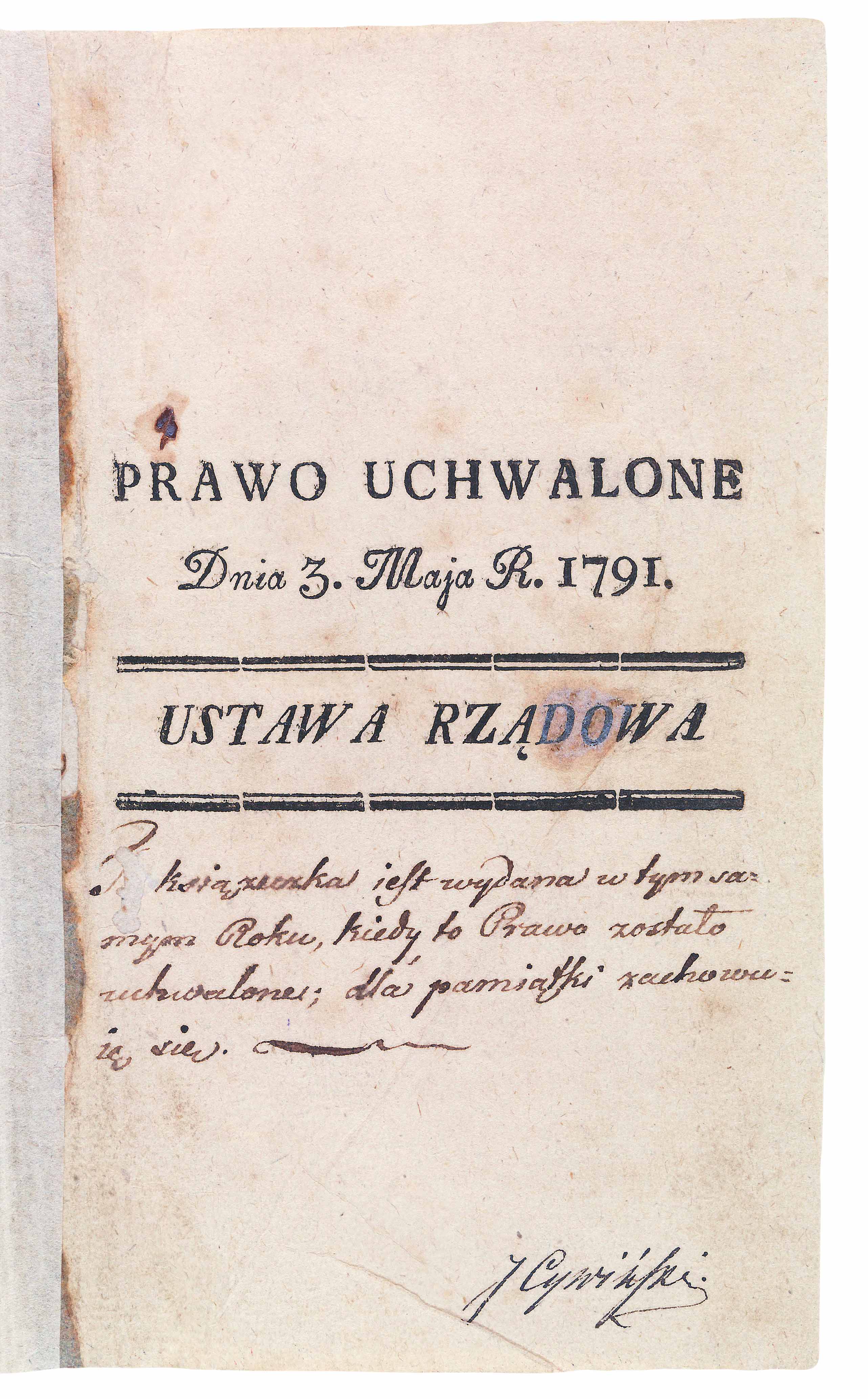
Pierwsza nowoczesna ustawa zasadnicza w Europie, a druga na świecie po Konstytucji Stanów Zjednoczonych Ameryki, uchwalonej zaledwie kilka lat wcześniej. Ustawa rządowa, bo taka była oficjalna nazwa aktu, regulowała władzę ustawodawczą, wykonawczą i sądowniczą. Likwidowała liberum veto. Osobne rozdziały poświęcone zostały mieszczanom i chłopom, których państwo wzięło „pod opiekę prawa i rządu”.
Konstytucja z 1791 roku miała nie tylko przynieść modernizację, ale także dzięki reformie wewnętrznej uwolnić Rzeczpospolitą spod obcych wpływów, przede wszystkim spod rosyjskiej kurateli. Właśnie dlatego, choć obowiązywała krótko, urosła do rangi symbolu walki o wolność. Prezentowane wydanie Konstytucji stało się pamiątką narodową, stąd druk chroni tekstylna oprawa.
Egzemplarz należał do Pawła Ksawerego Brzostowskiego, referendarza litewskiego, któremu idee wyrażone w Konstytucji były bardzo bliskie – w swoich dobrach zastąpił pańszczyznę oczynszowaniem i nadał chłopom wolność osobistą.
Zobacz obiekt online w bibliotece cyfrowej polona.pl.
Constitution of 3 may 1791
The first modern constitution in Europe and the second in the world after the Constitution of the United States of America, enacted just a few years earlier. The Governance Act – the official name of the act – regulates the legislative, execu - tive and judicial powers of government. It abolishes the liberum veto, under which every member of parliament had an absolute veto. Separate sections are devoted to the burghers and peasants, whom the state “took under the protection of law and government”.
The Constitution of 1791 was intended not only to bring modernisation, but also through internal reform to free the Republic from foreign influences, above all Russian tutelage. For this reason, although it was only in force for a short time, it became a symbol of the struggle for freedom.
The showcased edition of the Constitution is today considered a “national monument”, which is why it has been given a protective textile binding. It belonged to Paweł Ksawery Brzostowski, who held the office of Great Lithuanian Writer and to whom the ideas expressed in the Constitution were very dear: on his own estates he replaced serfdom with a system of land rents and granted personal freedom to the peasants.