O koniach wschodnich i wywodzących się z ras orientalnych
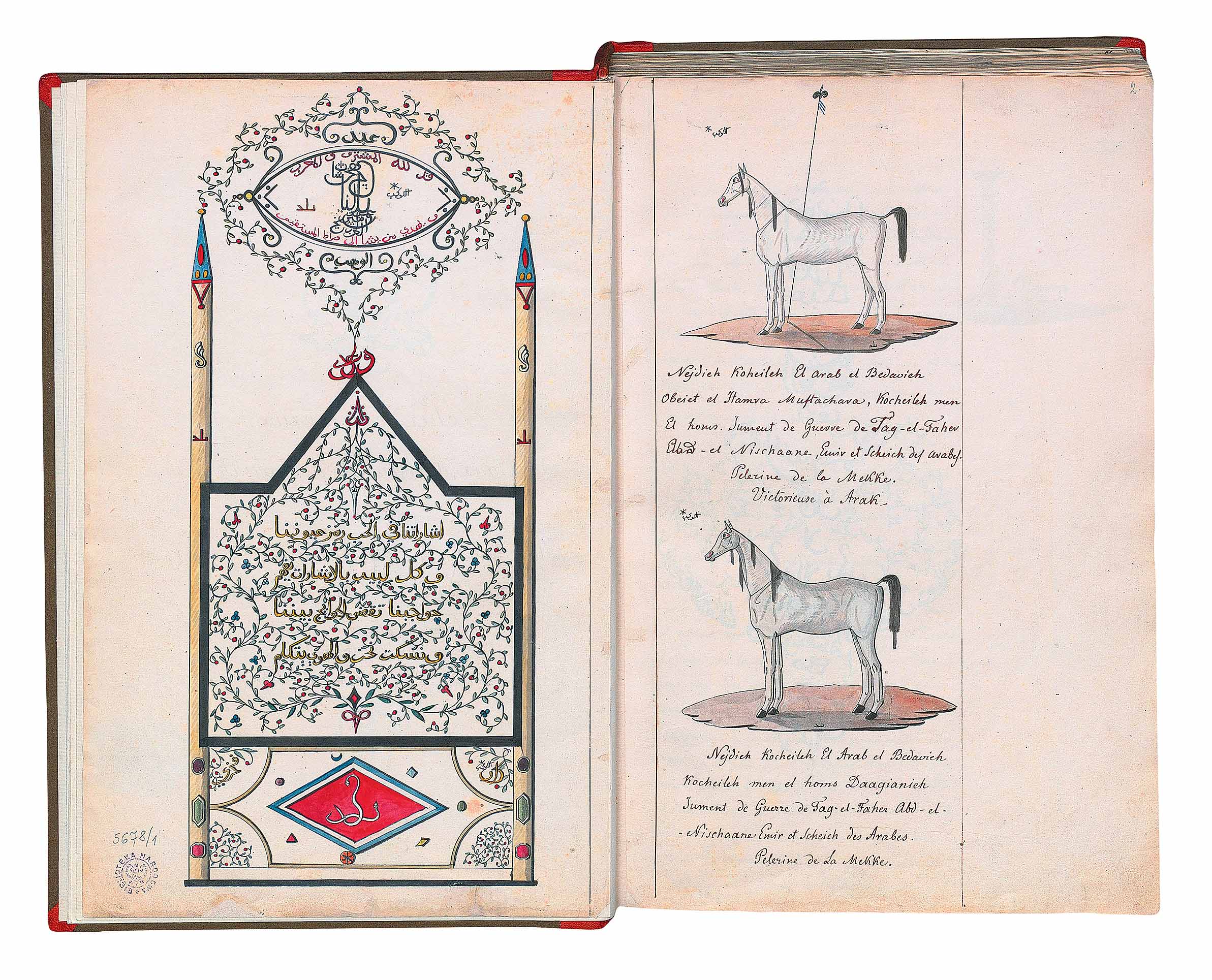
Wacław Seweryn Rzewuski, O koniach wschodnich i wywodzących się z ras orientalnych
Opis Półwyspu Arabskiego autorstwa Wacława Seweryna Rzewuskiego zwanego Emirem. Autor był zamiłowanym orientalistą, pionierem etnografii, a przy tym hodowcą i wytrawnym znawcą koni arabskich czystej krwi. W latach 1817–1819 odbył podróż przez Bałkany i Stambuł do Syrii, gdzie zamieszkał w pałacu w Aleppo. Stamtąd wyruszał na kolejne wyprawy – do Cylicji (dzisiejsza południowa Turcja), Palestyny, a przede wszystkim w pustynny region Nadżdu, obejmujący środkową część Półwyspu Arabskiego.
Informacje zebrane podczas długiej podróży zebrał Rzewuski w trzytomowym dziele w języku francuskim, które wbrew tytułowi nie jest poświęcone jedynie rasowym koniom. Stanowi cenne źródło wiedzy o kulturze ludów, które nie pozostawiły po sobie wielu pisanych świadectw, jak koczowniczy Beduini. Tekstowi towarzyszą liczne ilustracje autora, w tym na przykład rysunki przedstawiające stylizowany znak (balad), osiołka obciążonego pakunkami, karawanę czy obóz, który rozłożył się w drodze przez pustynię do Mekki. Rękopis po śmierci autora był w posiadaniu rodziny. W latach 20. XX wieku Adam Rzewuski sprzedał go Bibliotece Narodowej. Utwór był wielokrotnie wydawany we fragmentach w języku francuskim, dopiero w 2017 roku został opublikowany przez BN w całości, także w tłumaczeniu na język angielski i polski.
Zobacz obiekt online w bibliotece cyfrowej polona.pl.
Wacław Seweryn Rzewuski, Concerning the horses of the orient and those originating from oriental breeds
A description of the Arabian Peninsula by Wacław Seweryn Rzewuski. Rzewuski was an enthusiast of the Orient and pioneer of ethnography who received the title of Emir. He was also a breeder and consummate expert on pure-bred Arabian horses. Between 1817 and 1819 he travelled through the Balkans and Istanbul to Syria, settling in a palace in Aleppo. From there he embarked on further expeditions to Cilicia (in the south of modern Turkey), Palestine and in particular the desert region of the Najd in the central part of the Arabian Peninsula.
Rzewuski compiled the information he gathered during his long journey into a three-volume work in French, which contrary to its title is not solely devoted to thoroughbred horses. The work is a valuable source of knowledge about the culture of peoples who did not produce much written material about themselves, such as the nomadic Bedouins. The text is accompanied by numerous illustrations by the author. The text is enriched with drawings depicting, among other things, a styli‑sed sign (balad), a donkey laden with packs, a caravan and a camp that has been set up in the desert during a journey to Mecca. After the author’s death, the manuscript remained in the possession of the family of Count Rzewuski. In the 1920s Adam Rzewuski sold it to the National Library of Poland. Fragments of the work were published in French on several occasions but it was not until 2017 that it was published in its entirety by the National Library, accompanied by English and Polish translations of the text.